Skip to content
Briefings are running a touch slower this week while we rebuild the foundations.See roadmap
Iran Conflict 2026
11MAY

US Gulf shipping cover for allies only

5 min read
14:01UTC

The US revives a wartime insurance mechanism last used in 1914 to reopen Gulf shipping lanes. The catch: 60% of the oil that transits Hormuz flows to countries excluded from the scheme.

ConflictDeveloping
Key takeaway

The US has effectively nationalised Gulf shipping risk and, in doing so, created a two-tier maritime order that forces Asian importers to choose between political alignment and commercial exposure.

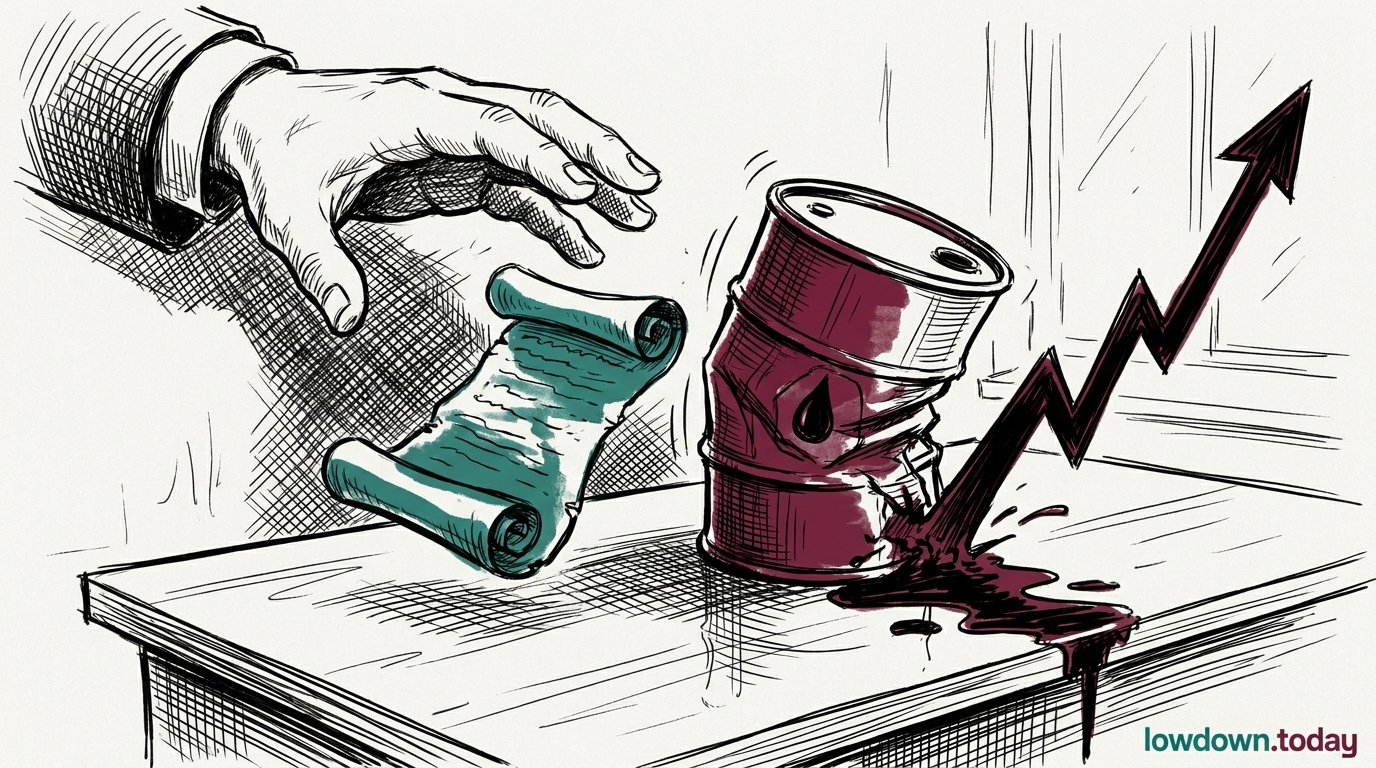
President Trump announced that the US Development Finance Corporation will provide political risk insurance for all maritime trade in The Gulf, with Navy escorts through the strait of Hormuz if required. The target is not Iran's navy. It is the insurance market.

After three major Protection & Indemnity clubs — American Steamship Owners Mutual, London P&I, and Skuldcancelled war risk coverage last week , the commercial mechanism for Gulf shipping collapsed. Without P&I insurance, vessels cannot be financed, flagged, or operated by any major shipping line. The effect was more complete than a naval blockade: vessel traffic through Hormuz fell 80% , and VLCC daily freight rates hit $423,736 per day — an all-time record exceeding the 1991 Gulf War peak . Iran's strategy of raising costs across dispersed targets had found its most effective lever not in missile salvos but in actuarial tables.

Government-backed War risk coverage for commercial shipping at this scale has not been deployed since the US war risk insurance Act of 1914, passed in the opening weeks of the First World War when European insurers withdrew from transatlantic routes. Operation Earnest Will (1987–88) provided Navy escorts for reflagged Kuwaiti tankers during the Iran-Iraq tanker war, but Washington did not underwrite the insurance itself. The Earnest Will precedent is instructive in another respect: 126 vessels were escorted over fourteen months, and the operation still produced the mining of USS Samuel B. Roberts and the accidental shootdown of Iran Air Flight 655 — 290 civilians killed. Military escorts through contested waters carry operational risks that compound over time.

The scheme's limitation defines its politics. Coverage applies to US-aligned shipping under US or allied flags. Chinese, Russian, and Indian tankers operating under separate commercial arrangements are not automatically included. Roughly 60% of Gulf oil exports flow to Asia, not to the United States or Europe. The architecture creates an insured lane for Western-aligned commerce and uninsured passage for everyone else — at the precise moment when Asian economies face the sharpest energy price exposure. Brent Crude had risen from approximately $73 before the strikes to $85–90 per barrel ; European gas prices nearly doubled . Beijing has not commented. Oil prices initially fell on the announcement — a market bet that some shipping will resume, not that the underlying risk has changed. The two-tier structure also creates a de facto incentive system: countries that align with Washington get insured passage; countries that do not, pay the war premium themselves. Whether that is trade policy dressed as maritime security or maritime security with trade policy consequences depends on which capital is reading it.

Deep Analysis

In plain English

Insurance is what makes global shipping function: without it, banks will not finance ships and companies cannot operate them legally. When private insurers pulled out of the Gulf last week, they closed the Strait more effectively than any naval blockade could. The US government is now offering to act as insurer itself — but only for ships from friendly countries. China, India, and others that depend on Gulf oil for most of their energy supply must either find their own insurance arrangements or accept US terms to access the covered lane. The initial fall in oil prices suggests markets believe some supply will flow again; the question is how much, and at what political cost.

Deep Analysis
Synthesis

The two-tier structure functions as a coercive instrument as well as a protective one. Access to the insured lane requires alignment with US policy — giving Washington leverage over Asian importers who have no comparable alternative. If Beijing responds by establishing a PRC-backed insurance and escort arrangement (analogous to its informal support for Russian oil tankers post-2022), the result is a formal bifurcation of Gulf maritime order along geopolitical lines, with oil priced and traded in two separate commercial ecosystems. The Hormuz crisis would then have accelerated a de-dollarisation of Gulf crude trade that was previously a long-run theoretical risk.

Root Causes

The proximate trigger for insurance withdrawal was the UK Joint War Committee's designation of the Persian Gulf as a high-risk area, which automatically activates exclusion clauses embedded in standard P&I club policies. This is a private-market mechanism that operates faster than any government response — Lloyd's-market insurers have no discretion once the JWC designation is in force. Reversing the designation requires a formal JWC review, which typically lags the security situation by weeks. The US programme does not address the JWC designation; it works around it.

Escalation

The Navy escort commitment creates sustained direct-contact risk between US and IRGC naval forces in the Strait. IRGC doctrine for asymmetric harassment — fast-boat swarms, limpet mines, drone attacks — is designed to impose costs without triggering a formal war response, and has been rehearsed in the Strait repeatedly since 2008. The commercial insurance backstop raises the US political cost of withdrawal: once DFC coverage is live and vessels are transiting under escort, any retreat hands Iran a demonstrable victory over US credibility. Escalation risk is therefore asymmetric — Iran can probe without fully committing, while US withdrawal becomes progressively harder.

What could happen next?
1 consequence2 risk1 precedent1 opportunity
  • Consequence

    Asian importers dependent on Gulf oil face an immediate binary: accept US alignment conditions for insured passage or operate uninsured at prohibitive cost, accelerating their search for alternative supply and insurance arrangements.

    Immediate · Assessed
  • Risk

    Direct US–IRGC naval contact under escort operations creates a standing escalation risk: IRGC asymmetric harassment could trigger a kinetic exchange without either side intending full-scale naval war.

    Short term · Assessed
  • Precedent

    Using the DFC as a war-risk insurer sets a precedent for state-backed commercial insurance as a geopolitical instrument — future administrations inherit a tool for weaponising market access in conflict zones.

    Long term · Suggested
  • Risk

    If China establishes a parallel PRC-backed insurance and escort framework, Gulf oil trade bifurcates into two commercial ecosystems, accelerating structural de-dollarisation of energy markets.

    Medium term · Suggested
  • Opportunity

    Gulf states — particularly Saudi Arabia and the UAE — could leverage Western escort dependency to extract security guarantees or policy concessions from Washington on unrelated issues.

    Short term · Suggested
First Reported In

Update #17 · IRGC installs Khamenei's son as leader

CNBC· 4 Mar 2026
Read original
Causes and effects
This Event
US Gulf shipping cover for allies only
The announcement addresses the insurance vacuum that shut the Strait of Hormuz more effectively than Iranian missiles. But by covering only US-aligned shipping, it creates a two-tier maritime order that excludes the Asian economies most dependent on Gulf oil — a structural tension with no precedent in modern energy markets.
Different Perspectives
International human rights monitors (NetBlocks, IHR, Hengaw)
NetBlocks recorded 1,704 cumulative hours of near-total internet blackout for roughly 90 million Iranians on Day 74, while IHR documented ongoing executions under emergency provisions. These organisations are the only active monitoring windows into a civilian population cut off from the global internet for 71 consecutive days.
UK / France coalition
The Royal Navy confirmed HMS Dragon's Hormuz deployment on its own website on 11 May, converting a press-reported presence into declared force posture; UK and French defence ministers hosted a coalition meeting the same day. Britain and France are now the only named contributors to a Hormuz escort mission all five allies Trump originally asked had declined.
Saudi Aramco / Gulf producers
Saudi Aramco CEO Amin Nasser warned on 11 May that a Hormuz closure could remove 100 million barrels of weekly supply from global markets (roughly 15 million barrels per day for a week), a figure that dwarfs any OPEC+ swing capacity. The warning functions as both a price-floor signal and a public pressure on Washington to protect transit.
Beijing / Chinese Government
China has not publicly acknowledged the four Hong Kong-registered entities designated on 11 May or extended MOFCOM's Blocking Rules cover to HK-domiciled firms. Xi Jinping hosts Trump on 14–15 May having already de-risked state-bank balance sheets via NFRA's quiet loan halt, entering the summit partially compliant before any negotiation.
Tehran / Iranian Government
Foreign Minister Araghchi described Iran's 10-point counter-proposal as 'reasonable and responsible' via spokesman Baqaei on 11 May, and widened the mediator pool by meeting Turkish, Egyptian, and Dutch counterparts in a single day. Tehran is buying procedural runway while Trump's verbal rejection went unmatched by any written US counter.
Trump White House
Trump White House
Trump called the ceasefire 'on massive life support' and dismissed Iran's 10-point counter-proposal as 'a piece of garbage' on 11 May, while departing for Beijing two days later with no signed Iran instrument to show Congress. The verbal maximum and the paper void coexist: the administration is running a legal pressure campaign through Treasury while the president free-lances the rhetoric.