Skip to content
You can now search across every topic, entity and event.What's new
Iran Conflict 2026
7MAY

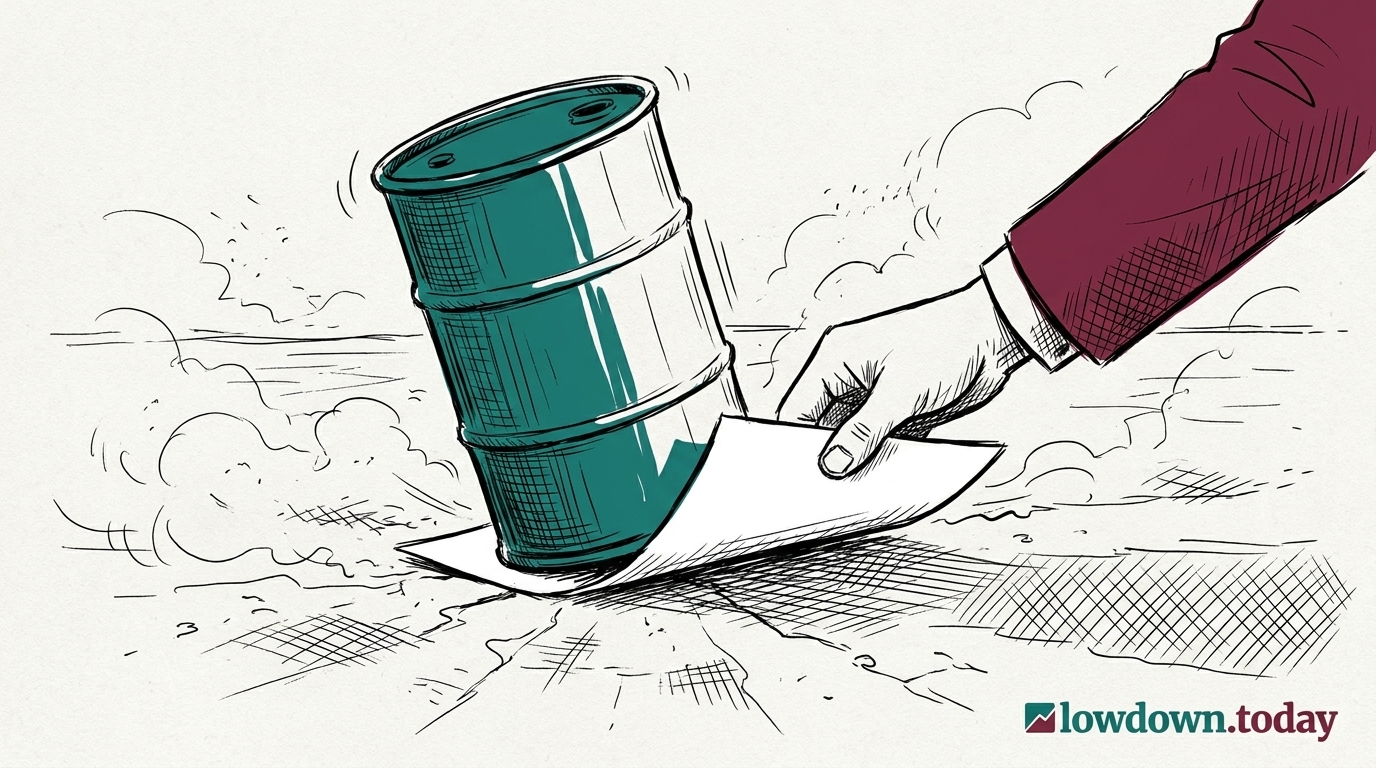
Kyiv moves the oil war to the Black Sea

2 min read
12:43UTC

Ukrainian drones struck the Caspian Pipeline Consortium terminal at Novorossiysk on 6 April, extending an anti-oil campaign that had worked the Baltic ports to year-low throughput.

ConflictDeveloping
Key takeaway

Kyiv accepted a diplomatic cost to extend the oil strike map past the Baltic.

Ukrainian drones struck the Caspian Pipeline Consortium terminal at Novorossiysk on 6 April, followed by a hit at Taman 1. The strikes carry the anti-oil fight into terminals that Ukraine's earlier Baltic campaign had left alone. Moscow scrambled to reroute crude through Vysotsk and Taman after Ust-Luga and Primorsk lost capacity in late March.

The Baltic ports are partially back on line. Ust-Luga resumed crude loading on 5 April, but Primorsk berths dropped from ten to four, and combined daily throughput fell to about 115,000 tonnes, a year-low 2. That partial recovery is exactly the dynamic the Iran war already complicated: the Russia-Iran corridor still runs, and Urals hit $123 a barrel earlier in April , offsetting the 43% Baltic volume drop with a price lift Ukraine cannot influence.

The southern expansion carries a different diplomatic risk than the Baltic strikes did. The CPC terminal's Chevron and ExxonMobil shareholders triggered a State Department demarche addressed separately elsewhere in this briefing. Kyiv continued striking after receiving the warning, accepting a commercial-channel diplomatic cost to keep the strike map expanding rather than retreat to Baltic assets with no American interest register.


Deep Analysis

In plain English

Ukraine has been attacking Russia's oil export infrastructure to cut revenue that funds the war. The 6 April strike at Novorossiysk on the Black Sea expanded that campaign beyond the Baltic coast, where Ukraine has been hitting terminals for months. The Baltic terminals have partially recovered: Ust-Luga resumed loading on 5 April, but at year-low throughput. The Black Sea expansion brought the campaign to a terminal partly owned by Chevron and ExxonMobil, which prompted the US State Department to warn Ukraine to stop. This created a direct conflict between Ukraine's military strategy and US energy company interests.

What could happen next?
  • Risk

    Continued Novorossiysk strikes risk triggering US suspension of other forms of military support, creating a forced choice between the oil campaign and broader US assistance.

  • Consequence

    Baltic oil throughput at 115,000 tonnes per day, a year-low, represents a real constraint on Russian export volumes but is partially offset by the Urals price surge driven by the Iran war (ID:2016).

First Reported In

Update #12 · Three narrowings of US support for Kyiv

Kyiv Independent· 11 Apr 2026
Read original
Different Perspectives
Oil market and P&I insurers
Brent cleared $87 intraday only once CENTCOM's blockade became physical rather than declared, even though P&I Clubs had already excluded Hormuz war risk a week earlier on 7 July: capital hedged ahead of enforcement, but prices moved only after it.
UAE reporting
UAE reporting
UAE reporting placed the Omani tanker deaths at one seafarer against the International Maritime Agency's count of two, the first time in this war that a Gulf state's casualty figures have diverged from an international monitor's.
Jordan
Jordan
Iranian strikes reached Jordan again on 14 July as part of the Gulf-wide retaliation for the Hormuz blockade, extending the conflict's geographic footprint to a state with no direct stake in the strait itself.
Bahrain
Bahrain
Bahrain sounded air-raid sirens on 14 July during Iran's Gulf-wide retaliation, the same day CENTCOM's blockade order and fourth night of strikes pushed the conflict's physical reach into the wider Gulf littoral.
Kuwait
Kuwait
Kuwait intercepted Iranian missiles and drones on 14 July as Tehran's blockade retaliation reached Gulf states beyond Iran's immediate shoreline, confirming Kuwaiti airspace now sits inside Iran's retaliatory envelope.
Oman
Oman
Oman absorbed the war's first tanker casualties in its own waters on 14 July, with two supertankers disabled and seafarers killed, putting the sultanate's shipping lanes directly in the path of the blockade fight for the first time.



