Skip to content
You can now search across every topic, entity and event.What's new
Iran Conflict 2026
6MAY

Brent round-trips 9% down and 7% up in a weekend

3 min read
10:13UTC

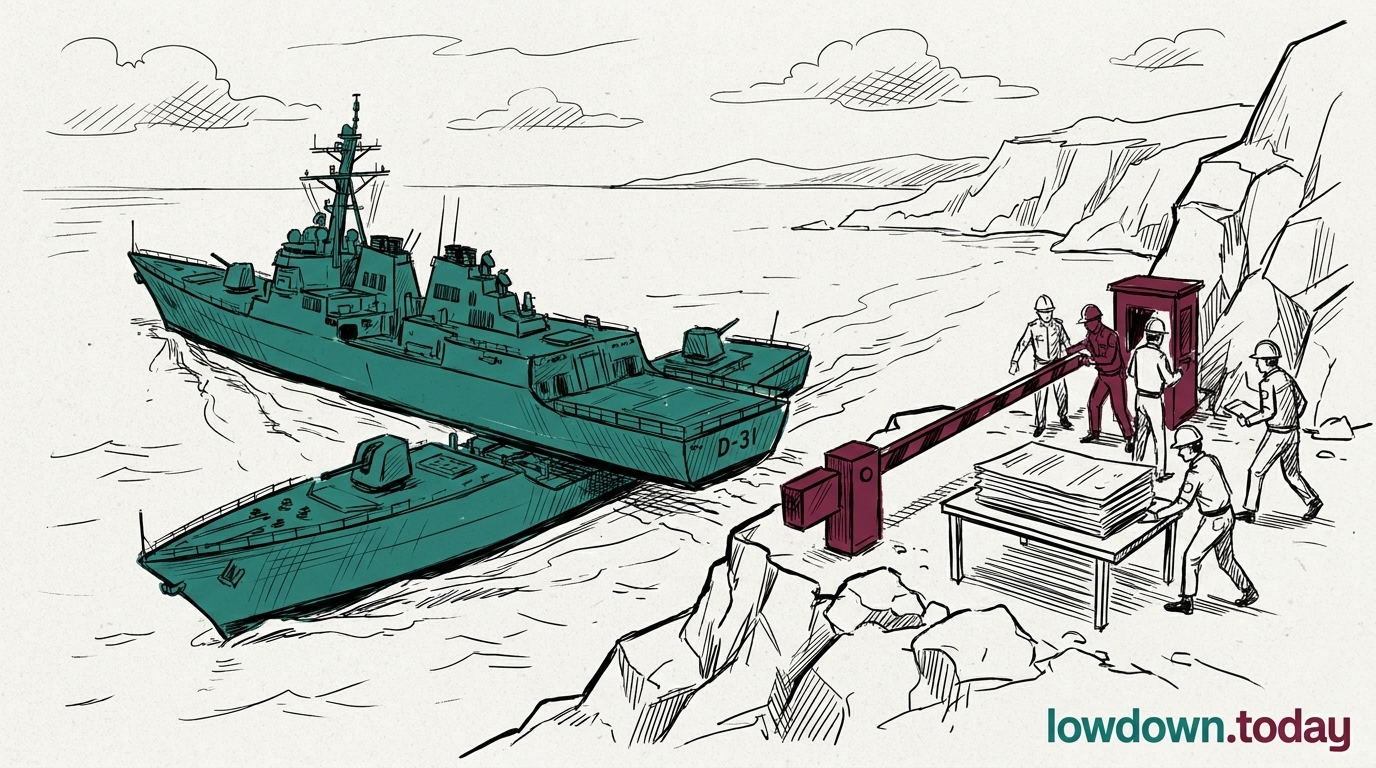
Oil fell nine per cent on Friday after Araghchi's corridor announcement, then rebounded seven per cent on Monday once the IRGC seizures proved the corridor was void.

ConflictDeveloping
Key takeaway

Brent's weekend round-trip priced the distance between an Iranian foreign-ministry clearance and an IRGC clearance.

Brent Crude closed up roughly 7% to $96.88 on Monday 20 April after a 9% drop on Friday 18 April, the sharpest single-day round-trip of the war, per Euronews trading data. Between Friday close and Monday open the underlying supply picture had not changed; the market's read on whose paper bound the strait had.

The Friday drop followed Foreign Minister Abbas Araghchi's civilian corridor announcement and a brief window of reopening optimism. The Monday rebound followed two weekend developments that voided that corridor: the IRGC tanker strikes and the subsequent US seizure of the Iranian-flagged Touska. Traders had priced Friday on an Iranian clearance system they could take at face value; by Monday morning Guard Corps enforcement had falsified that assumption and Brent marked down the recovery as void.

For European drivers that round-trip translates to roughly 4 to 5 pence per litre of flex at the pump on a lag of two to three weeks, once wholesale contracts reprice and retail margin adjusts. For Protection and Indemnity (P&I) insurance clubs, the Friday-to-Monday whipsaw adds war-risk premium on every hull that has transited or will transit Hormuz while the divergence holds, because the clubs price on the most recent kinetic data point, not the most recent diplomatic announcement. A counter-view from energy strategists at Goldman Sachs is that the supply floor under Brent remains the physical volume still moving despite the blockade; that reading is compatible with this round-trip, because the volatility is on the clearance system rather than on confirmed outages.

Deep Analysis

In plain English

Oil prices fell sharply on Friday after Iran's foreign minister announced the Strait of Hormuz was open for shipping. Then they rose almost as sharply on Monday after Iran's Revolutionary Guard fired on Indian ships that had been told they could cross, proving that the foreign minister's announcement did not actually open the strait. In two days, the price of a barrel of oil went down 9% and then back up 7%. That swing had nothing to do with how much oil was actually in the ground or flowing through pipes. Both moves were driven entirely by uncertainty about which Iranian official controls the strait. On Friday the answer appeared to be the diplomat; by Monday it was clear the answer is the general.

Deep Analysis
Root Causes

The 16-percentage-point round-trip traces to a single structural vulnerability in how oil markets process split-authority enforcement: futures markets can only price one authoritative voice per trading session.

Araghchi's Friday corridor announcement cleared as the authoritative signal because it came from the named foreign minister of a sovereign state. The IRGC Navy's Tabnak order, published in Farsi two days earlier, had not been processed as load-bearing by non-Farsi-reading algorithmic trading systems.

By Monday, IRGC enforcement of the Sanmar Herald firing and the Touska seizure made the Tabnak order legible to English-language market infrastructure. Friday's price reflected the civilian signal; Monday's price reflected the Guard Corps enforcement reality. The same physical strait, two trading sessions, two incompatible prices.

What could happen next?
  • Consequence

    Oil markets will reprice every future Iranian civilian announcement against the probability that IRGC enforcement overrides it, adding a permanent institutional-split premium to Hormuz-origin crude.

First Reported In

Update #74 · Two unsigned rulebooks collide at Hormuz

Euronews· 20 Apr 2026
Read original
Causes and effects
This Event
Brent round-trips 9% down and 7% up in a weekend
The market mispriced Iranian authority across the weekend and corrected inside one session. For European consumers that volatility flows through to the pump on a two-to-three week lag, and for P&I clubs it resets the war-risk premium on every Hormuz hull.
Different Perspectives
Oil markets and Lloyd's of London
Brent fell to $89.25 on ceasefire probability, not new barrels, with traders voting for Trump's deed over Tehran's denial. Lloyd's has not repriced Hormuz war-risk cover because its trigger requires a UN Security Council resolution or government certification, so tanker insurance costs remain elevated regardless of the spot move.
Pakistan and Qatar mediators
Pakistan's Mohsin Naqvi was in Tehran for his second visit in under a week, using the Pakistan-Qatar channel that delivered April's ceasefire after an identical public-denial cycle. The channel carries both civilian and military buy-in from Islamabad, the only configuration Iran's split command cannot dismiss as a partial signal.
India
India
India summoned the US Deputy Chief of Mission after three Indian sailors were killed aboard MT Settebello, the first formal grievance from a major non-belligerent directed at US enforcement. Indian seafarers supply roughly 12 per cent of the global maritime workforce; their presence on third-flag Gulf tankers is structurally inevitable regardless of bilateral diplomacy.
Islamic Revolutionary Guard Corps (IRGC)
The IRGC declared Hormuz closed on 11 June while civilian negotiators were on the same mediation channel, then issued no public comment on the MoU framework. Its silence on the framework, rather than any foreign ministry statement, is the operative approval signal; the corps' unilateral Hormuz closure shows it did not treat the diplomatic track as binding on its operations.
Iran foreign ministry (Baghaei)
Esmail Baghaei told IRNA that reports of a finalised deal were 'merely speculation' and that Iran had 'not yet made a final decision'. The denial is structurally identical to Iranian foreign ministry statements during the April ceasefire talks, which produced a binding text within 48 hours of the same language.
Trump administration / CENTCOM
Trump cancelled the third strike day and called the MoU 'very strong' and almost ready to sign, while CENTCOM kept tanker enforcement running in the same 24-hour window. The administration is simultaneously withdrawing the military pressure it claims drove the deal and sustaining the enforcement campaign it is trying to trade away.