Skip to content
You can now search across every topic, entity and event.What's new
Iran Conflict 2026
21APR

Russia GL-134B extended as Iran GL-U lapses

3 min read
10:51UTC

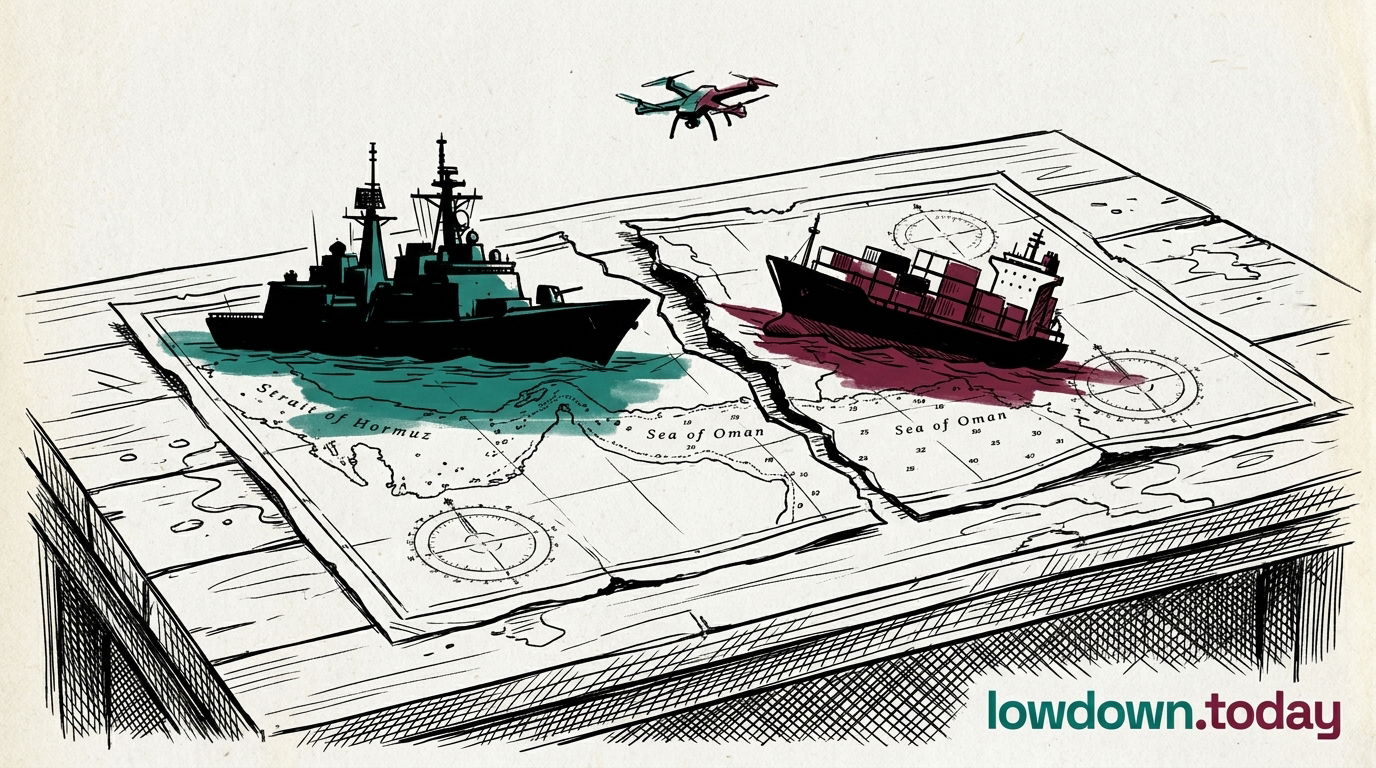
Treasury signed a seaborne-oil waiver for Russia to 16 May on the same Saturday it allowed the parallel Iranian authorisation to expire, producing a Russia-yes, Iran-no asymmetry in signed US policy text.

ConflictDeveloping
Key takeaway

Treasury's 19 April paperwork draws the Russia-yes, Iran-no line into signed policy text for the first time.

The US Treasury extended GL-134B, the OFAC General License authorising Russian seaborne-oil transactions, to 16 May 2026 on the same calendar day Iran's GL-U was allowed to lapse 1. Treasury Secretary Scott Bessent oversees both files; either renewal could have been declined or signed at his discretion. Treasury's choice to sign one and not the other on a single Saturday produced a policy act rather than a scheduling artefact.

Russia's side of the ledger had a readable expiry. GL-134A expired on 11 April and an extension had been widely expected since ; Treasury's silence between 14 April and 19 April made the asymmetry predictable rather than surprising . When Treasury did break silence, it broke it only for Russia. GL-134B now covers Russian seaborne-oil transactions through 16 May; GL-U covers no Iranian tanker past midnight Washington time.

For crude buyers, Saturday's paperwork produces a legally two-tier oil market. An Indian state refiner loading Russian crude this week retains signed cover under GL-134B; the same refiner loading Iranian crude loses it under the GL-U lapse and picks up secondary-sanctions exposure. The instruments governing the two flows are no longer symmetrical, and the asymmetry is now on paper that compliance teams, banks and foreign ministries can read without interpretation.

Deep Analysis

In plain English

Sanctions are legal rules that say 'you cannot do business with country X without special permission.' The US government grants those permissions through documents called General Licenses. On 19 April, the US did two things at the same time. It let Iran's special permission expire ; meaning ships carrying Iranian oil are now operating without legal cover. And it extended Russia's special permission through 16 May, meaning ships carrying Russian oil are still fully legal. Both decisions came from the same department ; the US Treasury ; on the same day. It is the first time US government documents show Iran and Russia being treated this differently at exactly the same moment, written into official text anyone can read.

Deep Analysis
Root Causes

GL-134B's extension to 16 May reflects the Trump administration's Ukraine-theatre calculus: ratcheting Russia energy sanctions during active Ukraine ceasefire diplomacy would remove leverage and signal bad faith to Moscow. Treasury's operational logic is to keep Russia sanctions pressure below the threshold that collapses ongoing talks.

The asymmetry's structural root is that GL-U and GL-134B were on different legal tracks from inception: GL-U was a war-emergency bridge instrument with a hard sunset; GL-134B was a rolling Russia waiver maintained across multiple renewal cycles. The same OFAC desk renewed one and allowed the other to lapse ; a decision that appears in the Federal Register as simultaneous administrative actions taken on the same calendar day.

What could happen next?
  • Precedent

    The first signed Russia-yes Iran-no asymmetry in US sanctions policy text gives trading partners a legally verifiable basis to distinguish their Russian and Iranian crude exposure.

    Immediate · 0.9
  • Consequence

    Countries like India that buy both Russian and Iranian crude face a regulatory wedge: maintaining Russian purchases while scaling back Iranian ones to avoid secondary-sanction exposure.

    Short term · 0.78
  • Risk

    If GL-134B's 16 May extension lapses without renewal while Iran negotiations remain unresolved, both Russian and Iranian crude simultaneously lose US legal cover ; a compound supply shock not yet priced by markets.

    Medium term · 0.62
First Reported In

Update #73 · Russia yes, Iran no: Treasury signs only one waiver

The White House· 19 Apr 2026
Read original
Different Perspectives
International Group of P&I Clubs
The Group has kept its Hormuz war-risk exclusion in force through the entire shipping recovery, even as London hull war-risk premiums fell to about 2% of vessel value. A burning LNG carrier off Limah is now the fresh case for holding that line, with mutual pooling meaning one hit reprices the strait for every owner at once.
Jordan
Jordan
Jordan's government said no threats existed at Aqaba hours before Iranian missiles landed there, and has not addressed the IRGC's claim that Jordanian civilians and soldiers supplied targeting intelligence for the strike. Amman hosts forces it does not command and is saying as little as it can.
United States (CENTCOM)
The Pentagon named two of the seventeen American dead, 1st Lieutenant Tyler Feehan and Private Isabella Gonzales, both killed at Jordan's Muwaffaq Salti Air Base, days after its Amman embassy had warned citizens away from Aqaba's airport and seaport. Washington is naming its own cost while flagging threats it declines to attribute publicly.
Iran
Iran
Iran said on Monday it disabled two oil tankers crossing the Strait of Hormuz without its permission, asserting a right to license passage through the strait it borders. Tehran named neither vessel, and CENTCOM had already denied a comparable Iranian claim on 18 July.
Qatar
Qatar
Qatar moved from summoning Iran's deputy ambassador on 8 July to a dated written claim at the UN Security Council thirteen days later, citing Resolution 2817 and reserving its Article 51 right of self-defence. Doha is building a permanent record while still hosting CENTCOM's forward headquarters and mediating with Tehran.
CENTCOM
CENTCOM
CENTCOM confirmed a third American service member died in northern Iraq on 19 July clearing unexploded ordnance from a downed Iranian drone, and recovered unidentified remains at Muwaffaq Salti Air Base in Jordan. The Pentagon has framed its Khuzestan strikes as degrading IRGC capacity, a rationale that stretches to explain a reactor foundation with no nuclear material in it.