Skip to content
You can now search across every topic, entity and event.What's new
Iran Conflict 2026
21APR

Northwood summit drafts Hormuz ROE without US

3 min read
10:51UTC

British and French planners are convening at the UK's Permanent Joint Headquarters on 20 April to draft Hormuz rules of engagement for the 40-nation Macron-Starmer maritime mission, with the United States not attending.

ConflictDeveloping
Key takeaway

Hormuz rules of engagement are being written at a British headquarters by a European coalition without the United States.

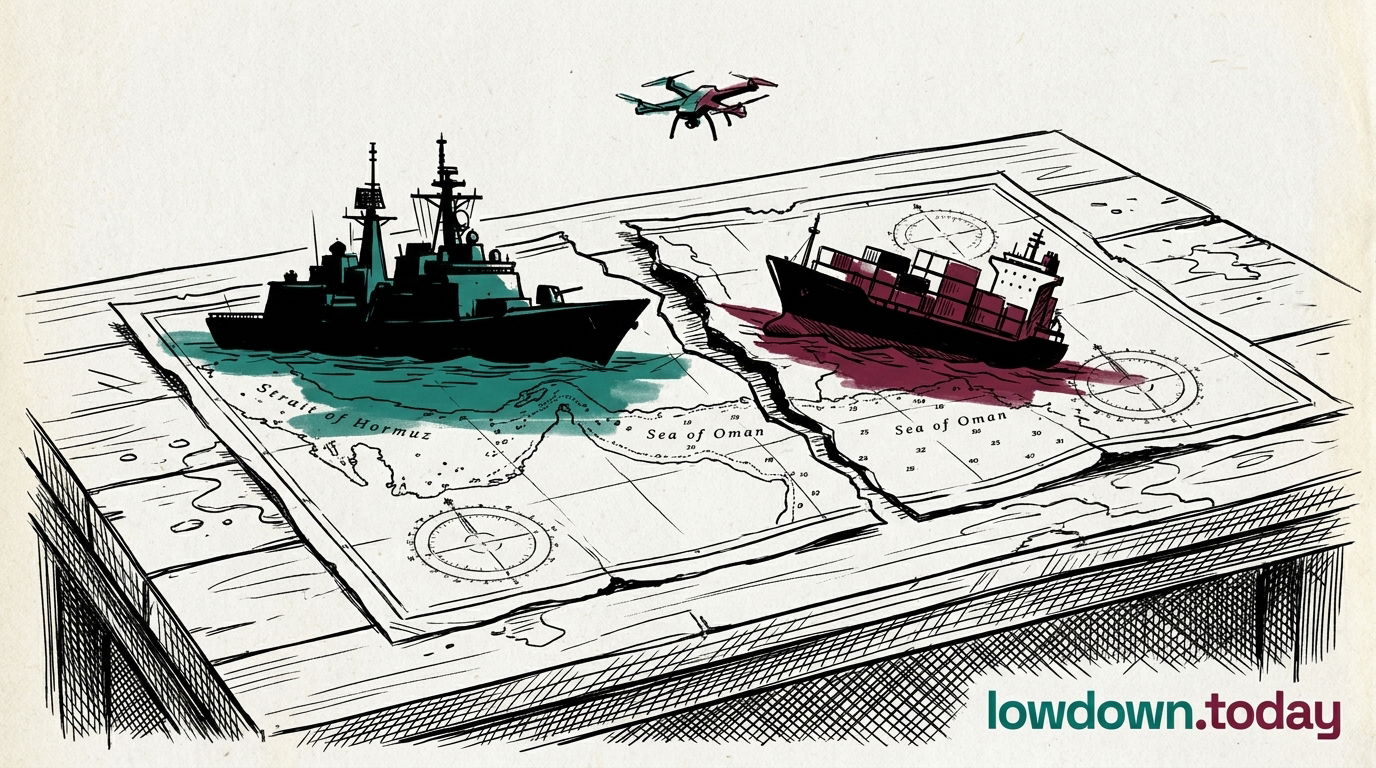
British and French planners are scheduled to convene the Northwood summit at Permanent Joint Headquarters (PJHQ), the UK's operational military headquarters in Northwood, on 20 April to draft Hormuz rules of engagement for the 40-nation Emmanuel Macron and Keir Starmer maritime mission 1. The United States has not been invited to the planning table.

Northwood was scheduled as the operational follow-on to the Paris 40-nation Hormuz conference of 17 April . Paris produced a posture; Northwood converts the posture into rules of engagement that naval commanders can carry to sea . The summit is authored by two European powers, hosted at a British operational headquarters, and staffed by planners from a coalition that has since expanded to 51 nations. Washington's absence is not a scheduling accident; it is the second Hormuz planning event in three days from which the US has been left out.

The practical question for Monday's tape is what rules the Northwood summit returns to the coalition. A maritime mission operating without published rules of engagement is a flag list; a mission with published rules is a posture. If the summit produces rules, Gulf states will have a document to sign on to ahead of the 22 April ceasefire expiry. If it does not, the 40-nation mission remains political architecture. Either way, a Hormuz security architecture authored by European powers without US participation is a new shape for the strait, and one that begins its operational life inside the same week GL-U lapses and the ceasefire is due to expire.

Deep Analysis

In plain English

Britain and France are planning a military mission to escort ships through the Strait of Hormuz ; the narrow waterway that connects the Persian Gulf to open ocean. On 20 April, military planners from Britain and France were meeting at the UK's Permanent Joint Headquarters in Northwood, a suburb of London, to write the rules for how that mission would operate. 51 nations have joined the coalition behind this mission. The United States is not one of them ; Washington has its own separate blockade operation and was not at the Northwood planning table. Northwood's planners face a specific operational problem: the IRGC granted radio clearance to two Indian tankers on 18 April and then opened fire on them anyway. Escort ships that can only respond after an attack has begun ; not before ; may arrive too late to stop IRGC gunboats that use the clearance-then-fire sequence.

Deep Analysis
Root Causes

The absence of the United States from Northwood reflects a structural reality established at the Paris conference on 17 April: Washington characterised its Hormuz posture as a blockade enforcement operation, not a freedom-of-navigation mission, making joint planning with European escorts who seek to challenge the blockade operationally incoherent.

The 40/51-nation mission's 'strictly defensive' mandate is a product of the widest-coalition consensus achievable: Saudi Arabia and Gulf Cooperation Council states have not confirmed participation, making a more assertive mandate diplomatically impossible without alienating regional partners whose port access the mission needs.

What could happen next?
  • Risk

    A 'strictly defensive' Northwood rules-of-engagement framework cannot prevent IRGC grant-and-fire attacks that begin after radio clearance ; the rules as described are structurally mismatched to the demonstrated threat.

  • Precedent

    51 nations drafting Hormuz naval rules of engagement without US participation marks the first independent European-led Gulf military planning exercise ; a precedent for autonomous European security action regardless of its operational outcome.

First Reported In

Update #73 · Russia yes, Iran no: Treasury signs only one waiver

CBS News· 19 Apr 2026
Read original
Different Perspectives
Jordan
Jordan
Jordan's armed forces downed three Iranian missiles on Tuesday with no casualties, a second successful interception since the 19 July strike on Muwaffaq Salti that killed three US service members. Amman has neither confirmed nor denied ISW's assessment that its intelligence sharing is a Russia-China cover story.
Operation Aspides
Operation Aspides
Operation Aspides has not needed to intervene against the Houthi Bab al-Mandab embargo: six vessels, including the Chinese VLCC Xin Long Yang, reversed course after radio hailing alone, with no vessel boarded, fired on or stopped by force.
Pete Hegseth, US Secretary of War
Hegseth told the Senate Appropriations Committee the campaign has cost $37.5 billion so far, without saying whether the figure is obligated, appropriated or incremental. It is the first cost Washington has put on the war, arriving as OMB seeks $87.6 billion for the wider supplemental.
Iran's IRGC and Artesh
Iran's IRGC and Artesh reported destroying radar and Patriot installations at four Gulf bases on Tuesday night, the fifth dated iteration of the same claim against the same sites since 13 July. Neither Kuwait nor Bahrain has named or confirmed a single base as destroyed.
Saudi Arabia
Saudi Arabia
Riyadh has pressed Washington to end the Hormuz blockade specifically to remove Tehran's incentive for the Houthis to escalate Bab al-Mandab beyond radio warnings. It treats the embargo as coordinated pressure on Saudi shipping tied to the Hormuz campaign, not an independent Yemeni action.
Kuwait's Ministry of Electricity, Water and Renewable Energy and defence ministry
Kuwait reported power and desalination stations struck for a fourth consecutive day and four cruise missiles plus 21 drones intercepted since dawn Wednesday, while its defence ministry statement used only the word interception, never destruction. Kuwait has confirmed no Iranian claim of a destroyed base.