Skip to content
You can now search across every topic, entity and event.What's new
Iran Conflict 2026
20APR

Lebanon is where the deal cracks first

3 min read
10:10UTC

The IRGC says Israel breached the Lebanon ceasefire 84 times in two days; Iran's military threatened retaliation while the US and Iran dispute whether the deal even covers Hezbollah.

ConflictDeveloping
Key takeaway

Lebanon's disputed scope gives Iran a ready violation claim before Friday's Geneva ceremony.

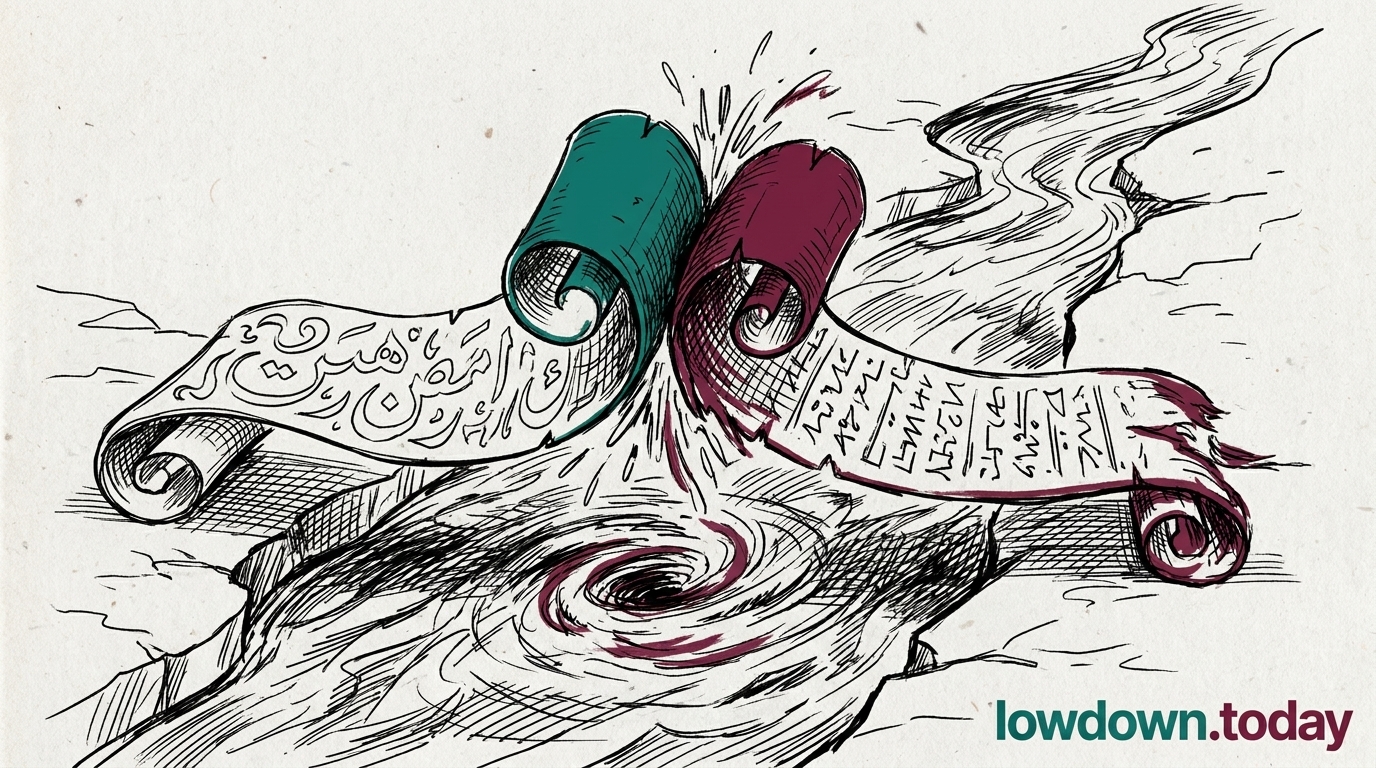
Lebanon was the one front the memorandum was meant to quiet, and it is breaking the deal first. The Islamic Revolutionary Guard Corps (IRGC) says Israel violated the Lebanon ceasefire 84 times in two days 1; the Israel Defense Forces (IDF) confirmed intercepting Hezbollah rockets fired at its troops in the south . On Tuesday 16 June Iran's military command issued a formal threat of retaliation if Israel's southern Lebanon offensive continues 2. That threat, already on the record, is the fuse that can detonate the ceasefire before Friday's Geneva ceremony. Israel's Defence Minister says troops stay inside a 25-mile "security zone".

The two sides do not even agree the deal covers Lebanon. US Ambassador to Israel Mike Huckabee stated flatly that "Hezbollah is not included in the deal" 3; Iran and Pakistan insist it covers all fronts, Lebanon included. JD Vance has said both that the memorandum is "not conditioned on Israel withdrawing from Lebanon" and that it "envisioned a ceasefire that covers both Iran and Lebanon". Those two formulations cannot both hold.

The gap between them hands Iran's foreign minister Abbas Araghchi a ready-made violation claim to carry into Geneva. A ceasefire with no agreed scope is a ceasefire either side can declare broken at the moment it suits them, and Araghchi already holds the 84-violation count as his pretext. Israel's cabinet has separately repudiated the deal outright , so Lebanon is contested both across the front line and from inside Jerusalem's own government.

Deep Analysis

In plain English

Iran and the US signed a ceasefire, but they couldn't agree whether it covered the fighting in Lebanon between Israel and Hezbollah. The US ambassador to Israel said Hezbollah was not in the deal; Iran and Pakistan said it was. Meanwhile, the fighting continued: Iran claimed Israel broke the Lebanon ceasefire 84 times in two days, and Israeli troops confirmed they fired back at Hezbollah rockets. To make things more complicated, the US Vice President Vance made two different public statements about whether the deal required Israel to pull its troops out of Lebanon. He said both yes and no. That contradiction gives Iran an easy excuse to say the deal is already broken, before the formal ceremony has even happened on Friday.

Deep Analysis
Root Causes

Lebanon's ambiguous status in the MOU has a direct cause: Israel was excluded from the negotiations. Qatar, Pakistan, Saudi Arabia and Turkey brokered the text. None of them can commit Israel to a ceasefire.

Washington declined to make Israeli Lebanon withdrawal a precondition for US signatures. The result is a ceasefire text that both Iran and the US read to their domestic audiences as covering or excluding Lebanon, depending on which statement Vance made most recently.

What could happen next?
  • Risk

    Iran can invoke the MOU's violation clause over Lebanon ceasefire breaches before Friday's Geneva ceremony, using Vance's two incompatible statements as evidence of US bad faith.

  • Risk

    Without an explicit Lebanon annex with enforcement mechanisms, Israeli-Hezbollah exchanges provide Iran a permanent trigger to suspend MOU compliance throughout the 60-day nuclear window.

First Reported In

Update #130 · Trump signed the war over; it kept going

ABC News· 17 Jun 2026
Read original
Different Perspectives
Jordan
Jordan
Jordan's armed forces downed three Iranian missiles on Tuesday with no casualties, a second successful interception since the 19 July strike on Muwaffaq Salti that killed three US service members. Amman has neither confirmed nor denied ISW's assessment that its intelligence sharing is a Russia-China cover story.
Operation Aspides
Operation Aspides
Operation Aspides has not needed to intervene against the Houthi Bab al-Mandab embargo: six vessels, including the Chinese VLCC Xin Long Yang, reversed course after radio hailing alone, with no vessel boarded, fired on or stopped by force.
Pete Hegseth, US Secretary of War
Hegseth told the Senate Appropriations Committee the campaign has cost $37.5 billion so far, without saying whether the figure is obligated, appropriated or incremental. It is the first cost Washington has put on the war, arriving as OMB seeks $87.6 billion for the wider supplemental.
Iran's IRGC and Artesh
Iran's IRGC and Artesh reported destroying radar and Patriot installations at four Gulf bases on Tuesday night, the fifth dated iteration of the same claim against the same sites since 13 July. Neither Kuwait nor Bahrain has named or confirmed a single base as destroyed.
Saudi Arabia
Saudi Arabia
Riyadh has pressed Washington to end the Hormuz blockade specifically to remove Tehran's incentive for the Houthis to escalate Bab al-Mandab beyond radio warnings. It treats the embargo as coordinated pressure on Saudi shipping tied to the Hormuz campaign, not an independent Yemeni action.
Kuwait's Ministry of Electricity, Water and Renewable Energy and defence ministry
Kuwait reported power and desalination stations struck for a fourth consecutive day and four cruise missiles plus 21 drones intercepted since dawn Wednesday, while its defence ministry statement used only the word interception, never destruction. Kuwait has confirmed no Iranian claim of a destroyed base.