Skip to content
You can now search across every topic, entity and event.What's new
Iran Conflict 2026
20APR

Iran lost track of its own minefield

2 min read
10:10UTC

Tehran deployed at least a dozen mines in Hormuz and never mapped most of them. US intelligence officials told the New York Times and Wall Street Journal the minefield now sits beyond Iran's own reach.

ConflictDeveloping
Key takeaway

Iran cannot reopen Hormuz because it cannot find the mines it laid.

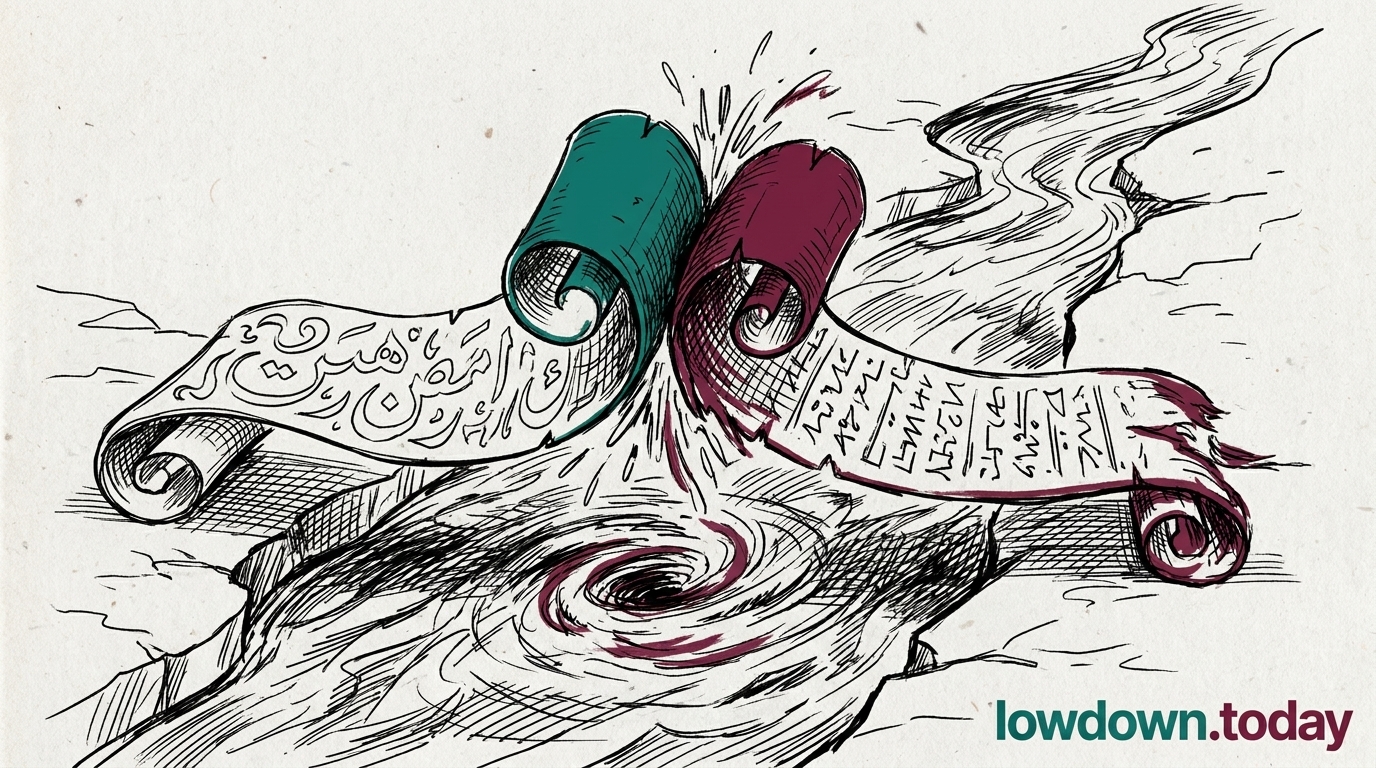
US intelligence officials told the New York Times and the Wall Street Journal this week that Iran deployed at least a dozen naval mines in the Strait of Hormuz during the opening weeks of the war and did not systematically track every placement 12. Some mines drifted from their original positions. Iranian authorities cannot reliably map, locate, or recover all of them, and Tehran lacks the capability to remove the mines once found. This is single-provenance US-intelligence reporting, relayed through two American papers; no non-American source has confirmed the assessment independently.

The two models identified are Maham-3, a moored mine with magnetic and acoustic sensors, and Maham-7, a seabed limpet-style device designed to evade sonar 3. US officials call Iran's mine-tracking failure "a key factor in Tehran's failure to meet demands from the Trump administration" to reopen the strait. The minefield has become an ungoverned obstacle Iran itself cannot clear.

The IRGC corridor charts Iran published on 9 April, directing traffic through channels near Larak Island , now read less as a coercive toll architecture than as a confession: Tehran does not know which channels are safe because it does not know where its own mines are. That confession reshapes the operational meaning of the toll regime that was producing 20 transits per day on 5 April . What looked like leverage on Monday looks like a trap on Friday.

Deep Analysis

In plain English

Iran laid sea mines — underwater bombs that detonate when a ship passes over or near them — in the Strait of Hormuz, the narrow waterway that most of the world's oil travels through. The problem is that Iran never properly recorded where each mine was placed, and some have since drifted from their original positions. That matters because the ceasefire deal requires Iran to reopen the strait. But Iran cannot safely reopen it if it does not know where its own mines are. Even if both sides want peace, the physical danger in the water does not go away because of a political agreement.

Deep Analysis
Root Causes

Iran's mine doctrine was designed for area denial, not for precision emplacement with recovery in mind. The IRGC's naval arm built the Maham series to be cheap, difficult to detect, and deniable — not to be retrievable. That doctrine made strategic sense as a deterrent against US carrier groups; it becomes a liability when the ceasefire demands Iran clear what it laid.

The second cause is institutional: the IRGC operates as a parallel naval command with limited integration with the regular Artesh navy, which has the only functional minesweeping vessels. Coordination between the two forces in active mine-laying operations was not systematically documented.

What could happen next?
  • Consequence

    Any ceasefire compliance demand that Iran 'open Hormuz' is physically unenforceable until a credible mine-clearance process is established by a third-party naval force.

    Immediate · 0.85
  • Risk

    An uncharted minefield increases the probability of an accidental detonation by a commercial vessel, which could trigger an insurance market withdrawal making the strait economically impassable even if politically agreed open.

    Short term · 0.75
  • Precedent

    If a multinational minesweeping mandate is eventually issued, the 1991 Gulf War precedent suggests clearance of an imprecisely-laid field in a deep-water strait could require six months or more even with full cooperation.

    Medium term · 0.7
First Reported In

Update #65 · Iran lost its own minefield

Daily Caller· 11 Apr 2026
Read original
Different Perspectives
Jordan
Jordan
Jordan's armed forces downed three Iranian missiles on Tuesday with no casualties, a second successful interception since the 19 July strike on Muwaffaq Salti that killed three US service members. Amman has neither confirmed nor denied ISW's assessment that its intelligence sharing is a Russia-China cover story.
Operation Aspides
Operation Aspides
Operation Aspides has not needed to intervene against the Houthi Bab al-Mandab embargo: six vessels, including the Chinese VLCC Xin Long Yang, reversed course after radio hailing alone, with no vessel boarded, fired on or stopped by force.
Pete Hegseth, US Secretary of War
Hegseth told the Senate Appropriations Committee the campaign has cost $37.5 billion so far, without saying whether the figure is obligated, appropriated or incremental. It is the first cost Washington has put on the war, arriving as OMB seeks $87.6 billion for the wider supplemental.
Iran's IRGC and Artesh
Iran's IRGC and Artesh reported destroying radar and Patriot installations at four Gulf bases on Tuesday night, the fifth dated iteration of the same claim against the same sites since 13 July. Neither Kuwait nor Bahrain has named or confirmed a single base as destroyed.
Saudi Arabia
Saudi Arabia
Riyadh has pressed Washington to end the Hormuz blockade specifically to remove Tehran's incentive for the Houthis to escalate Bab al-Mandab beyond radio warnings. It treats the embargo as coordinated pressure on Saudi shipping tied to the Hormuz campaign, not an independent Yemeni action.
Kuwait's Ministry of Electricity, Water and Renewable Energy and defence ministry
Kuwait reported power and desalination stations struck for a fourth consecutive day and four cruise missiles plus 21 drones intercepted since dawn Wednesday, while its defence ministry statement used only the word interception, never destruction. Kuwait has confirmed no Iranian claim of a destroyed base.