Skip to content
You can now search across every topic, entity and event.What's new
Iran Conflict 2026
10APR

Eight days, no proof of life for Mojtaba

3 min read
08:05UTC

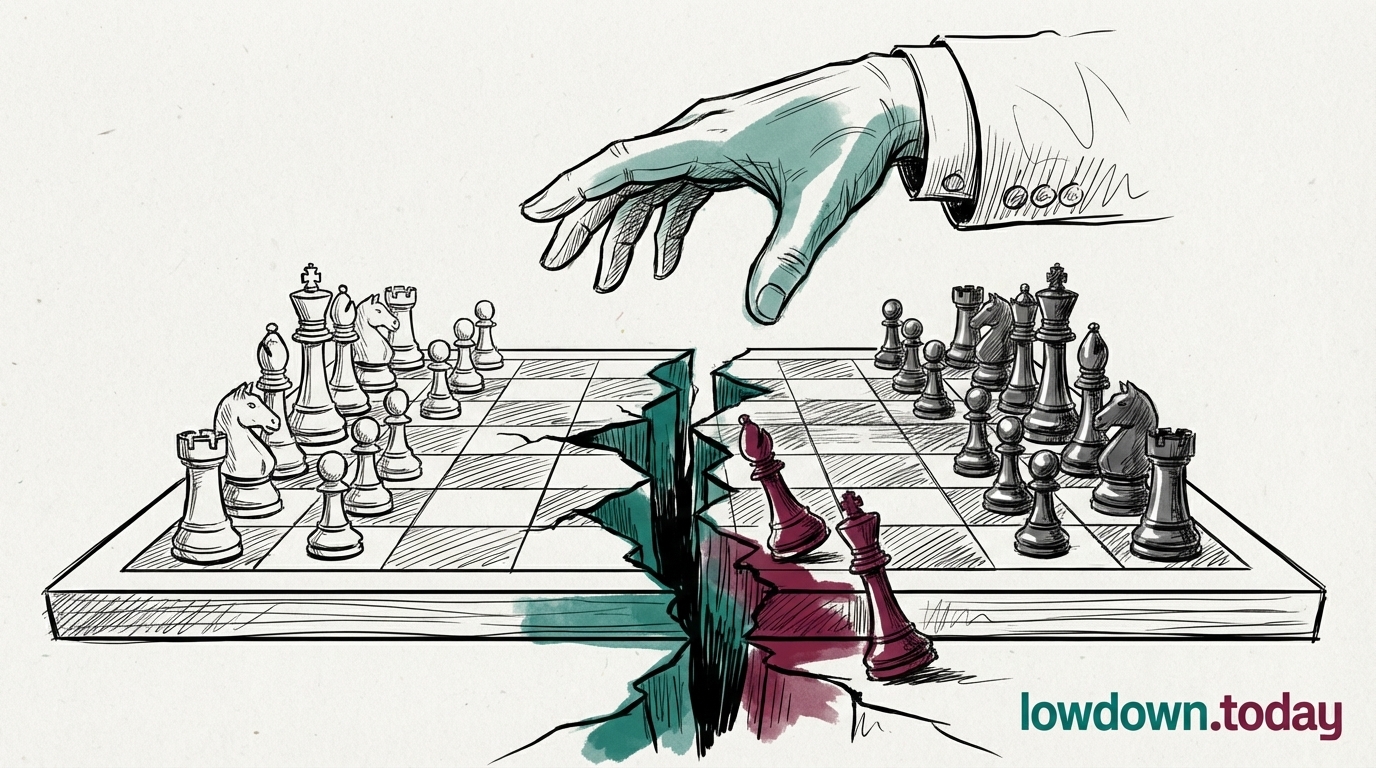
Mojtaba Khamenei has not been seen, heard, or verified alive since taking power eight days ago. The IRGC, which pledged complete obedience to him, may be governing without any civilian authority above it.

ConflictDeveloping
Key takeaway

Eight days without video confirmation makes this the longest unverified leadership installation in Iran's post-revolutionary history.

Trump told reporters on Monday: "We don't know if he's dead or not" regarding Mojtaba Khamenei, Iran's newly installed Supreme Leader 1. He added that "a lot of people are saying that he's badly disfigured" and that Khamenei "lost his leg." In a separate Fox News interview: "I think he's probably alive in some form" 2. A written statement was issued in Khamenei's name the same day. He has not appeared publicly — no video, no audio, no verified photograph — in the eight days since the Assembly of Experts installed him on 9 March.

Trump's remarks extend a line that Defence Secretary Hegseth opened on 13 March, when he claimed Khamenei was "wounded and likely disfigured" from the 28 February opening strikes . The sole prior communication attributed to the new Supreme Leader was a statement read aloud by another person while a photograph was displayed on state mediaIran International reported at the time that it could not confirm the words were genuinely his. The Administration has now made the claim three times, at ascending levels of specificity, without producing evidence.

The operational question is not biographical but institutional. The IRGC pledged "complete obedience" to Mojtaba within hours of his appointment. If he is incapacitated or dead, the IRGC functions as the de facto state — commanding military operations, the Hormuz blockade, and political authority with no civilian check above it. Iranian Foreign Minister Araghchi told CBS last week that Iran had "never asked for a ceasefire" , but whether Araghchi speaks for the IRGC or only for President Pezeshkian's civilian government has been unresolved since the war's first week. A Supreme Leader WHO cannot arbitrate between them leaves Iran's war policy in the hands of whichever institution acts fastest — and the IRGC has the weapons.

For Washington and Tel Aviv, the ambiguity is useful in a different register. Assertions of a fractured command structure support the claim that the military campaign is achieving its objectives — even as the IRGC fires five salvos a day at Israel, maintains a selective Hormuz blockade, and strikes Gulf infrastructure hard enough to shut Dubai's airport and take the Shah Gas Field offline. The distance between the narrative of Iranian collapse and the observable operational tempo is wide enough that both cannot be true simultaneously.

Deep Analysis

In plain English

Iran's new Supreme Leader was appointed eight days ago, but nobody outside Iran has seen him speak, move, or appear on camera since then. When world leaders want to signal they are in charge, they give speeches or interviews — this one has done neither. A written statement, which anyone could draft on his behalf, is the only sign of life. This raises serious questions about whether he has been severely wounded, is incapacitated, or whether the people around him are concealing his condition. The significance goes beyond one person: in Iran's system, the Supreme Leader is the ultimate authority over the military. Without a confirmed, functioning leader, the commanders running the war are operating without civilian oversight.

Deep Analysis
Synthesis

The combination of an unverified leader, an IRGC that pledged loyalty to a person whose condition is unknown, and an active war creates a command authority vacuum with no constitutional resolution short of a second succession. This is structurally unprecedented in the Islamic Republic's 47-year history.

Root Causes

Iran's constitution vests enormous authority in the Supreme Leader but provides no mechanism for temporary incapacitation short of the Assembly of Experts convening a full succession. There is no 'acting Supreme Leader' provision. The gap between Khomeini's death and Khamenei's appointment in 1989 lasted under 24 hours precisely because the constitution offered no alternative — making prolonged ambiguity constitutionally novel territory.

Escalation

An IRGC operating without verified civilian authority has no institutional incentive to seek negotiated pauses. Escalation risk rises if the command vacuum persists beyond two weeks — historically the threshold at which military actors begin treating interim authority as permanent.

What could happen next?
  • Risk

    IRGC operating without verified civilian oversight removes the last institutional constraint on autonomous escalation decisions during active combat.

    Immediate · Assessed
  • Risk

    Prolonged absence could force a second Assembly of Experts session, creating a legitimacy contest between Mojtaba loyalists and IRGC pragmatists seeking operational freedom.

    Short term · Suggested
  • Precedent

    First test of Iran's constitutional succession mechanism under wartime conditions — the system has no template for a Supreme Leader who is present but unverifiable.

    Medium term · Assessed
First Reported In

Update #38 · Israel enters Lebanon; Hormuz pact fails

CNN Day 17· 17 Mar 2026
Read original
Causes and effects
This Event
Eight days, no proof of life for Mojtaba
The status of Iran's Supreme Leader determines whether the IRGC operates under legitimate civilian authority or as an unchecked military-political entity commanding both the war and the state. The ambiguity also shapes whether the US narrative of command-structure collapse holds or collapses itself.
Different Perspectives
Qatar (mediator)
Qatar (mediator)
Qatari negotiators flew to Tehran on Sunday morning to close remaining gaps between the parties, operating as the primary shuttle channel. Qatar's role is to bridge the civilian-track gap the IRGC veto has left.
IAEA / Rafael Grossi
Grossi replied to Araghchi's 13 June protection-of-materials letter the same day, citing Iran's NPT Safeguards Agreement obligation to declare any nuclear material transfer. With 97 days of lost inspector access and approximately 240 kg unaccounted, Grossi has treaty text and no inspectors on the ground to enforce it.
United Arab Emirates
The UAE state oil company assessed full Hormuz flows will not resume until 2027 even with a fast deal, citing demining, inspection, and insurance timelines. The UAE ambassador to Washington said a simple ceasefire is not enough.
Islamic Revolutionary Guard Corps (IRGC)
The IRGC ran naval exercises in Hormuz during Geneva talks and its political deputy declared Iran was negotiating from a position of strength. The corps has not endorsed the MoU; by amplifying Mashhad protests through Fars, it is framing any deal as conditions it imposed rather than a concession it accepted.
Iran Foreign Ministry / Araghchi
Araghchi's dilute-in-Iran red line was met by the US concession, but his foreign ministry spokesman said Tehran had not taken a final decision and a signing might come in days, not Sunday. Araghchi separately wrote to the IAEA pledging to protect nuclear materials as dilution negotiations advanced.
White House / US negotiating team
Washington accepted dilution inside Iran rather than ship-out, its first substantive material concession in 106 days, the New York Times reported. With the White House register blank and the ceremony slipped a third weekend, the administration has moved its negotiating position without yet producing a document.