
Skip to content
Briefings are running a touch slower this week while we rebuild the foundations.See roadmap
Iran Conflict 2026
17MAR

Day 18: Israel enters Lebanon; Hormuz pact fails

7 min read
04:31UTC

Israel's 91st Division crossed into southern Lebanon on Saturday night while every country Trump named for his Hormuz escort fleet declined to commit warships. Oil reached $106, Lebanon's displaced topped one million, and the US Treasury admitted it is deliberately permitting Iranian oil tankers through the strait to prevent prices rising further.

Key takeaway

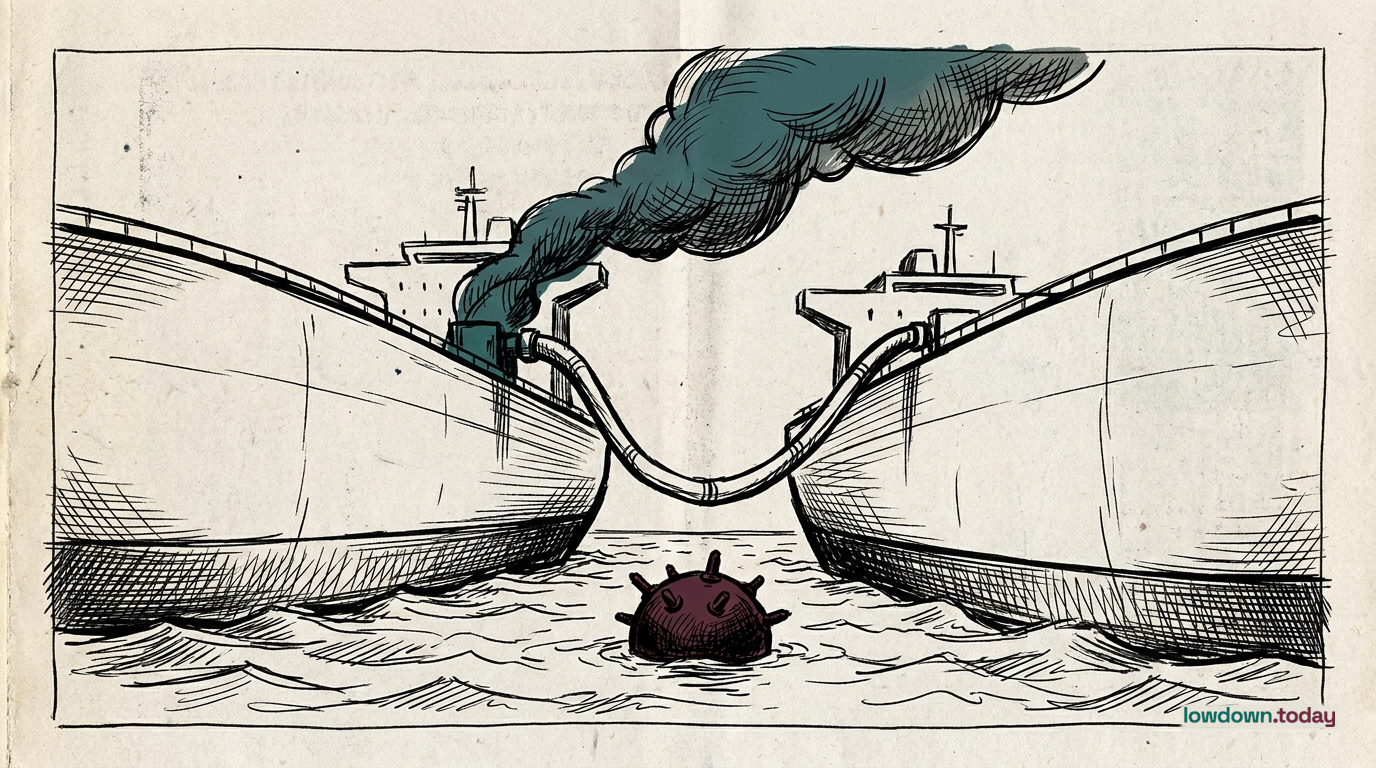
The United States is prosecuting a war in which its allies will not participate, against an adversary whose oil it permits to flow, over a waterway no country will help secure, while onshore infrastructure destruction has become the primary constraint on global energy supply.

This briefing mapped
Loading map…
Military
Humanitarian

The IDF's 'Galilee' Division pushed deeper into southern Lebanon than any prior incursion in this war — but Haaretz's own assessment suggests the operation will move Hezbollah's launch sites without silencing them.

Sources profile:This story draws on mixed-leaning sources from Israel and United States
United StatesIsrael
LeftRight

Israel's 91st "Galilee" Division entered eastern southern Lebanon on Saturday in what the IDF called a targeted defensive operation. Troops killed several Hezbollah fighters. Haaretz assessed the operation aims to defend the border, not suppress rocket fire.

Israel occupied this ground from 1982 to 2000 and withdrew after 900 soldiers died. A senior official told Axios Israel plans to seize all territory south of the Litani — the 91st's structure exceeds a temporary buffer. 

Briefing analysis

Israel's 91st Division has entered the same southern Lebanese towns — Khiam, Kfar Kila, Houla — it occupied from 1982 to 2000. That occupation began as Operation Peace for Galilee, described as a limited incursion, and expanded into an 18-year presence that catalysed Hezbollah's founding. The 2006 war displaced one million Lebanese in 33 days; the current conflict has matched that displacement in 15.

The 2006 ground operation, also initially described as limited, expanded under its own operational logic until UNSC Resolution 1701 provided a diplomatic exit. No equivalent mechanism exists today — Israel has rejected direct talks with Lebanon, and the five-nation Western statement carries no enforcement power.

A Northern Command officer told reservists to prepare for operations through late May — a timeline that contradicts official 'limited operation' language and exceeds every planning horizon previously disclosed.

Yedioth Ahronoth reported a Northern Command officer told reservists the Lebanon ground operation could last 'until Shavuot' (21–23 May 2026), indicating a three-month ground campaign — contradicting official descriptions of a limited operation and exceeding the Passover planning horizon IDF Brig. Gen. Defrin disclosed the previous week.

The Shavuot timeline exceeds every previously disclosed Israeli operational horizon — including Brig. Gen. Defrin's Passover planning window disclosed last week — and contradicts official 'limited operation' framing. Reservists are being told to prepare for a campaign roughly three times the duration of the 2006 Lebanon war. 

Israel's president told Europe its security required Hezbollah's destruction. Hours later, five Western governments publicly disagreed.

Israeli President Herzog told AFP on Monday that Europe should back efforts to "eradicate" Hezbollah and that defeating Iran's clerical leadership was "in the innermost national security interests of Europe." Hours later, Canada, France, Germany, Italy, and the UK issued a joint statement calling a major Lebanese ground offensive potentially devastating.

"Eradicate" sets a standard most security analysts, including Israeli ones, consider operationally unachievable. The 5-nation statement came with Israeli troops already inside Lebanon

Canada, France, Germany, Italy, and the United Kingdom opposed Israel's ground offensive in Lebanon — the sharpest Western diplomatic break since the war began, delivered without sanctions, arms conditions, or enforcement of any kind.

Sources profile:This story draws on mixed-leaning sources from United States and United Kingdom (includes United Kingdom state media)
United StatesUnited Kingdom
LeftRight

Canada, France, Germany, Italy, and the United Kingdom issued a joint statement calling a 'significant Israeli ground offensive' potentially devastating, urging direct Israeli-Lebanese negotiations and expressing support for Lebanese government efforts to disarm Hezbollah. No sanctions, arms conditions, or enforcement mechanisms accompanied the statement. It was issued the same day Israeli troops were already inside Lebanon — the sharpest Western diplomatic break with Israel since the war began.

The first joint diplomatic statement by five major Western governments opposing Israeli military operations since the war began. Its weight is limited by the absence of any enforcement mechanism — no arms conditions, sanctions, or diplomatic consequences were attached, and Israeli troops were already inside Lebanon when the statement was released. 

163 more killed in five days, the total past 850 with more than 100 children among the dead, and 831,000 displaced — matching the entire 2006 war's displacement in half the time.

Sources profile:This story draws on mixed-leaning sources from Israel, Qatar and 2 more (includes China state media)
IsraelQatarChinaUnited Kingdom
LeftRight

Lebanon's Health Ministry reported 850 killed — more than 100 children — 2,105 wounded, and 831,000 displaced since 2 March. That is 163 deaths in 5 days since the previous toll of 687 . The 2006 war killed roughly 1,200 Lebanese in 34 days; this campaign approaches that in 15.

Lebanon's hospitals were critically under-resourced after its 2019-2022 financial collapse. Displacement causes cascading deaths at lower thresholds than any prior Lebanon conflict. 

Hours after Israeli ground forces entered southern Lebanon, a Hezbollah rocket struck a residential building in northern Israel, wounding six — including four minors.

A Hezbollah rocket struck a residential building in Nahariya on Monday, wounding 6 people — 2 adults and 4 children — with smoke inhalation. 2 houses were destroyed. Nahariya sits 8 km from the Lebanese border.

The strike landed as Israeli troops entered Lebanon, confirming the ground operation has not reduced Hezbollah's fire. Pre-positioned caches spread across southern Lebanon are designed to survive air and ground interdiction; pushing them northward does not stop barrages. 

Sources:ToI Nahariya

Iran sustained five missile salvos from Sunday night through Monday afternoon, forcing Israel's air defences into continuous operation while the IRGC claims its newer weapons have not yet been fired.

Sources profile:This story draws on left-leaning sources from United States
United States
LeftRight

Iran fired 5 missile salvos at Israel across roughly 18 hours from Sunday night through Monday afternoon. Debris reached residential areas near the Knesset and the Church of the Holy Sepulchre. Israel approved NIS 2.6 billion (~$826m) in emergency interceptor procurement last week .

The tempo targets reload cycles. Arrow and David's Sling need 20-30 minutes per reload; 5 salvos per day probes those windows. An IRGC spokesman said Monday that newer weapons remain unused. 

Intercepted Iranian missile fragments landed within metres of Israel's parliament and Christianity's holiest church. Even accidental structural damage to the Holy Sepulchre would change how 2.4 billion Christians perceive this war.

Fragments from intercepted Iranian missiles fell near the Knesset and the Church of the Holy Sepulchre in Jerusalem's Old City on Sunday. A large piece struck a home in East Jerusalem; 1 person suffered burns from shrapnel.

The Church is revered by 2.4 billion Christians. Visible structural damage would force a political reckoning among European governments that have so far experienced the war primarily as a fuel-price problem. 

Iran says it has been spending decade-old stock while keeping newer weapons in reserve — and dares the US to prove otherwise by sailing warships into the Gulf.

An IRGC spokesman said Monday that most missiles fired since 28 February were produced "a decade ago" and that weapons built after the initial strikes remain unused. He challenged the US to send warships into The Gulf if Iran's capability was truly destroyed.

Iran's Kheibarshekan and Fattah hypersonic systems have not appeared in strike data despite pre-war tests. Underground, hardened production facilities are difficult to assess from satellite imagery, giving the deterrence claim genuine ambiguity. 

Within 72 hours, all five countries Trump named for a Strait of Hormuz escort coalition formally declined — no government will send warships into what America's own navy calls a 'kill box.'

Sources profile:This story draws on centre-left-leaning sources from United States and Japan
United StatesJapan
LeftRight

All 5 countries Trump named for a Hormuz escort Coalition — Australia, Japan, the UK, Germany, and France — formally declined within 72 hours. The US Navy had described the strait as an Iranian "kill box" . Trump said he was "not happy with the UK."

Bessent's same-day admission that Iranian oil transits freely undermined any Coalition rationale. Allies see no logic risking sailors to enforce a blockade Washington is voluntarily not enforcing. 

The world's busiest international passenger hub — 89 million travellers a year — went dark for seven hours after a single drone hit a fuel tank. Previous strikes damaged buildings; this one shut operations.

Sources profile:This story draws on centre-left-leaning sources from United States
United States

A drone struck a fuel tank near Dubai International Airport early Monday, sparking a fire that halted all flights for more than 7 hours. Emirates cancelled or diverted multiple services. DXB handled 89 million passengers in 2024.

This was the 3rd drone to reach the airport since 28 February, the first to force a full shutdown. The 2 previous caused building damage without halting flights. Each attack has reached a higher-consequence target. 

A drone fire at the Shah gas field — jointly operated by ADNOC and Occidental Petroleum — shut down 1 billion cubic feet of daily gas processing, the deepest strike into Emirati energy infrastructure since the war began.

Sources profile:This story draws on mixed-leaning sources from United States and France
United StatesFrance
LeftRight

A drone ignited a fire at the Shah Gas Field, 180 km from Abu Dhabi, on Monday. Jointly operated by ADNOC and Occidental Petroleum, it processes 1 billion cubic feet of gas per day. Operations were suspended.

Sour gas plants require mandatory hydrogen sulphide integrity testing after fire. Every pipe and seal must be cleared before restart — a process taking days to weeks. Iran chose a target whose chemistry enforces a lengthy shutdown. 

Bloomberg reports oil loading operations suspended at the world's third-largest bunkering port after a second drone attack in three days — closing both the Strait of Hormuz and its main bypass simultaneously.

Sources profile:This story draws on centre-left-leaning sources from United States
United States

A second drone struck Fujairah's oil trading hub on Monday, 3 days after Saturday's strike. Bloomberg reported oil loading has been suspended. Fujairah is The Gulf's primary export route outside the strait of Hormuz.

With Hormuz transits in single digits and Fujairah suspended, no major Gulf export route operates at capacity. Iran needs only to make loading unsafe enough that commercial operators stop on their own — at Fujairah, that threshold has been crossed. 

Saudi Arabia's air defences faced the war's heaviest single-day drone barrage on Monday, with the kingdom's oil infrastructure — the world's last spare production capacity — under daily attack.

Sources profile:This story draws on centre-leaning sources from France
France
LeftRight

Saudi Arabia intercepted more than 60 drones on Monday, the highest single-day total of the conflict, targeting Ghawar and the Abqaiq complex. The Kingdom holds roughly 2 million barrels per day of global spare capacity.

A Patriot PAC-3 interceptor costs ~$4 million; an attacking Shahed drone costs under $50,000. At 60 intercepts daily, Saudi defence spending runs into tens of millions against an adversary paying a fraction of that. 

The UAE has intercepted nearly 2,000 projectiles since 28 February — 298 ballistic missiles, 15 cruise missiles, and 1,606 drones — while absorbing 7 deaths and 142 injuries in a war it did not start.

Sources profile:This story draws on centre-leaning sources from France
France
LeftRight

The UAE military has intercepted 298 ballistic missiles, 15 cruise missiles, and 1,606 drones since 28 February — 1,919 projectiles in 17 days. 7 people have been killed and 142 injured.

High interception rates cannot prevent every leak. Dubai Airport shut for 7 hours, Shah Gas Field went offline, and Fujairah suspended oil loading on the same day. Interceptor stocks are finite; Iran is testing that limit at 113 projectiles per day. 

A missile struck a civilian vehicle in Abu Dhabi on Monday, killing one person — the first fatality inside the capital despite nearly 1,920 Iranian projectiles intercepted since the war began.

A missile struck a civilian vehicle in Abu Dhabi's Al Bahyah district on Monday, killing 1 person of Palestinian nationality — the first fatality inside the UAE capital. The cumulative UAE toll since 28 February stands at 7 killed and 142 injured.

Previous strikes hit industrial and airport perimeters. This reached a residential street in the capital. For roughly 9 million UAE residents, mostly foreign workers, residential areas can no longer be assumed safe. 

Brent crude hit the war's highest price — more than 50% above pre-war levels — driven not by speculation but by the physical destruction of Gulf energy infrastructure.

Sources profile:This story draws on centre-leaning sources from United States
United States
LeftRight

Brent Crude traded at $106.18 on Monday, up 3% on the day and more than 50% above pre-war levels of $67.41 on 27 February — the war's highest price. Gulf oil exports have dropped at least 60% compared with February. Fujairah oil loading suspended. Shah Gas Field offline.

Oil at $106 reflects a 60% collapse in Gulf exports, the failure of the IEA's record 400-million-barrel strategic reserve release, and daily drone attacks on Saudi Arabia's oil infrastructure — the world's spare capacity of last resort. 

The US is at war with Iran and deliberately allowing Iranian tankers through the strait it describes as a kill box — because blocking them would break the oil market.

Sources profile:This story draws on centre-left-leaning sources from United States
United States

Treasury Secretary Bessent told CNBC on Monday the US is deliberately allowing Iranian oil tankers through Hormuz. "The Iranian ships have been getting out already, and we've let that happen." Brent reached $106.18; Gulf exports have dropped at least 60%.

The US spends ~$1.4 billion per day fighting Iran while permitting Iranian exports that fund that defence. Washington concluded that interdicting Iranian oil would push prices past a politically tolerable threshold. 

Sources:CNBC Bessent

Two Indian tankers crossed the strait after direct diplomacy with Tehran. Twenty-two remain stranded, and Iran wants three seized vessels returned as the price of continued access.

Sources profile:This story draws on mixed-leaning sources from United States, United Kingdom and 1 more
United StatesUnited KingdomIndia
LeftRight

Two Indian-flagged LPG tankers transited the strait of Hormuz safely on Saturday after direct India-Iran diplomatic engagement. Iran's ambassador to India confirmed the passage. Tehran's condition: return of three tankers seized by India's Coast Guard in February. India has 22 vessels still stranded west of the strait; each transit requires separate negotiation with no blanket arrangement.

India's bilateral transit deal demonstrates that Iran is constructing a selective blockade — open to countries maintaining direct diplomatic channels, closed to those aligned with US military operations. This fragments the blockade along political lines and removes the remaining incentive for major importers to join any multinational escort Coalition

Mojtaba Khamenei has not been seen, heard, or verified alive since taking power eight days ago. The IRGC, which pledged complete obedience to him, may be governing without any civilian authority above it.

Sources profile:This story draws on left-leaning sources from United States
United States
LeftRight

Trump told reporters Monday: 'We don't know if he's dead or not' regarding Mojtaba Khamenei, adding 'A lot of people are saying that he's badly disfigured' and 'he lost his leg.' To Fox News: 'I think he's probably alive in some form.' A written statement was issued in Khamenei's name Monday but he has not appeared publicly — no video, audio, or verified photograph — since the Assembly of Experts installed him eight days ago.

The status of Iran's Supreme Leader determines whether the IRGC operates under legitimate civilian authority or as an unchecked military-political entity commanding both the war and the state. The ambiguity also shapes whether the US narrative of command-structure collapse holds or collapses itself. 

Closing comments

The war is widening on three axes. Geographically: UAE infrastructure attacks have escalated from intercept-and-debris incidents to direct production shutdowns (Shah) and transport hub closures (Dubai airport). Militarily: the IRGC's claimed rationing of newer weapons, combined with the documented shift to one-tonne warheads and cluster submunitions that penetrated Israeli defences last week, implies unused rungs on the escalation ladder. Diplomatically: no ceasefire framework exists — Iran's FM Araghchi stated 'we never asked for a ceasefire,' Israel rejected Lebanon's offer of direct talks, and the five-nation Western statement carries no enforcement mechanism. Each day without a viable diplomatic channel raises the probability that the next escalation results from accident or miscalculation rather than deliberate choice. Israel's ground operation in Lebanon, with a potential three-month horizon, opens a sustained land front that historically has proven far easier to enter than to leave.

Emerging patterns

  • Ground war escalation in Lebanon following pattern of announced plans preceding force deployment
  • Military timeline extension pattern — official 'limited' descriptions contradicted by longer operational horizons disclosed to troops
  • Israeli leaders framing conflict in existential terms for European allies while those allies publicly dissent
  • Allied governments distancing from Israeli military operations as civilian costs mount
  • Accelerating Lebanese civilian toll with no diplomatic off-ramp
  • Hezbollah retaliatory strikes on northern Israel persisting despite ground operation designed to push launch sites northward
  • Sustained Iranian missile campaign maintaining operational tempo despite US claims of 90% volume reduction
  • War reaching global religious and political landmarks with outsized symbolic consequences beyond the immediate theatre
  • IRGC strategic communications suggesting deliberate capability rationing — expending older inventory while preserving newer systems
  • International refusal to join US-led military coalitions in a theatre characterised as lethal by US officials themselves
Different Perspectives
Australia
Australia
Transport Minister Catherine King explicitly ruled out naval participation in the Hormuz coalition — the first categorical refusal from a Five Eyes partner.
Japan
Japan
PM Takaichi declined Trump's Hormuz call, stating 'current circumstances do not warrant military participation.' Japan imports most of its oil through the strait but judged the military risk too high.
United Kingdom
United Kingdom
PM Starmer stated 'We will not be drawn into the wider war,' declining both the Hormuz coalition and joining the five-nation statement against the Lebanon ground operation — drawing public criticism from Trump by name.
US Treasury
US Treasury
Secretary Bessent publicly acknowledged the US is permitting Iranian oil tankers through Hormuz — the first official confirmation that Washington is at war with Iran while allowing its oil revenue to continue flowing.
