Skip to content
Briefings are running a touch slower this week while we rebuild the foundations.See roadmap
Iran Conflict 2026
10APR

Islamabad talks open in separate rooms

3 min read
08:05UTC

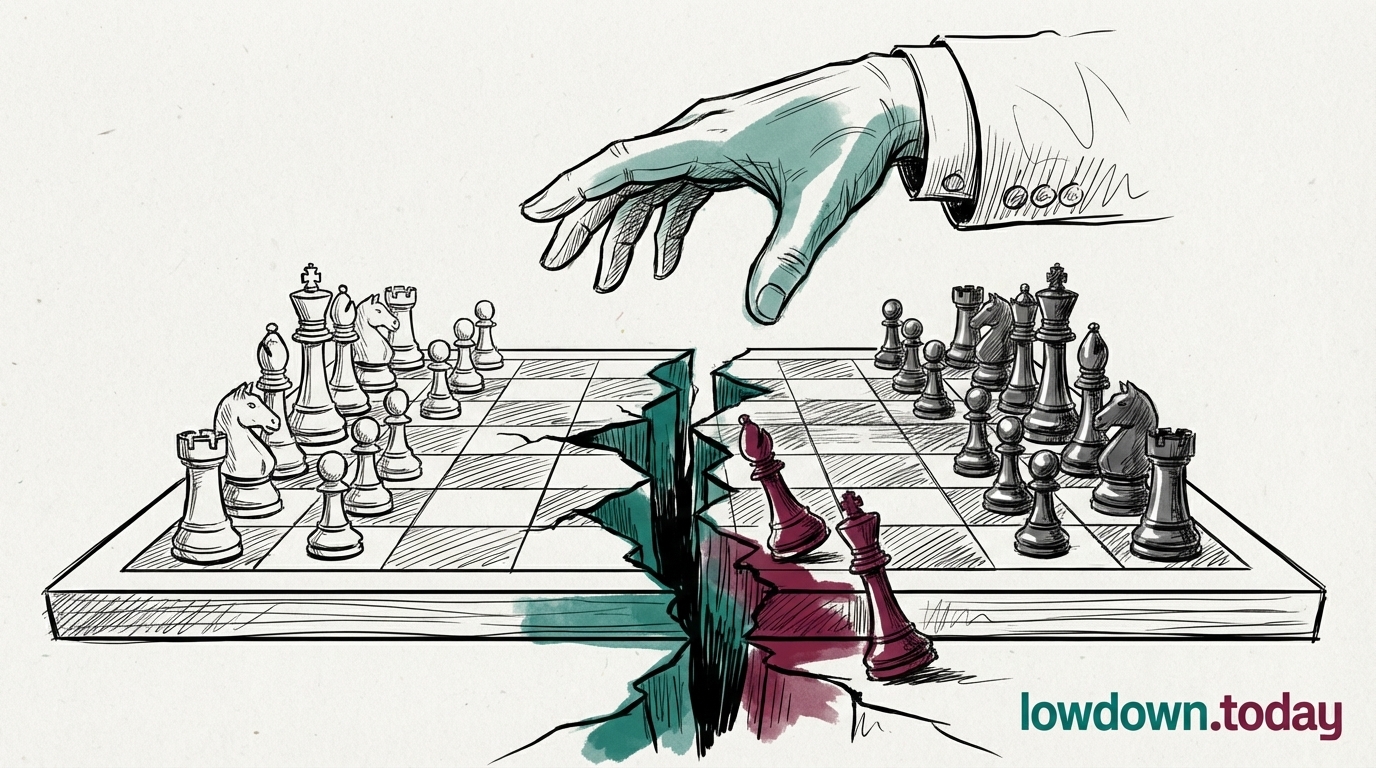
The first formal US-Iran negotiating session since 1979 opened at the Serena Hotel in Islamabad on Saturday with both delegations staying in separate rooms. Pakistani officials physically walked messages between them.

ConflictDeveloping
Key takeaway

Vance and Ghalibaf are in the same hotel but will not meet, by design.

Vice President JD Vance arrived at Nur Khan air base on Friday leading a 30-member US delegation that includes Steve Witkoff and Jared Kushner . Iran sent Parliament Speaker Mohammad Bagher Ghalibaf and Foreign Minister Abbas Araghchi. Both delegations are staying at the Serena Hotel, where Saturday's talks are taking place, in separate rooms; Pakistani officials physically walk messages between them, and no face-to-face meeting is contemplated 1.

The historical precedent cited by Pakistani officials is the 1988 Geneva Accords on Afghanistan, when Afghan and Pakistani delegations never met directly. Zamir Akram, a former Pakistani ambassador to the United Nations, described Islamabad's own success bar on the record: "breathing space, not expecting anything big" 2. Pakistani diplomats logged more than 25 high-level contacts in the run-up to the summit.

Ghalibaf went to meet Prime Minister Shehbaz Sharif before any contact with the Americans, and Iranian state television said the "timing of talks with the US delegation will be determined after preconditions are clarified" through the Pakistani mediators 3. This is the same Ghalibaf WHO rejected the ceasefire framework earlier in the week and whose presence in the room gives the Supreme Leader's inner circle a pre-built justification for walking out . The format is designed to survive failure, not to produce success.

Deep Analysis

In plain English

The US and Iran have not held formal talks since the 1979 Iranian revolution made them enemies. In Islamabad, both sides are staying in the same hotel but in separate rooms — Pakistani officials physically walk messages back and forth between them, like a diplomatic version of passing notes through a classroom. This format is called a 'proximity talk'. It was chosen because both sides want to keep talking, but neither can afford to be seen sitting across a table from the other without facing severe domestic backlash. Pakistan's own goal, by its own admission, is simply to keep the conversation going — not to reach an agreement.

Deep Analysis
Root Causes

The proximity format reflects a specific domestic political constraint on both sides. For Iran, direct contact with the US would require the Supreme Leader's explicit public sanction — which Mojtaba Khamenei has not given — while the presence of Ghalibaf rather than Araghchi alone signals the format was designed to maintain deniability for the leadership .

For the US, the Witkoff and Kushner inclusion despite prior Iranian exclusion requests signals Washington is prioritising internal coalition management over Iranian comfort. Neither side entered Islamabad intending a breakthrough; both entered intending to demonstrate good faith without committing to it.

What could happen next?
  • Precedent

    The Islamabad format establishes that the US and Iran can conduct structured indirect communication after 47 years of no formal diplomatic channel — a floor, not a ceiling, for future contact.

  • Risk

    Pakistan Defence Minister Khawaja Asif's deleted post calling Israel 'a cancerous state' prompted Netanyahu's office to declare Pakistan cannot serve as a neutral arbiter, undermining the format's legitimacy before substantive exchanges begin.

First Reported In

Update #65 · Iran lost its own minefield

Al Jazeera· 11 Apr 2026
Read original
Different Perspectives
Lloyd's of London
Lloyd's of London
The Joint War Committee left Hormuz war-risk premiums at $10-14 million per voyage on 25 May, declining to move on Brent's 5% fall. The JWC's protocol requires a UN Security Council resolution or bilateral government certification letter before de-listing, and neither has arrived: a verbal understanding does not satisfy the formal condition the reinsurance market's treaty terms require.
Gulf Arab producers
Gulf Arab producers
Saudi Arabia and UAE depend on Hormuz for their own crude exports; Aramco CEO Nasser has warned no oil market recovery arrives until 2027 if the blockade continues past mid-June. Monday's $98.96 Brent settlement shortens nothing for Gulf producers without a signed instrument and a Pentagon mine-clearance timeline that runs up to six months post-ceasefire.
Qatar
Qatar
Qatar holds $12bn of frozen Iranian assets at the centre of the sequencing dispute but cannot release them without explicit US Treasury authorisation, given the original freeze was a US instrument. As the asset-holding state, Qatar's leverage is real but passive: it is the escrow holder, not the decision-maker, and any resolution requires US Treasury sign-off that Trump has withheld.
Pakistan
Pakistan
With both Prime Minister Sharif and army chief Munir simultaneously in Beijing on 25 May, Pakistan has for the first time consolidated its civilian and military mediation tracks under China's roof. Munir's direct Tehran-to-Beijing flight signals that the security and financial threads of the sequencing problem are now being worked in parallel rather than sequentially.
China
China
Beijing hosted Pakistan's principal mediators and Iran's China envoy Ghalibaf simultaneously on 25 May while its banking regulator capped new state-bank lending to five sanctioned refiners. China is simultaneously the most credible third-party underwriter of the $12bn sequencing and the state whose institutions face live OFAC secondary-sanctions exposure if the deadlock persists through GL V's expiry.
United States
United States
Trump posted on 24 May that the blockade holds until a deal is certified and signed, ruling out the informal MOU structure both sides had been building. The 'certified, and signed' condition is the first operational bar Trump has attached in 87 days, but it arrived without an executive instrument, maintaining the gap between posted ultimatum and signed US policy.