Skip to content
You can now search across every topic, entity and event.What's new
Iran Conflict 2026
27MAR

Islamabad Accord was already a corpse

3 min read
14:13UTC

Qatar walked away from mediation two weeks before the Pakistan framework was held up as a ceasefire route, and Iran had already refused to attend the venue.

ConflictDeveloping
Key takeaway

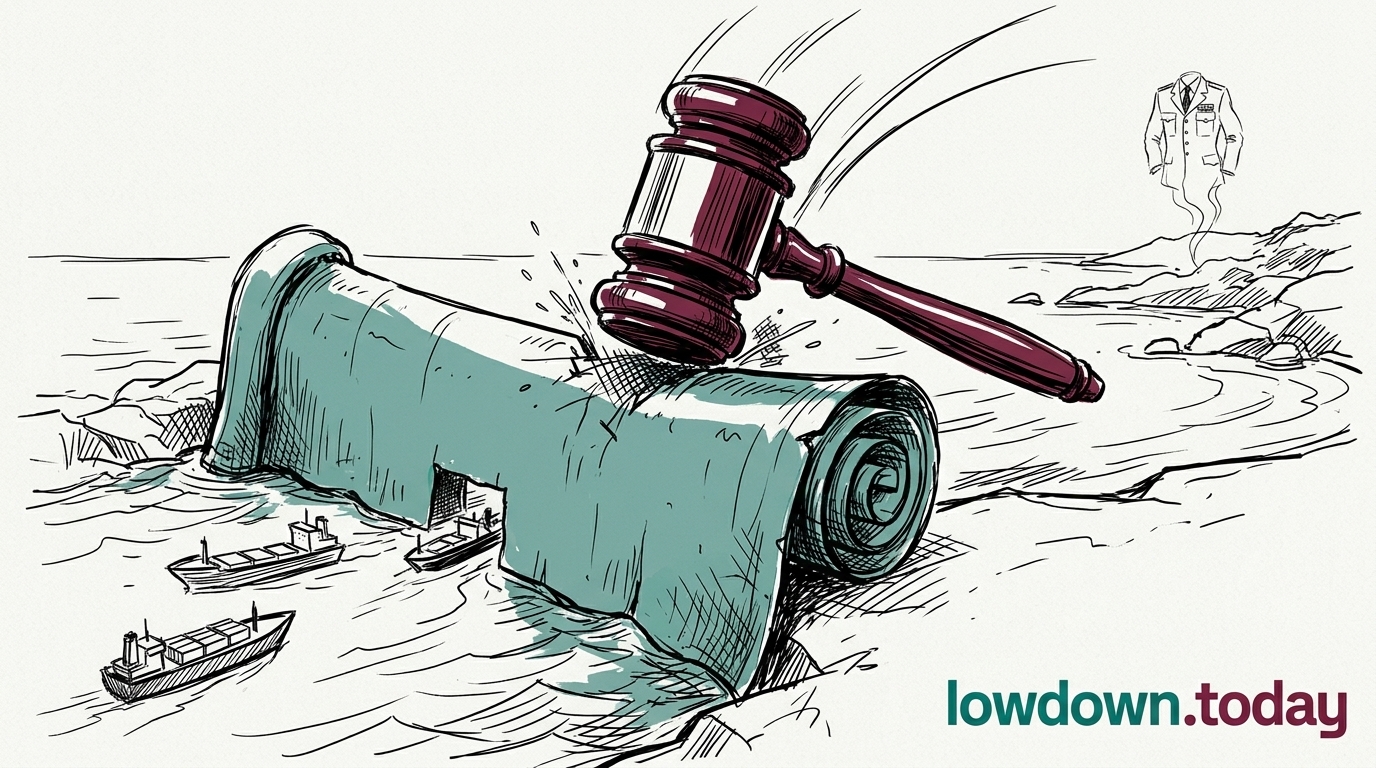
The accord exists as a document, not a process, and was constructed to label the deadline-extension cycle.

Qatar's Ministry of Foreign Affairs publicly declined the central mediator role on 24 March, when Dr. Majid Al Ansari, advisor to the Qatari Prime Minister, stated that Qatar "wasn't engaging in any direct mediation efforts between the United States of America and Iran" 1. Qatar is the only Gulf state with active back-channels to both Tehran and Washington. It walked away from the role two weeks before the Islamabad framework was held up as the ceasefire route.

The Wall Street Journal then reported on 3 April, citing two regional officials familiar with the talks, that the Pakistan-led mediation had already hit a dead end: Iran had refused to attend the proposed Islamabad meetings and called Washington's conditions "unacceptable" 2. Three days after that report, the "Islamabad Accord" was publicly announced. The framework that yesterday's coverage treated as a ceasefire breakthrough functioned, on the documentary record, as face-saving extension cover for Trump and a regional credibility play for Field Marshal Asim Munir.

The IRGC's prior block on Pezeshkian sits behind Tehran's refusal to attend; the men who would have had to authorise the venue were already procedurally walled off from anyone who could deliver a ceasefire signal. Pakistan got the press conference, Trump got the extension, and the actual mechanics of a ceasefire stayed exactly where they were. We led on the Pakistan framework yesterday. We are correcting the framing today: with Qatar out and Iran refusing the venue, the Islamabad Accord exists on paper without a room behind it.

Deep Analysis

In plain English

The Islamabad Accord was presented in recent coverage as a hopeful ceasefire framework brokered through Pakistan. Today's reporting establishes that it was announced after the process behind it had already collapsed. Qatar , the only Gulf state with active lines to both Tehran and Washington , publicly said it was not mediating, two weeks before the accord was named. Iran had already refused to attend the proposed meetings. Pakistan's army chief got a press conference; no one got a ceasefire room. The accord exists as a document, not a process.

Deep Analysis
Synthesis

The accord's exposure as hollow is itself a diplomatic fact with consequences: it removes the US administration's preferred extension framing without replacing it with a credible alternative, narrowing the space between another naked extension and a genuine escalation decision.

Root Causes

Qatar's withdrawal reflects the risk calculus of a state that hosts the largest US airbase in the Middle East (Al Udeid) while maintaining active back-channels to Tehran.

Being named as central mediator would have exposed Doha to pressure from both sides without giving it meaningful control over the outcome.

Iran's refusal to attend the Islamabad meetings stems from the IRGC's prior veto on Pezeshkian's negotiating mandate, documented at and , the apparatus that would have had to authorise the venue is the same apparatus blocking civilian access to Khamenei.

What could happen next?
  • Consequence

    With the Islamabad framework exposed as hollow, the US administration loses its principal extension-labelling tool, making the choice between a seventh naked extension and a genuine escalation decision more visible domestically.

  • Risk

    If neither side names a credible replacement channel, the absence of any functioning diplomatic architecture makes misreading of Iranian signals , or US strike escalation , more likely over the next deadline cycle.

First Reported In

Update #61 · Carriers retreat; Iran codifies Hormuz

Bloomberg· 7 Apr 2026
Read original
Different Perspectives
Oil traders
Oil traders
Sent Brent down 2.29 per cent to $98.38 a barrel on reports that mediation was reviving, moving the price on CENTCOM's quiet night rather than on Trump's same-day promise of a bigger operation with no deadline attached.
Iran
Iran
An Iranian official called the same mediation account completely misleading, denying it received any US proposal via Baghdad on the same day Iraq denied delivering one, leaving neither denial able to settle what actually passed between the two capitals.
Iraq
Iraq
Called groundless the New York Times account that its prime minister carried a US ceasefire proposal to Tehran, a denial that also protects Baghdad's effort to avoid becoming a party to a war fought by aircraft it does not control.
OHCHR
OHCHR
Recorded 17 civilian seafarer deaths since the war began, a population neither the Pentagon nor Iran's Health Ministry counts in its own tally, and called for urgent action on 6,000 crew stranded across roughly 400 vessels in the Strait of Hormuz.
Houthis
Houthis
Enforced the blockade on Saudi-linked shipping it declared on 20 July by hitting the NCC Masa and then an Aramco facility at Jazan, moving from radio warnings to strikes on land after four days without a confirmed hit.
Saudi Arabia
Saudi Arabia
Struck Houthi military sites near Hodeidah the same day the NCC Masa was hit, while its coalition spokesman insisted Hodeidah, Ras Issa and Salif all remain open to navigation. The distinction protects the ports Yemen's population depends on for food and fuel even while punishing the group behind the tanker strike.