Skip to content
You can now search across every topic, entity and event.What's new
Iran Conflict 2026
27MAR

Trump extends grid deadline to 6 April

2 min read
14:13UTC
ConflictDeveloping

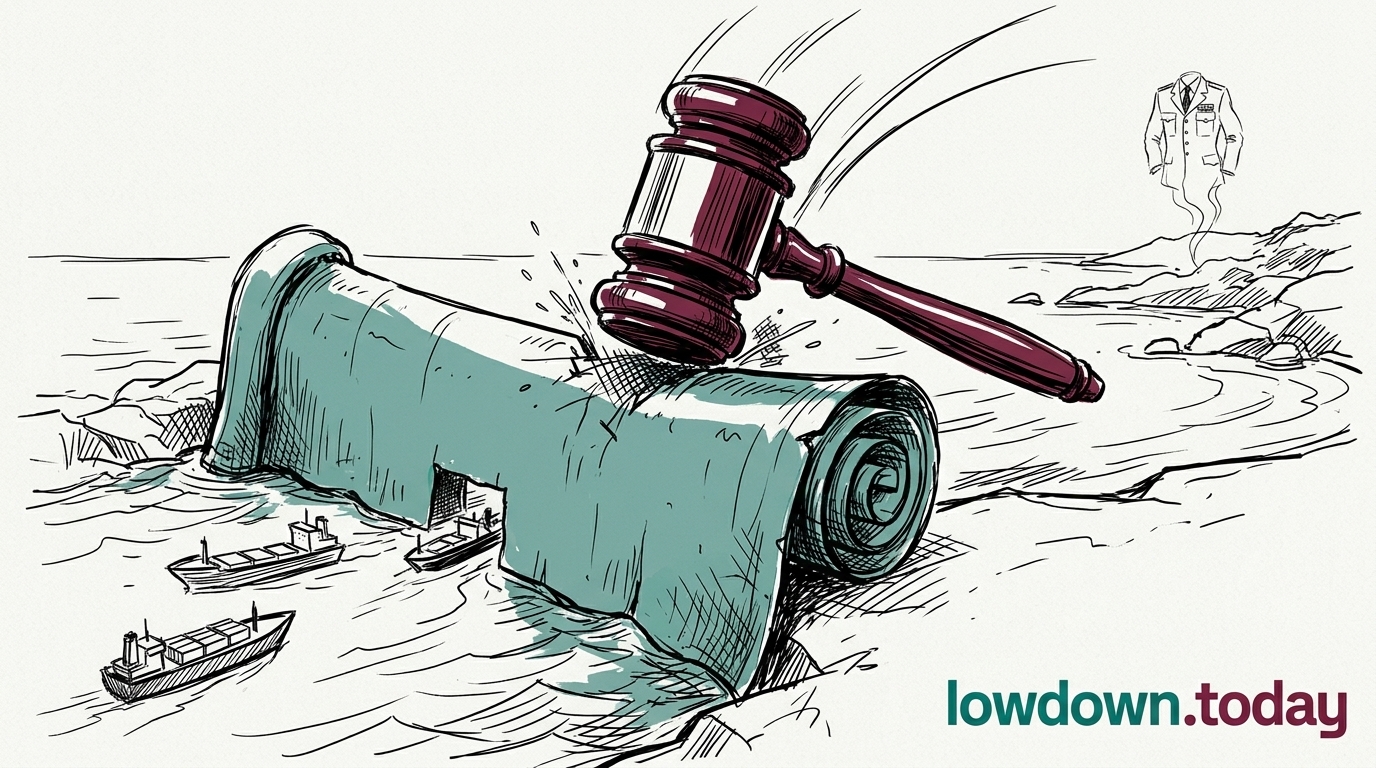
President Trump extended the deadline for strikes on Iran's power grid to 6 April, the third such extension since his original 48-hour ultimatum, according to Bloomberg. 1 Trump cited three reasons: an Iranian government request, 10 oil tankers allowed through Hormuz as a 'present,' and progress in Pakistan-mediated indirect talks. The original deadline of 25 March was extended once before reaching the current April 6 date.

The tanker claim requires scrutiny. The vessels Trump described as an Iranian diplomatic gesture appear to be Pakistani-flagged ships already in the 'friendly nation' category that Iran established under its own vetting system weeks earlier . Iran has neither confirmed nor denied granting any special concession to Trump. Earlier, Iran had declared Hormuz closed to US-linked vessels while allowing transit to countries including India, Pakistan, Iraq, Malaysia, and China . Pakistani-flagged ships transiting was not a new Iranian concession; it was Iran's existing policy applied to Pakistan's existing fleet.

After three postponements in five days, Iran has learned that deadlines are suggestions. The credibility of the threat deteriorates with each extension because the pattern has been demonstrated: Trump sets a deadline, claims an Iranian gesture whether or not Iran acknowledges making one, and extends. Markets have largely repriced this pattern: Brent crude fell 10.9% on the first talks announcement but has since stabilised as each deadline passes without result. The April 6 deadline arrives against a backdrop of Bushehr nuclear construction suspended , the Philippines in national energy emergency , and US gasoline at $3.98 per gallon .


Deep Analysis

In plain English

Trump set a deadline to bomb Iran's power stations if it did not reopen the Strait of Hormuz. That deadline passed. He set a new one. That one passed too. Now there is a third deadline on 6 April. Each time he has credited Iran with making some kind of gesture, but Iran has not confirmed making any. The problem is that the more times you set a deadline and do not follow through, the less seriously anyone takes the next deadline. Iran has now seen three deadlines come and go, which gives it good reason to believe 6 April will also pass without the strike.

Deep Analysis
Root Causes

The structural dilemma is that power grid strikes would trigger Iranian retaliatory strikes on Gulf desalination and energy infrastructure, as explicitly threatened by the Khatam al-Anbiya Central Headquarters in March.

The administration cannot follow through without accepting consequences it is not positioned to absorb. But each extension teaches Iran that the threat has no teeth.

First Reported In

Update #49 · Hormuz toll into law; Tangsiri killed

NPR / Houston Public Media· 27 Mar 2026
Read original
Different Perspectives
Oil market and P&I insurers
Brent cleared $87 intraday only once CENTCOM's blockade became physical rather than declared, even though P&I Clubs had already excluded Hormuz war risk a week earlier on 7 July: capital hedged ahead of enforcement, but prices moved only after it.
UAE reporting
UAE reporting
UAE reporting placed the Omani tanker deaths at one seafarer against the International Maritime Agency's count of two, the first time in this war that a Gulf state's casualty figures have diverged from an international monitor's.
Jordan
Jordan
Iranian strikes reached Jordan again on 14 July as part of the Gulf-wide retaliation for the Hormuz blockade, extending the conflict's geographic footprint to a state with no direct stake in the strait itself.
Bahrain
Bahrain
Bahrain sounded air-raid sirens on 14 July during Iran's Gulf-wide retaliation, the same day CENTCOM's blockade order and fourth night of strikes pushed the conflict's physical reach into the wider Gulf littoral.
Kuwait
Kuwait
Kuwait intercepted Iranian missiles and drones on 14 July as Tehran's blockade retaliation reached Gulf states beyond Iran's immediate shoreline, confirming Kuwaiti airspace now sits inside Iran's retaliatory envelope.
Oman
Oman
Oman absorbed the war's first tanker casualties in its own waters on 14 July, with two supertankers disabled and seafarers killed, putting the sultanate's shipping lanes directly in the path of the blockade fight for the first time.



