Skip to content
Briefings are running a touch slower this week while we rebuild the foundations.See roadmap
Iran Conflict 2026
28FEB

Israel claims air supremacy over Iran

3 min read
19:00UTC

More than 2,000 munitions across 24 of Iran's 31 provinces in 48 hours. An air defence network built over two decades has been functionally destroyed.

ConflictDeveloping
Key takeaway

Israel's 48-hour air supremacy declaration over 24 Iranian provinces marks an unprecedented pace of aerial dominance against a major regional military power, though the gap between declaration and operational fact warrants scrutiny.

The Israeli Defence Forces declared air supremacy over Iran on Saturday evening, 48 hours after the opening strikes hit Tehran, Isfahan, Qom, Karaj, and Kermanshah . The IDF reported more than 2,000 munitions dropped across 24 of Iran's 31 provinces, with the Israeli air force alone accounting for 1,200. The remainder came from US platforms, though the Pentagon has not published a breakdown.

Air supremacy — in NATO doctrinal terms — means conducting air operations without effective opposition from enemy defences. Iran entered this war with Russian-supplied S-300PMU-2 batteries, its indigenous Bavar-373 system, and layered short-range air defences accumulated over two decades. That network has been functionally destroyed in less time than it would take to ship a single replacement battery from Russia.

Twenty-four of thirty-one provinces hit means this is not a repeat of the June 2025 campaign against nuclear infrastructure at Fordow, Natanz, and Isfahan . That operation was surgical — specific facilities, limited duration, no claim of air superiority. This operation is systematic: air defence radars, command nodes, communications relays, military airfields, and IRGC installations across the country. The target set encompasses Iran's capacity to defend its own airspace, not its nuclear programme alone.

Air supremacy, however, is not resolution. Iran continues to fire ballistic missiles from mobile launchers — it struck 27 US military installations across seven countries in the opening hours and has since directed 137 missiles and 209 drones at the UAE alone. The campaign has stripped Iran of the ability to contest its skies. It has not stripped Iran of the ability to inflict casualties on its adversaries and their hosts.

Deep Analysis

In plain English

When a military declares 'air supremacy,' it means it has destroyed or suppressed enough of the enemy's aircraft and air defences that its own planes can fly and operate without meaningful resistance. Israel is claiming to have achieved this over most of Iran — a country roughly eight times Israel's size — within two days. This is a remarkable claim. It means, if true, that Iranian radar systems, missile batteries, and air force bases across nearly the entire country have been disabled or destroyed. For context, the United States took more than a month to achieve a comparable level of dominance over Iraq in 1991, and Iraq's defences were far weaker. The 2,000-munition figure across 24 provinces suggests a deliberately broad and simultaneous strike campaign designed to prevent Iran from reconstituting its defences.

Deep Analysis
Synthesis

The air supremacy declaration, if it holds operationally, represents a fundamental shift in the regional balance of power. Iran has for decades relied on the deterrent credibility of its air defences and missile programmes to offset Israeli and US conventional superiority. If that deterrent has been degraded within 48 hours, the strategic logic underpinning Iranian security policy — and the security calculations of every regional actor that has sheltered under Iranian deterrence — collapses. This is not merely a battlefield update; it is a potential restructuring of the Middle East's security architecture. The pace also sets a precedent that will be studied closely by China, Russia, and NATO: that a technologically advanced air campaign, with sufficient intelligence preparation, can achieve air superiority over a large, defended nation-state far faster than historical doctrine suggested.

Root Causes

Israel's ability to achieve rapid air supremacy — if verified — reflects years of intelligence preparation, almost certainly including pre-positioned knowledge of Iranian air defence locations, frequencies, and command nodes. The suppression of enemy air defences at this scale requires precise prior mapping, suggesting the intelligence groundwork predates the current campaign by years. The volume of munitions (2,000 in 48 hours) also implies that Israel either pre-positioned stocks or received direct US logistical support, given that Israel's own munitions stockpiles would be stretched by a campaign of this magnitude. The geographic breadth — 24 of 31 provinces — suggests a deliberate strategy to prevent Iran from concentrating surviving air defence assets in any single corridor.

Escalation

The declaration of air supremacy is a strategic inflection point that cuts in two directions simultaneously. On one hand, it suggests the offensive phase is succeeding on its own terms, reducing the pressure to escalate to ground operations or to widen the campaign to additional actors. On the other hand, a declaration of this scope — 24 provinces — signals to Iran and its proxies that no part of the country is a sanctuary, which may accelerate Iran's calculus to use whatever asymmetric capabilities remain before they are destroyed. The 'weeks, not days' assessment from US officials (event 2) implicitly acknowledges that air supremacy does not equal victory: Iran retains ground forces, proxy networks in Iraq, Syria, Lebanon, and Yemen, and naval assets capable of threatening Hormuz. Escalation risk therefore shifts from the air domain to the maritime and proxy domains, where Israeli air supremacy provides less direct advantage.

What could happen next?
  • Meaning

    Israel has achieved the operational condition required for sustained deep-strike operations into Iran without air-to-air contest, a historically unprecedented achievement against a nation of Iran's size and defence investment.

    Immediate · Reported
  • Risk

    If the declaration is politically premature, reconstituted Iranian air defences or surviving long-range SAM systems could threaten Israeli aircraft during subsequent strike packages, leading to a public reversal.

    Short term · Assessed
  • Consequence

    Iran's surviving military capability shifts decisively toward asymmetric options — proxy forces, maritime interdiction, and cyber — rather than conventional air-to-air or ground-based defence.

    Short term · Assessed
  • Precedent

    The pace of air dominance, if verified, will revise military doctrine globally regarding the viability of large-scale, densely-networked air defence architectures against a SEAD-capable adversary.

    Long term · Suggested
First Reported In

Update #6 · Pentagon produced no evidence for Iran war

Al Jazeera· 1 Mar 2026
Read original
Causes and effects
This Event
Israel claims air supremacy over Iran
Air supremacy means the US-Israeli coalition can operate over Iran without effective resistance. Iran can no longer defend its own airspace, though it retains the ability to strike outward with ballistic missiles and drones from dispersed mobile launchers.
Different Perspectives
Gulf shipping and insurance markets
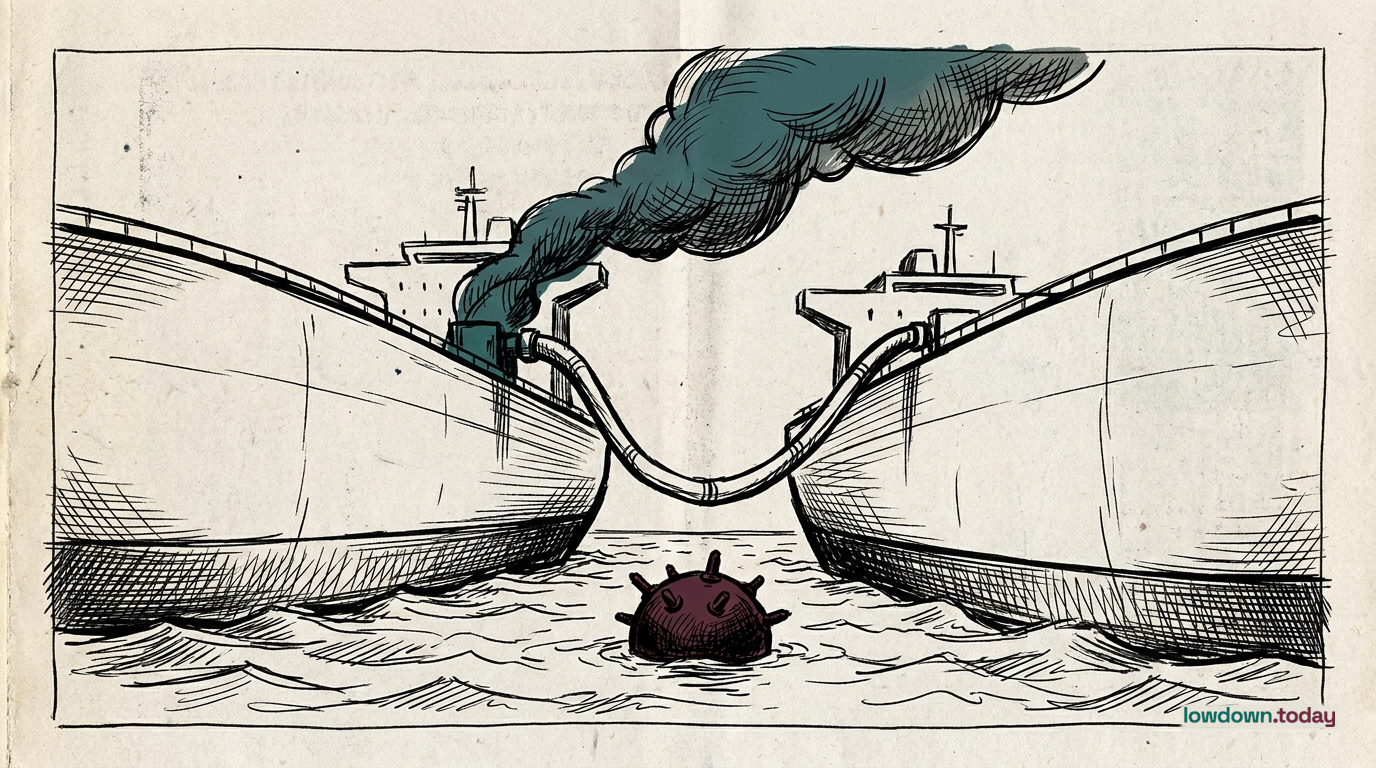
With Hormuz and Bab el-Mandeb both hostile at once, war-risk underwriters face their first dual-chokepoint pricing problem; the rerouting hedge that absorbed one closure is gone for Israeli-linked hulls. Any deal that reopens Hormuz without a Houthi stand-down clause delivers only partial shipping relief.
Russia and China
Russia and China
Russia and China met IAEA chief Grossi jointly in Geneva on 5 June to coordinate an advance blocking position against Washington's censure resolution, the first documented instance of proactive pre-session obstruction rather than reactive post-vote dissent. Beijing's move came four days after OFAC designated Shanghai Qianye Energy under Iran energy sanctions.
Saudi Arabia
Saudi Arabia
Saudi Arabia was left out of the emergency $4.01 billion Patriot waiver Qatar received on 2 May as its own PAC-3 stocks ran near-empty from intercepting Iranian salvoes over Aramco facilities. Riyadh is on a standard 18-month FMS queue behind a production line booked through 2030, with no equivalent priority to Qatar's Al Udeid basing role.
Houthis (Ansar Allah)
The Houthis declared a complete ban on Israeli Red Sea navigation on 8 June and struck Jaffa, their first attack on Israeli territory since April, seven days after the Tasnim authorisation to activate other fronts including Bab el-Mandeb. The declaration put both chokepoints under hostile authority simultaneously.
Iran
Iran
Iran agreed the 9 June mutual halt after the Mahshahr exchange and coordinated with Russia and China to block Washington's IAEA censure resolution, using the Board as a second front while the bilateral pause held on the military one. Tehran's acceptance of the Lebanon carve-out contradicts the linkage position it stated on 1 June.
Benjamin Netanyahu and the IDF
Israel struck the Karun Petrochemical plant at Mahshahr on 8 June over Trump's explicit objection, then agreed a halt with Iran the following day scoped on Israeli terms with Lebanon carved out. Netanyahu's posture is that the IDF will not accept Iranian missile factories as off-limits regardless of US diplomatic timelines.