Skip to content
You can now search across every topic, entity and event.What's new
Iran Conflict 2026
23AUG

Saudi Arabia left off the Patriot list

4 min read
19:02UTC

Qatar received a $4.01 billion emergency Patriot waiver on 2 May; Saudi Arabia was left out as its own interceptor stocks ran near empty. The plant that builds more is booked through 2030.

ConflictDeveloping
Key takeaway

Saudi Arabia missed the emergency Patriot waiver Qatar got, leaving its oil terminals thinly defended.

Qatar received a $4.01 billion emergency Patriot Foreign Military Sale waiver on 2 May for 300 PAC-3 MSE and 200 GEM-T interceptors, and Saudi Arabia was not in that emergency package 1. PAC-3 (Patriot Advanced Capability-3) is the US Army's hit-to-kill interceptor for ballistic and cruise missiles, and the waiver moves a buyer up the production queue ahead of the standard 18-month wait.

Across the Gulf, the states absorbing IRGC salvoes have been firing interceptors faster than they can replace them. Bahrain reached 87% PAC-3 depletion with an 18-month resupply gap after the 5 June two-country salvo , barely a salvo or two of interceptors before its magazine runs dry. Saudi Arabia, by open-source depletion estimates circulating this week, sits near the bottom of its own magazine after the largest absolute losses of any Gulf state. No confirmed government or contractor figure for Saudi stocks was on the record by 9 June, so that estimate should be read as an estimate, not a measured count.

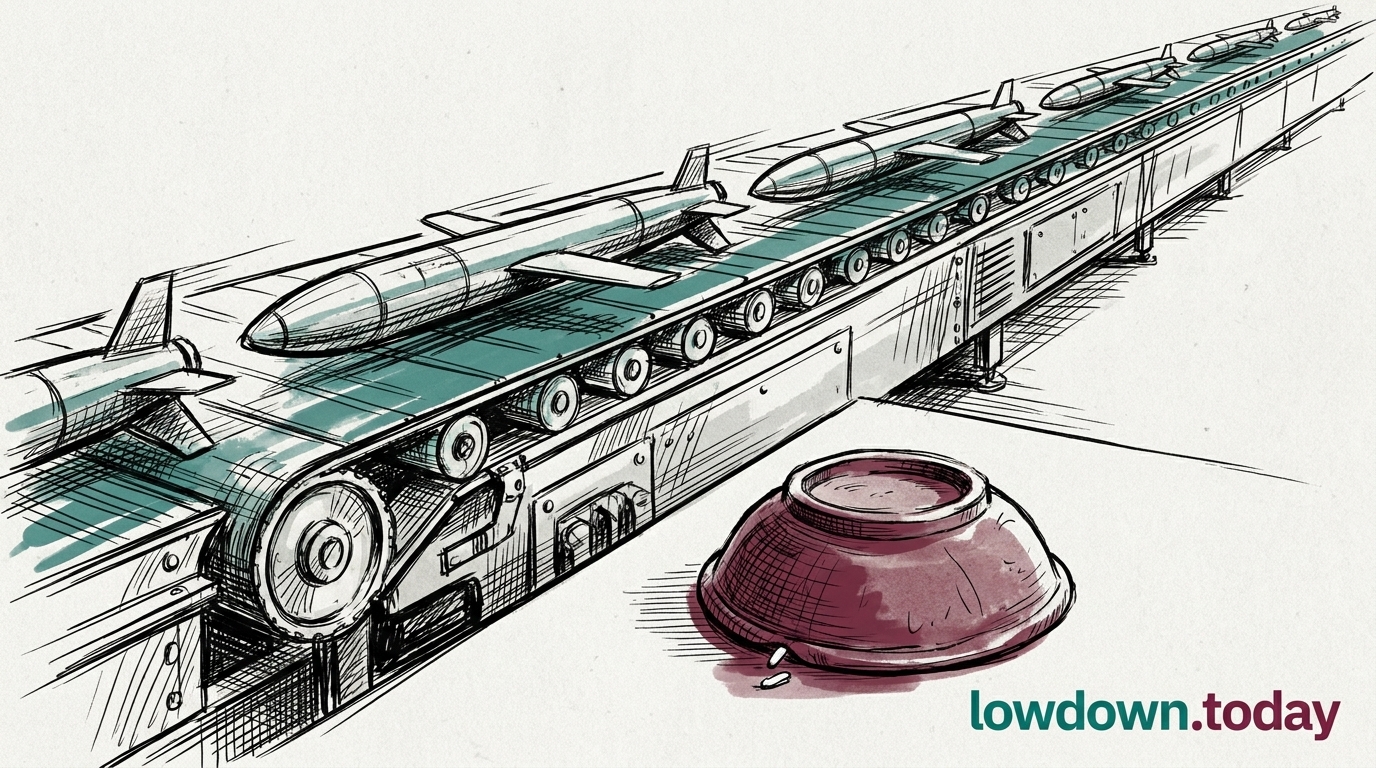
The factory, not the paperwork, sets the binding constraint. Lockheed Martin's Camden plant in Arkansas delivered roughly 620 PAC-3 MSE interceptors in 2025, and a US Army contract has booked that line through 2030 2. A waiver buys queue position; it cannot conjure rounds the plant has not yet built. That is why the gap between Qatar's emergency waiver and Saudi Arabia's standard filing is timing, not bureaucracy: one buyer jumps the line, the other waits behind a sold-out run.

Washington has moved fast for other Gulf partners. On 6 June the State Department approved a $1.98 billion Anduril counter-drone sale to Kuwait , an arms decision it could make and did. The interceptor allocation that would refill Saudi magazines is the one it has not made for its largest Gulf partner. The next sustained IRGC salvo against Saudi targets would meet a near-empty defence over the world's largest oil export terminals.

Deep Analysis

In plain English

The Patriot PAC-3 is the missile that knocks down ballistic rockets in the final seconds before impact , the last layer of defence. It is manufactured at a single factory in Camden, Arkansas, which builds roughly 620 units per year. Qatar received an emergency order of 300 of them in May; Saudi Arabia received no equivalent waiver. Open-source analysis suggests Saudi Arabia's existing PAC-3 supply is nearly exhausted from intercepting Iranian missiles over the past three months. The Camden factory is fully booked until 2030. Saudi Arabia is on a standard 18-month waiting list behind a queue it cannot jump, which means it has less air defence than it needs at the moment it needs it most.

Deep Analysis
Escalation

A near-empty Saudi PAC-3 magazine changes Iran's cost-benefit calculation on future missile launches. If Riyadh cannot reliably intercept a sustained IRGC salvo, Saudi Arabia faces a choice between accepting missile strikes or retaliating , neither outcome is in Washington's interest during active deal negotiations.

What could happen next?
  • Risk

    Saudi Arabia's near-empty PAC-3 reserves, combined with an 18-month resupply lag, create a window in which Iran could conduct a sustained ballistic salvo against Saudi infrastructure , including Aramco facilities , with a higher probability of penetrating terminal defences than at any point since the 2019 Abqaiq attack.

  • Consequence

    The asymmetric treatment of Qatar (emergency waiver granted) versus Saudi Arabia (excluded) will complicate US-Saudi security relationship discussions and may accelerate Riyadh's domestic AFAD programme as an alternative to dependence on US FMS timelines.

First Reported In

Update #122 · Trump warns Bibi as Israel strikes anyway

Defense News· 9 Jun 2026
Read original
Different Perspectives
Hizballah
Hizballah
Has not commented on the US Treasury's 20 August designation of ten people, including named couriers, over a cash network Treasury says moved money to it from the IRGC-Qods Force. ACLED recorded a sharp rise in attacks around it the same day.
Kuwait
Kuwait
Kuwait's Chief of the General Staff, Lieutenant General Khaled al-Shriaan, co-chaired the 16th US-Kuwait Joint Military Commission at the Pentagon on 21 August. Kuwait has not published what was agreed; only a summary of the meeting's existence and attendees is sourced.
Qatar
Qatar
Has not commented publicly on the $4.5bn KC-46A tanker Foreign Military Sale notification the State Department approved on 20 August. The notification opens a sale process; Doha has not confirmed whether it will proceed to a signed transfer.
Mohammad Bagher Ghalibaf
Told a Baghdad business meeting on 20 August that Iran will not endure a hungry population regardless of its military strength, against 87.9% point-to-point inflation and 128.1% food inflation for Tir. His fellow Majlis Economic Committee member Samsami separately warned a petrol price rise would ignite unrest.
US Navy
US Navy
Signed a $22.9bn, seven-year contract with Raytheon on 17 August to raise Tomahawk output from about 60 a year to more than 1,000. The Acting Navy Secretary, quoted via an X post, framed it as the "Arsenal of Freedom" initiative; it replaces the 850 missiles fired by 1 April in about ten months at the new rate.
UK Maritime Trade Operations
UKMTO logged six armed men boarding a tanker 136 nautical miles east of Al Mukalla on 20 August and redirecting it toward Somalia. A vessel steered toward the Somali coast reads as an attempted seizure, a distinct hazard from the stand-off strikes the same lane has seen before.