Skip to content
Welcome, thoughtbot's Giant Robots listeners!Start here
Iran Conflict 2026
31JUL

US strikes four Iranian sites near Hormuz

3 min read
09:24UTC

Donald Trump ordered CENTCOM onto Iranian soil for the first time in 100 days of war, hours after telling reporters a deal was in its 'final throes'.

ConflictDeveloping
Key takeaway

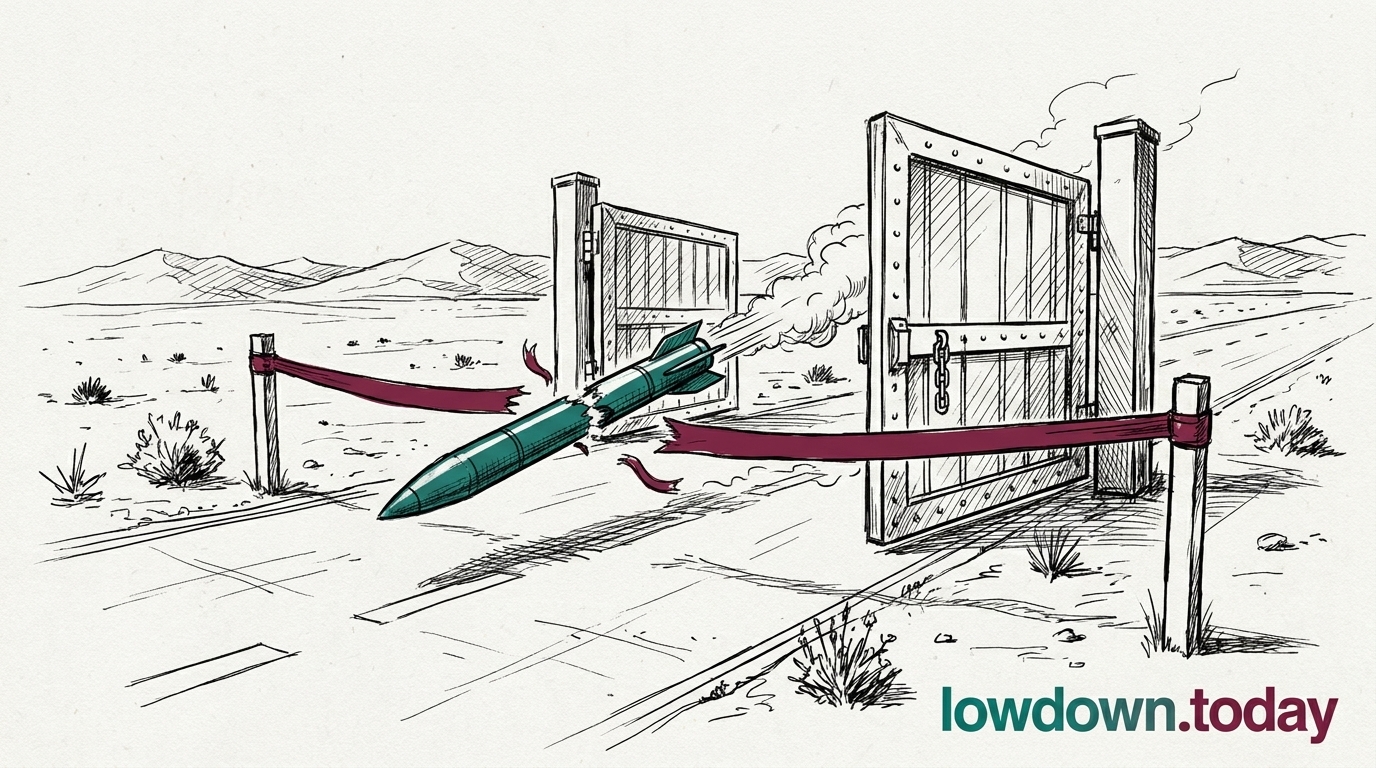
Trump's first decisive Iran act in 100 days was a missile strike, not the deal he keeps promising.

CENTCOM (US Central Command) struck Iranian air-defence, radar and ground-control sites at Qeshm Island, Bandar Abbas, Sirik and Jask between 22:00 GMT on Tuesday 9 June and 01:00 GMT on Wednesday 10 June, at Donald Trump's direct order⁠1. For 100 days the US-Iran front had been sanctions and the Strait of Hormuz blockade while Israel did the kinetic work; this was the first American ordnance on Iranian soil since the war began⁠2. CENTCOM called it a "proportional response" and "self-defence", citing Iran's downing of a US AH-64 Apache helicopter, the aircraft logged "cause unknown" a day earlier and now resolved.

The strike package hit four named sites, yet Al Jazeera, citing Iranian accounts, reported the damage ran to a single telecoms tower at Sirik and two water tanks⁠3. The kinetic footprint stayed small while the political signal ran large. A target set of coastal air-defence and radar, not Fordow or Natanz, reads as a deliberately survivable strike: Washington demonstrated reach without forcing the all-out nuclear exchange that hitting an enrichment site would compel.

Trump had told reporters on 9 June that an Iran deal was in its "final throes"; he ordered missiles onto Iranian territory within hours of saying it. The president who signed nothing across 100 days, no AUMF, no Article 51 notice, no nuclear memorandum, answered a stalled negotiation with ordnance rather than paper. What closed the war's defining action-versus-words gap was a missile order, not a signature, which means every legal instrument remains unsigned even now.


Deep Analysis

In plain English

The United States military launched air strikes on Iran overnight on 9-10 June 2026. The targets were radar stations and air-defence equipment near the strait of Hormuz, the narrow waterway through which a fifth of the world's oil travels. The stated reason was that an American military helicopter, a type called an AH-64 Apache, had gone down near the strait earlier that day. The US President ordered the strikes as retaliation, calling it self-defence. Iran says the radar sites were protecting its own coast. No new permission from the US Congress was sought; the President argued he already had the authority.

Deep Analysis
Root Causes

The casus belli chain runs from the Apache downing through CENTCOM's 'self-defence' doctrine, but the structural precondition was set earlier: CENTCOM had already struck Iranian radar at Goruk and Qeshm Island in late May and on 31 May to 1 June, establishing a pattern of airspace-denial strikes that Iran had not yet answered with ordnance on American aircraft.

When the Apache went down, CENTCOM's existing strike precedent meant the only doctrinal response it had available was another radar-suppression package.

The deeper root cause is the 100-day gap between the start of hostilities and any signed US legal authority. Defence Secretary Hegseth's May Senate testimony converted Article II self-defence from a fallback into a named policy.

Once it became stated doctrine that no AUMF was required, the threshold for ordering strikes fell to whatever Trump defined as necessary at the moment of decision, with no congressional gate and no UN notification requirement in the administration's own legal theory.

What could happen next?
  • Precedent

    CENTCOM's 9 June strike package marks the first American ordnance on Iranian sovereign territory since the war began on 28 February, establishing a new threshold Iran now must decide whether to accept or escalate above.

    Immediate · Assessed
  • Risk

    With no Article 51 notification filed and no AUMF in place, the US legal position on the strikes rests entirely on Trump's Article II self-defence assertion, leaving the action vulnerable to challenge in any subsequent war-powers litigation or allied diplomatic forum.

    Short term · Assessed
  • Consequence

    Degrading Iranian radar and ground-control at four Hormuz-proximate sites reduces Tehran's situational awareness around the strait's chokepoint, potentially increasing Iran's reliance on IRGC missile salvos rather than air-defence coordination as its primary deterrent posture.

    Medium term · Suggested
First Reported In

Update #123 · Trump orders strikes on Iranian soil

Al Jazeera· 10 Jun 2026
Read original →
Different Perspectives
United States (Joint Maritime Information Center)
The JMIC, the US-led naval reporting cell, rated the Hormuz threat "severe" in its 25 October advisory, as reported by gCaptain, and warned of possible renewed mining. Eight days earlier it found no substantiation for the Guards' mine claims, while US-facilitated transits ran at about 34 a day.
United Kingdom (CPS and Counter Terrorism Policing)
The CPS charged two men under the National Security Act 2023 over the RAF Fairford incident, and Counter Terrorism Policing said it believes the foreign intelligence service involved is Iran's, LBC reported. The case now runs through the courts; both men are charged, not convicted.
Aden and Yemen's recognised government
The Houthis told people to leave Aden airport, in the government-held south, before a missile fell there on 28 October, AFP reported, and police reported a second attack that afternoon. The fight between Riyadh and the Houthis is landing on the south's main civilian airport.
Qatar (mediators)
Qatar (mediators)
Qatar-led mediators put new terms to Iran this week, which an Iranian official called "ideas, not a proposal". Riyadh framed the Tehran meeting as support for Qatari and Pakistani mediation, keeping Doha at the centre of the indirect channel.
Korea Shipowners' Association
The association said the ships Iran listed were sub-chartered to an overseas oil company, not owned by Sinokor, carried no South Korean crew, and that Sinokor was unaware of the warning. South Korea's shipowners are contesting whose vessels the notice covers before it takes effect.
Kuwait (foreign ministry)
Kuwait summoned Iran's ambassador, Mohammad Toutounji, and handed him a protest note over the embassy's denial that its citizen took part in the alleged plot against Interior Minister Fahad Al-Yousef. Kuwait is answering through its courts and a diplomatic protest, citing international law and the UN Charter.

Written with AI from Lowdown's published reporting. Not individually reviewed by an editor. Editorial standards.