Skip to content
Welcome, thoughtbot's Giant Robots listeners!Start here
Iran Conflict 2026
25JUN

Vance lands in Geneva for Iran talks

3 min read
14:30UTC

JD Vance flew to Switzerland on 21 June and sat across from Iran's Ghalibaf and Araghchi, two days after a wire report said he had cancelled the trip and Iran had pulled its negotiators.

ConflictDeveloping
Key takeaway

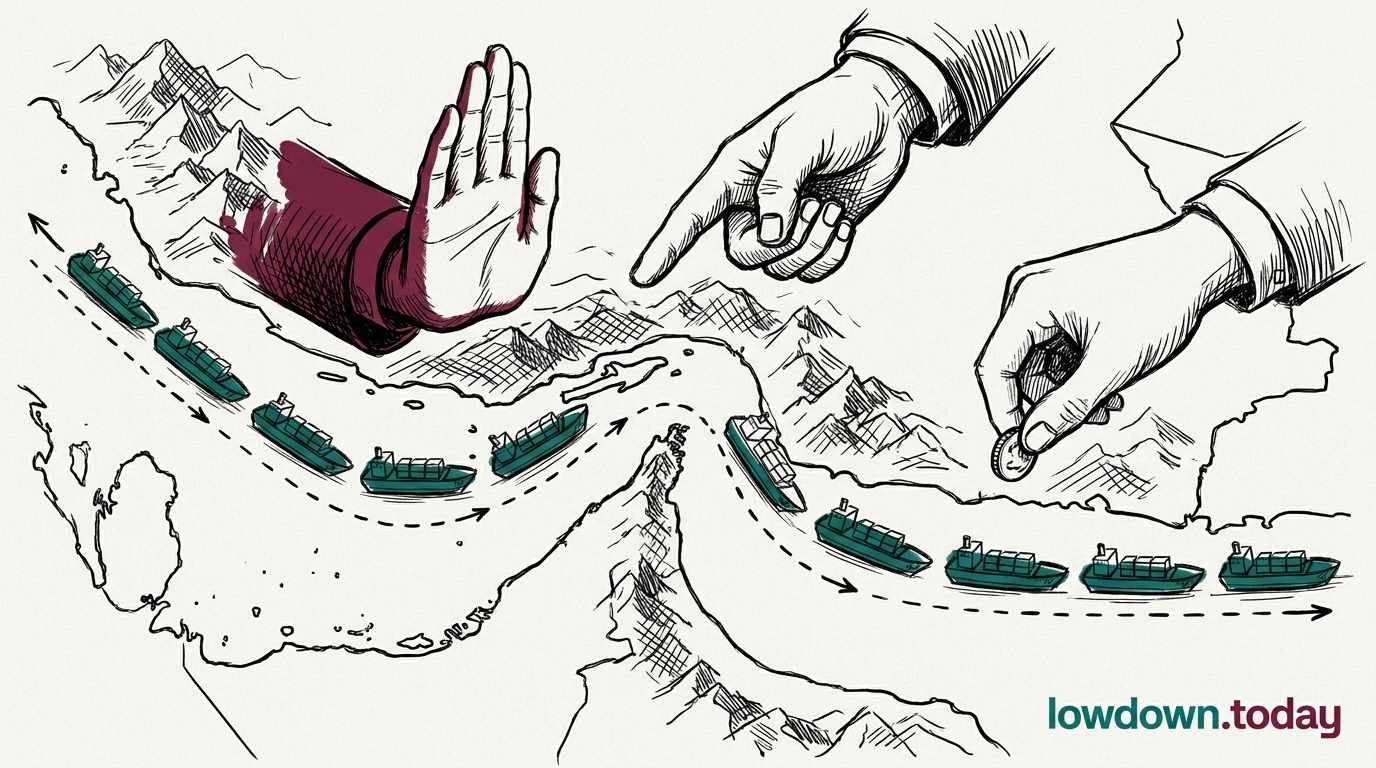
Iran's Hormuz closure on Saturday is what put Vance in Geneva on Sunday.

US Vice President JD Vance attended direct talks with Iran's delegation in Switzerland on Sunday 21 June, two days after a wire report said he had cancelled the trip and Iran had withheld its negotiators. Vance sat alongside special envoy Steve Witkoff and, per Al Jazeera, Jared Kushner; Iran sent parliament speaker Mohammad Bagher Ghalibaf and Foreign Minister Abbas Araghchi⁠1. Pakistan's army chief Asim Munir and Qatar co-mediated. Qatar's foreign ministry confirmed negotiations opened, and Al Jazeera reported the first round concluded the same day⁠2.

This is the Islamabad Memorandum of Understanding (MoU) in motion for the first time since the two sides signed it on 15 June. the MOU is the Pakistan-and-Qatar-brokered framework covering the ceasefire, the reopening of the Strait of Hormuz, and the deferred nuclear question. Readers arriving cold need one fact to orient them: the deal exists on paper, but almost none of its promised steps have landed. The Switzerland round gives each side its first venue to test whether the other will deliver on the MOU's terms.

Look at what moved Vance. On Friday 19 June he was off the plane, Iran had pulled its negotiators, and IRGC boats had fired warning shots in the strait. On Saturday 20 June the Islamic Revolutionary Guard Corps (IRGC) declared Hormuz shut. On Sunday Vance flew anyway and the talks began. The sequence reads one way: Iran's escalation pried the trip loose, not any signed US instrument. Five days after Donald Trump declared the war over and ordered Hormuz reopened without tolls, the only American move that materialised was a diplomat boarding an aircraft.

The mediation channel carries its own weight. Munir's general-officer line into Tehran reaches the IRGC, which holds day-to-day war authority that Araghchi's ministry does not. Routing Iran through Witkoff and Kushner rather than the State Department also keeps the process off the instrument register that Congress can subpoena, which fits a White House that has produced declarations on Iran for months but no signed paper.

Deep Analysis

In plain English

Iran and the United States have been at war since February 2026. They have not had a direct diplomatic conversation since 1979. On 21 June, US Vice President JD Vance and senior Iranian officials sat in the same room in Switzerland for the first time, a genuinely unusual event. Pakistan and Qatar set up the meeting. Their role matters because Iran and the US do not trust each other enough to arrange talks directly. Pakistan's army chief, a four-star general with intelligence contacts on both sides, physically brokered the session. The meeting follows Iran's military arm, the Islamic Revolutionary Guard Corps, or IRGC, declaring the strait of Hormuz (a key global shipping route) closed the day before. Iran's escalation seems to have pressured Washington into attending rather than preventing it.

Deep Analysis
Root Causes

Iran chose a parliament speaker rather than a president to lead its delegation because Ghalibaf carries IRGC institutional legitimacy that a civilian president lacks. The IRGC's 20 June Hormuz closure and the simultaneous Geneva talks are not contradictory signals from a unified actor, they reflect a factional competition inside the Iranian war leadership, where the corps sets military facts and the civilian track extracts concessions from them.

The Pakistan-Qatar mediation architecture persists because neither side has a working bilateral channel. Iran treats Witkoff and Kushner as Trump-proxies without constitutional standing; Washington treats Araghchi as a civilian official who cannot bind the IRGC. Munir's general-officer track is the only conduit trusted by both the corps and the US National Security Council.

Escalation

The talks themselves represent a de-escalatory signal, but they were preceded by an IRGC military escalation (the 20 June Hormuz closure). The pattern, Iran's corps escalates, diplomats negotiate, means each diplomatic session is purchased by a military move. The net direction is contested: talks open but the IRGC retains the capacity and willingness to re-close Hormuz unilaterally.

What could happen next?
  • Consequence

    If the first Geneva round produces a joint communiqué or a scheduled follow-on session, OFAC faces pressure to issue the oil-transaction waiver the MOU promised five days ago.

    Immediate · Reported
  • Risk

    If the IRGC re-closes Hormuz again before a second round, the Pakistan-Qatar mediation architecture loses credibility and the talks collapse into a third failed channel.

    Short term · Reported
  • Precedent

    Direct US-Iran talks at vice-presidential level normalise a channel that bypasses the IRGC veto, the first time that architecture has operated during active hostilities.

    Medium term · Reported
First Reported In

Update #134 · Hormuz shuts as Vance flies to Geneva

Al Jazeera· 21 Jun 2026
Read original →
Different Perspectives
Office for Budget Responsibility
The OBR's 28 October forecast assumed $82 oil for 2026 and 2027, from market prices for the ten working days to 19 August, and blamed dearer wholesale energy on the war without naming Iran. It expects CPI inflation close to 4% in early 2027 even at that price.
Hengaw, Kurdish rights group
Hengaw reported the 3 November hangings of Amirhossein Maleki and Amirhossein Ebrahimi in Isfahan, saying Ebrahimi was tortured into confessing and that nine of 12 people sentenced to death in the case have now been hanged. Iran's judiciary holds that the defendants killed members of the security forces.
FINTRAC, Canada's financial intelligence unit
FINTRAC worked with the US Treasury on the 6 November designation of eight money services businesses in British Columbia, Ontario and Quebec. Treasury says the businesses still operate, some under new names, so closing them falls to Ottawa.
Abdul Qadir al-Dakhil, Governor of Nineveh
Al-Dakhil cancelled three Mosul International Airport contracts on 7 November over alleged links to armed groups, after meeting Prime Minister Ali al-Zaidi in Baghdad. He named no group or company, and said the contracts will go to international companies.
Kuwait
Kuwait
Kuwait condemned the Houthi missile fired towards the Madinah region on 5 November and restated its support for Saudi Arabia, the Qatar News Agency reported. Its state tanker company, Kuwait Oil Tankers Company, is among the Gulf state fleets on Iran's expanded Hormuz list.
Scott Bessent, US Treasury Secretary
Treasury designated an alleged Chandigarh false-flag network on 4 November and eight Canadian exchangers on 6 November, while State sanctioned alleged MANPADS intermediaries. None of the actions touches an oil buyer; they target the paper, cash and procurement around Iran's trade.

Written with AI from Lowdown's published reporting. Not individually reviewed by an editor. Editorial standards.
