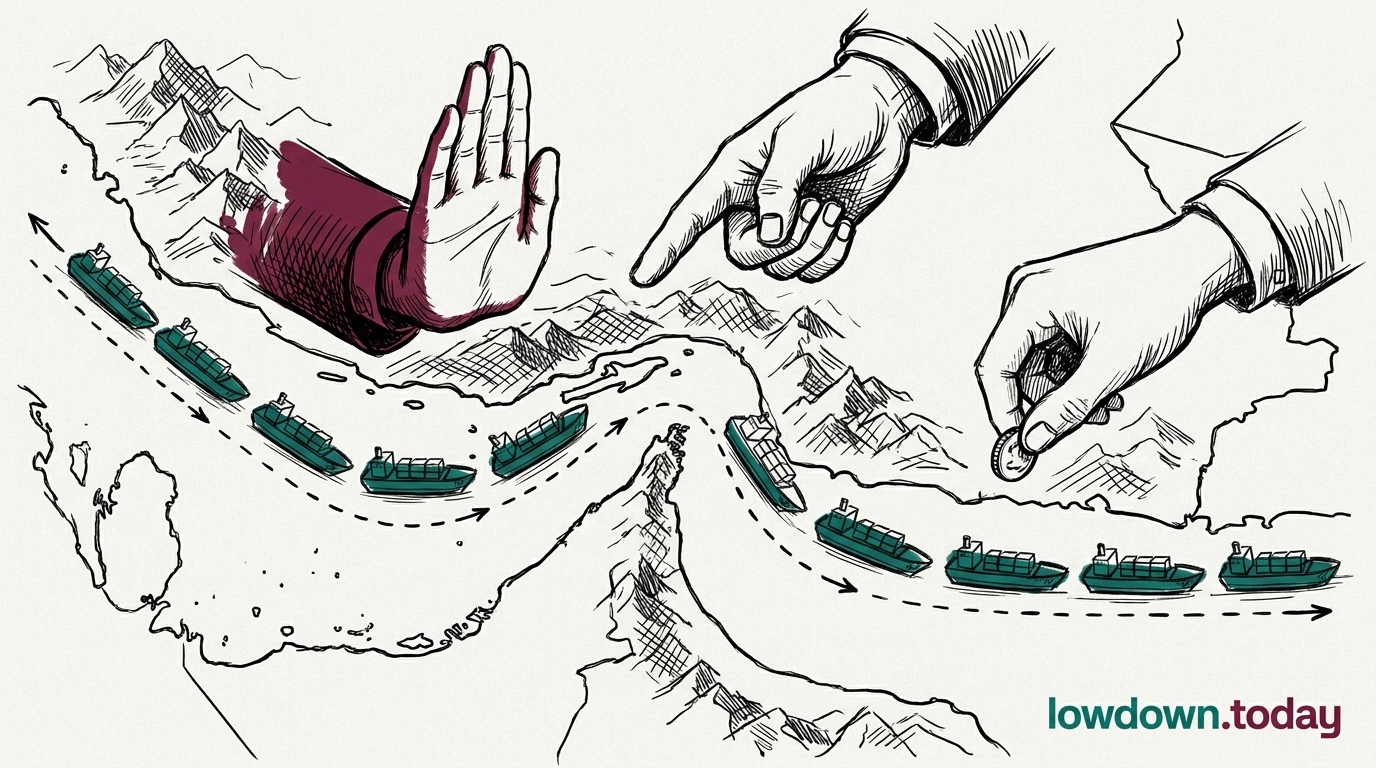
OFAC, the Office of Foreign Assets Control inside the US Treasury, issued General Licence W on Friday 1 May, designated three Iranian foreign exchange houses and the Panama-flagged tanker NEW FUSION to the SDN (Specially Designated Nationals) list, and published a sanctions alert naming the Iranian Red Crescent Society, Bonyad Mostazafan and Iranian embassy accounts as prohibited Hormuz toll payment channels1. Treasury Secretary Scott Bessent's name is on the alert: OFAC will 'relentlessly target the regime's ability to generate, move, and repatriate funds'2.
GL-W is the sixth Iran General Licence of the war and the first dispatched after the briefing's first Russia-only OFAC day on 29 April. It draws its authority from Executive Orders 13902 (Iran additional sectors) and 13224 (counterterrorism), routed through Treasury bureau action rather than presidential signature. The package is the enforcement counter-text to Mojtaba Khamenei's 30 April reassertion of Iranian sovereignty over the Strait.
The contradiction with the WPR letter Trump signed earlier the same Friday is not rhetorical. Each instrument is a real US government document dated 1 May 2026. One declares hostilities terminated; the other enforces against the regime's wartime conduct. A correspondent bank running Iran-exposed compliance now has two signatures of equal legal weight pointing in opposite directions, and the sanctions alert lists charity rails as toll routes for the first time, which means a transfer to the Iranian Red Crescent Society is now a designated payment channel rather than a humanitarian exception.
The alert's choice of channels matters at the operational level. Naming charity, embassy and FX-house routes simultaneously closes the workarounds bank compliance teams had been quietly using to keep humanitarian-tagged flows moving. The ladder from this alert to a second tier of designations, against named recipients of toll payments rather than the categories, is the next visible step on the enforcement track.





