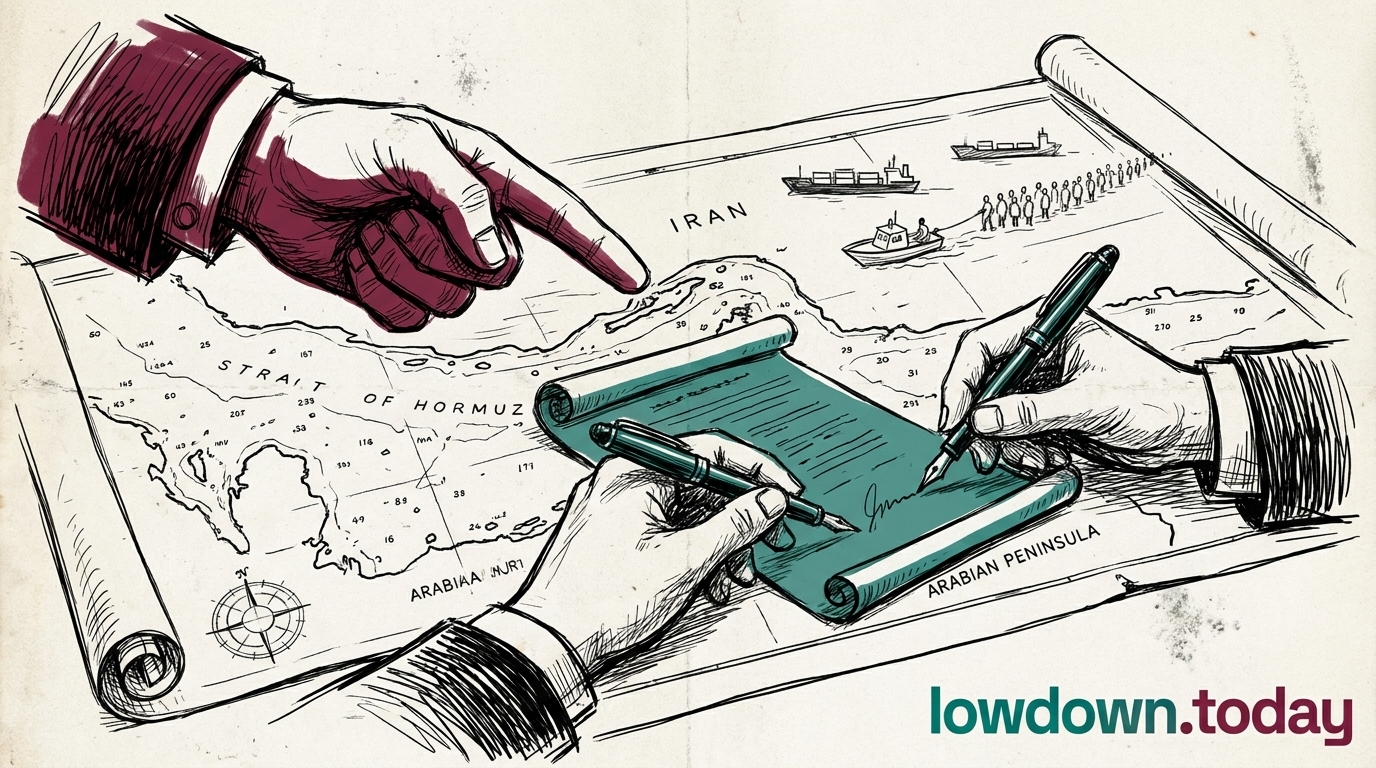
Defence Secretary Hegseth announced at the Pentagon's midday briefing that a second massive air assault on Iran is imminent. The assault will employ 500-pound and 2,000-pound bombs. Hegseth claimed US and Israeli forces will achieve "complete control of Iranian skies in under a week." The announcement — paired with his statement that Iran is "toast and they know it" — frames the second wave as the campaign's decisive phase.
The munitions Hegseth named are standard precision-guided ordnance: GBU-38 (500 lb) and GBU-31 (2,000 lb) Joint Direct Attack Munitions. The 2,000-lb variant with BLU-109 penetrating warhead was confirmed on B-2 Spirit sorties against underground ballistic missile facilities. Those warheads penetrate roughly 1–2 metres of reinforced concrete. Iran's Natanz enrichment halls sit beneath 8 metres of concrete and 22 metres of earth; Fordow is built inside a mountain. The GBU-57 Massive Ordnance Penetrator — the 30,000-lb bomb specifically engineered for such targets — has not been confirmed used. If destroying Iran's nuclear infrastructure is a primary campaign objective, the announced munitions cannot reach the hardest targets.
"Complete control of Iranian skies" conflates two distinct military tasks. Achieving air superiority over Iran's fighter fleet — ageing F-14 Tomcats, MiG-29s, and Su-24 Fencers, two of which Qatar's air force shot down during defensive operations this week — is achievable with US fifth-generation aircraft. Suppressing Iran's integrated air defence network, which includes Russian-supplied S-300PMU-2 systems and the indigenously produced Bavar-373, is a separate and harder problem. Hegseth's one-week timeline does not distinguish between the two.
A second assault presses against the conflict's narrowing diplomatic space. Iran's foreign minister told Oman's FM Albusaidi that Tehran was "open to serious efforts" toward de-escalation, and the Omani backchannel remains the only active diplomatic thread. The European Council on Foreign Relations assessed this week that no viable exit exists on current terms. Within the US administration itself, the campaign's purpose remains officially ambiguous — Hegseth stated "this is not a Regime change war" on the same day Secretary of State Rubio stated the US "would welcome ending the governing system in Tehran". A second massive assault before any diplomatic process produces results answers Rubio's framing more than Hegseth's.





