Skip to content
You can now search across every topic, entity and event.What's new
Iran Conflict 2026
23JUN

The oil licence Trump finally signed

3 min read
11:42UTC

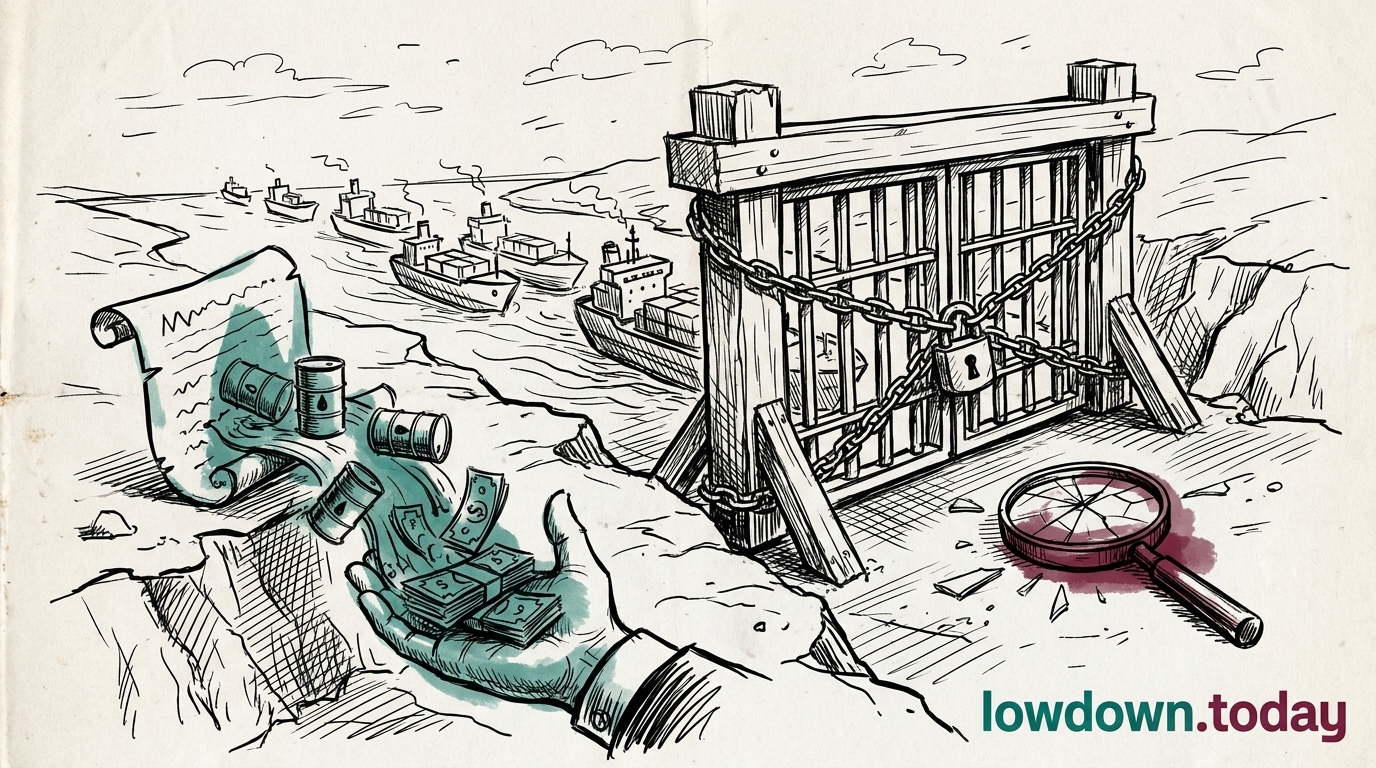
Treasury Secretary Scott Bessent issued General License X on 22 June, the first Iran oil-sanctions relief of the war, authorising Iranian crude sales and dollar payments through 21 August.

ConflictDeveloping
Key takeaway

GL X is a 60-day oil licence its drafters can snap back by doing nothing on 21 August.

Treasury Secretary Scott Bessent issued General License X on 22 June 2026, the first Iran oil-sanctions instrument Washington has signed in 116 days of war. The licence authorises the production, sale and delivery of Iranian crude, petrochemicals and petroleum products, and, in a clause with no precedent in this conflict, permits US dollar payments to sanctioned Iranian entities 1. A general licence is an administrative authorisation from the Office of Foreign Assets Control (OFAC), the US Treasury bureau that runs Iran sanctions. This one also authorises the vessel services that move oil, insurance, flagging, classification, salvage and bunkering, runs until 12:01am EDT on 21 August 2026, and quietly amends the Russia-related General License 134.

For 116 days the ledger had not moved. Trump declared the war over and ordered the Strait of Hormuz reopened , yet produced no executive order, proclamation or OFAC action behind any of it. The prior briefing logged Foreign Minister Abbas Araghchi claiming sanctions relief with no register entry to corroborate it . GL X corroborates that claim in part, reversing the OFAC silence that held when no waiver issued through 18 June .

The paper rewards what the words never could. GL X gives Iran 60 days of oil revenue and the dollar rails to bank it, and its own recitals state that Iran agreed to reopen Hormuz and admit nuclear inspectors. Iran's actions over the next two days contradicted both claims. The instrument is also cheaper to reverse than to issue: OFAC can let it lapse on 21 August with no vote and no further signature, which is why the 60-day clock matters more than the authorisation.


Deep Analysis

In plain English

The US Treasury department has a special office, called OFAC (Office of Foreign Assets Control), that runs America's sanctions programmes. On 22 June it issued what it calls a General Licence, basically a temporary permission slip, allowing Iranian oil to be sold and paid for in US dollars for the next 60 days. Normally, buying Iranian oil or paying an Iranian company in dollars is illegal under US law. This licence lifts that ban temporarily, up until 21 August, as part of ceasefire talks. Think of it as the US pressing pause on one set of penalties while negotiations continue, without fully cancelling them.

Deep Analysis
Root Causes

GL X's narrow scope (oil alone, 60 days, no frozen-assets release) reflects three structural constraints in Washington's position.

First, the Islamabad MOU was published in outline only, and its nuclear commitments, per US officials speaking to CNN, exist as verbal side-deals rather than treaty text. OFAC cannot issue broad relief against a document whose binding terms are not in writing.

Second, the US Treasury's IRGC designation framework, in place since 2007 under Executive Order 13382, prohibits dollar payments to entities the IRGC controls. Any instrument broader than GL X would require a formal designation revision, which carries its own congressional-notification requirements under IEEPA.

Third, GL X also quietly amends Russia-related General License 134, linking the Iran oil instrument to the parallel Russia sanctions track. That dual-ledger linkage constrains how far any single Iran relief instrument can go without triggering Russia-policy objections inside the administration.

Escalation

GL X is de-escalatory in intent but the 60-day ceiling contains its own escalation risk. If the window closes without a successor instrument on 21 August, Iran's oil sector reverts instantly to full sanctions exposure.

The PGSA fee schedule and Shetab-Mir Stage 3 completion both fall within the same window, meaning the August expiry will arrive with Iran's parallel infrastructure complete rather than nascent. A cold snap-back on 21 August would be harder to enforce than the original sanctions, not easier.

What could happen next?
  • Consequence

    Iranian crude begins flowing through GL X's 60-day window, partially normalising oil-market supply expectations before the 21 August expiry.

    Immediate · Assessed
  • Risk

    If no successor instrument follows GL X, a snap-back on 21 August coincides with a fully operational Shetab-Mir payment corridor, making reimposed sanctions structurally harder to enforce.

    Short term · Reported
  • Precedent

    GL X establishes that OFAC can issue Iran oil relief via administrative general licence without a signed treaty, setting a template that can be revoked equally fast.

    Medium term · Assessed
First Reported In

Update #136 · Trump's first Iran paper is an oil licence

OFAC/US Treasury· 23 Jun 2026
Read original
Causes and effects
This Event
The oil licence Trump finally signed
After 116 days of declaring victory and signing nothing, Washington's first Iran instrument front-loads oil revenue against commitments Tehran denies it made.
Different Perspectives
Shipping and insurance industry
UKMTO counted about 20 US-facilitated Hormuz transits a day to 11 September against only 6 visible on AIS, with traffic still around 90% below the 138-a-day pre-war baseline. War-risk underwriters cannot price hulls they cannot see, or resolve whether the tanker El Gaia hit a mine, as Iran claims, or a missile and drone, as CENTCOM says.
European refiners
European refiners
European refiners, including Poland's Orlen, absorbed a roughly $26 gap between Dated Brent at $130.80 on 15 September and ICE Brent futures settling at $103.87 on 18 September, a spread that widened from $13.45 on 9 September rather than newly opening. Their futures hedges no longer cover what they now pay for physical barrels.
Saudi Arabia
Saudi Arabia
Saudi Aramco zeroed European term customers' October allocations and rerouted roughly 60 million barrels to Asia through Ras Tanura and Sohar, using Red Sea and Gulf terminal capacity built years ago to cut Hormuz exposure. Riyadh reallocated existing supply rather than negotiating a shortfall with Europe.
Qatar
Qatar
Qatar's energy minister Saad al-Kaabi told Bloomberg at the Qatar Economic Forum on 20 September that Bessent's two-year Hormuz-obsolescence forecast is wrong, and that Doha has deliberately built no bypass pipeline. Qatar's gas exports run through one waterway by choice, not oversight.
Iran (foreign ministry and Majlis)
Iran's foreign ministry and 130 Majlis deputies moved toward NPT withdrawal this week, with lawmaker Hossein-Ali Haji Deligani filing a triple-urgency bill on 20 September that Speaker Qalibaf has not yet scheduled. Tehran treats treaty membership as leverage still on the table, not yet spent.
Russia and China
Russia and China
Moscow and Beijing vetoed the Panel of Experts' renewal, maintaining Resolution 2231 lapsed in October 2025 and the 2025 snapback was never validly triggered, so the sanctions architecture the Panel enforces has no current legal standing. Both governments frame the veto as upholding law, not shielding Tehran.



