Skip to content
You can now search across every topic, entity and event.What's new
Iran Conflict 2026
23JUN

OFAC issues no Iran sanctions waiver

3 min read
11:42UTC

The US Treasury's sanctions office issued no Iran waiver, licence or delisting through 18 June; the MOU text ties full relief to a final agreement nobody has written.

ConflictDeveloping
Key takeaway

The MOU promised sanctions relief on a schedule to be agreed, which is no schedule at all.

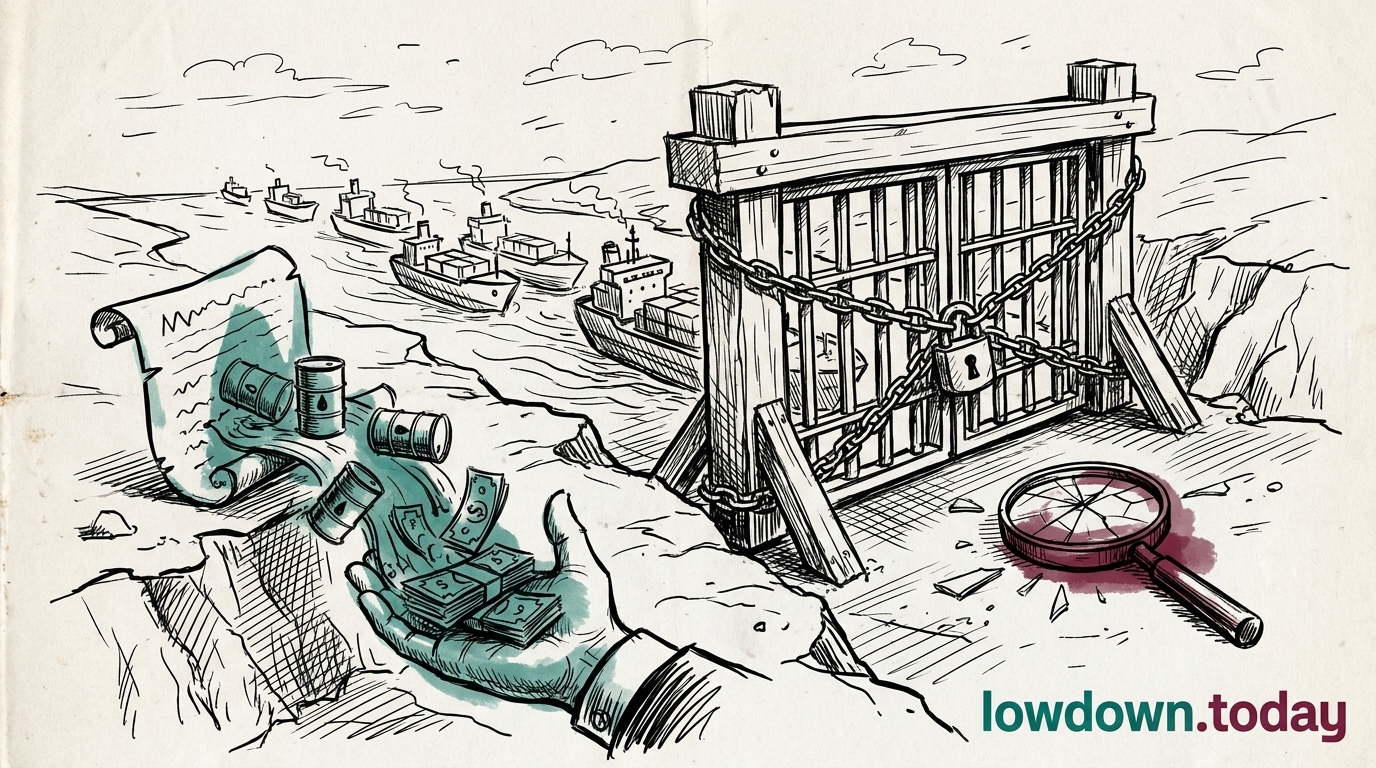
The Office of Foreign Assets Control (OFAC), the US Treasury arm that administers sanctions, issued no Iran waiver, general licence or delisting through 18 June. Its updates that day touched Counter-Terrorism and Cuba designations only 1. The published text of the US-Iran memorandum explains the silence rather than contradicting it : full sanctions relief, including the United Nations Security Council resolutions, is tied to a "final agreement" on "a schedule to be agreed", and only oil-transaction waivers apply "immediately upon signing" 2.

That distinction matters because an OFAC licence is a mechanical instrument, not a statement. Its absence settles the question in a way a podium denial cannot. Roughly $100bn in frozen Iranian assets and a $300bn reconstruction plan are both contingent on a deal that has not been drafted 3.

Secretary of State Marco Rubio told Congress on 2 June the United States "is not discussing, nor has it offered, sanctions relief for Tehran", and he has not walked that back 4. One US official called the 14-point text a "gentleman's agreement". The structure follows the position Washington held before signing: the MOU defers relief because The Administration had not conceded it. For Iran's hardliners, the empty register is evidence the deal delivers nothing now, strengthening the Paydari and IRGC case against it.


Deep Analysis

In plain English

The United States has a powerful tool called sanctions. These are legal rules that forbid US companies and anyone using US dollars from doing business with Iran. Most of Iran's money, roughly $100 billion, has been frozen in foreign banks because of them. After the deal was signed, Iran expected Washington to start loosening these rules. But OFAC, the US Treasury sanctions bureau, issued no Iran waiver on 18 June. The deal's text explains why: the main sanctions relief comes only after a bigger, future final agreement is signed. The $100 billion stays frozen. Iran cannot access it through any existing legal channel under the MOU as written.

Deep Analysis
Root Causes

The OFAC gap has three structural roots. First, the MOU was deliberately drafted to make sanctions relief conditional on a final agreement rather than the interim framework. Republican Senate pressure from Thune and others who would not back the deal without its text made immediate relief politically acute.

Second, Rubio's 2 June congressional testimony created a public record that the US had not offered Iran sanctions relief. No such reversal was issued through 18 June, meaning OFAC action would have directly contradicted the Secretary of State's testimony.

Third, OFAC's sanctions architecture spans multiple executive orders and congressional statutes. Issuing a comprehensive Iran general licence without congressional notification would create legal exposure that Treasury was unwilling to accept without a final deal in hand.

Escalation

OFAC inaction through 18 June is the first concrete data point for Iranian hardliners arguing that the MOU produced no real benefit. If Iran's IRGC or parliament uses the sanctions gap to argue that Phase 2 is futile, the escalation risk rises significantly before talks even begin.

What could happen next?
  • Risk

    The OFAC sanctions gap gives Iran's IRGC concrete evidence to present domestically that the MOU delivered nothing material, potentially undermining Pezeshkian's political position before Phase 2 begins.

    Short term · Assessed
  • Consequence

    Iran's roughly $100 billion in frozen assets remain inaccessible under the MOU structure, preventing any significant economic recovery or reconstruction spending until a final agreement is signed.

    Medium term · Assessed
  • Precedent

    The MOU's oil-waiver-only structure sets a precedent for future Iran negotiations that economic normalisation is a Phase 3 outcome, not a Phase 2 incentive, which may complicate the next negotiating round.

    Long term · Assessed
First Reported In

Update #132 · Trump lifted the blockade, not the strait

US Treasury (OFAC) / Congressional record· 19 Jun 2026
Read original
Different Perspectives
Turkiye
Turkiye
Erdogan followed the Pakistani delegation to Jeddah for an instrument that has not been signed. Ankara's entry widens Saudi Arabia's defence architecture beyond the existing Pakistan pact, adding a second non-Gulf military partner mid-conflict.
Oman
Oman
Muscat is the corridor's broker but has published nothing about the arrangement Fars describes on its behalf. The account leaves Oman administering outbound traffic only, a narrower role than the shared route its mediation has rested on since 1979.
Pakistan
Pakistan
Islamabad sent Sharif, Munir and Dar to Jeddah to widen a defence commitment it has honoured in cheaper registers since March, when Dar invoked the Saudi mutual defence pact. Jeddah tests whether that hedge becomes a binding trilateral instrument with Turkiye.
United States
United States
Washington rejected the Majlis Hormuz bill outright while CENTCOM's own tally kept climbing to 49 vessels redirected since 14 July. Both instruments tightened in the same week Trump promised the strait would reopen soon.
Iran
Iran
Iran's foreign ministry is selling a phased Hormuz corridor through Oman and denying any percentage cargo tariff, while its own Majlis is legislating fines to 20% and a bar on Israeli-linked cargo. The two accounts, from the same government, do not agree with each other.
Saudi Arabia
Saudi Arabia
Riyadh published a target forecast, not an attribution, for the campaign it says the Najran strike previewed. That keeps an Article 51 case available while it formalises a trilateral defence architecture with Pakistan and Turkiye.



