Skip to content
You can now search across every topic, entity and event.What's new
Iran Conflict 2026
23JUN

Bessent locks Iran's funds in Qatar

3 min read
11:42UTC

Scott Bessent said the disputed $12 billion in frozen Iranian funds would sit in a US-controlled escrow in Qatar, spendable only on American food and medicine. Iran rejected the terms.

ConflictDeveloping
Key takeaway

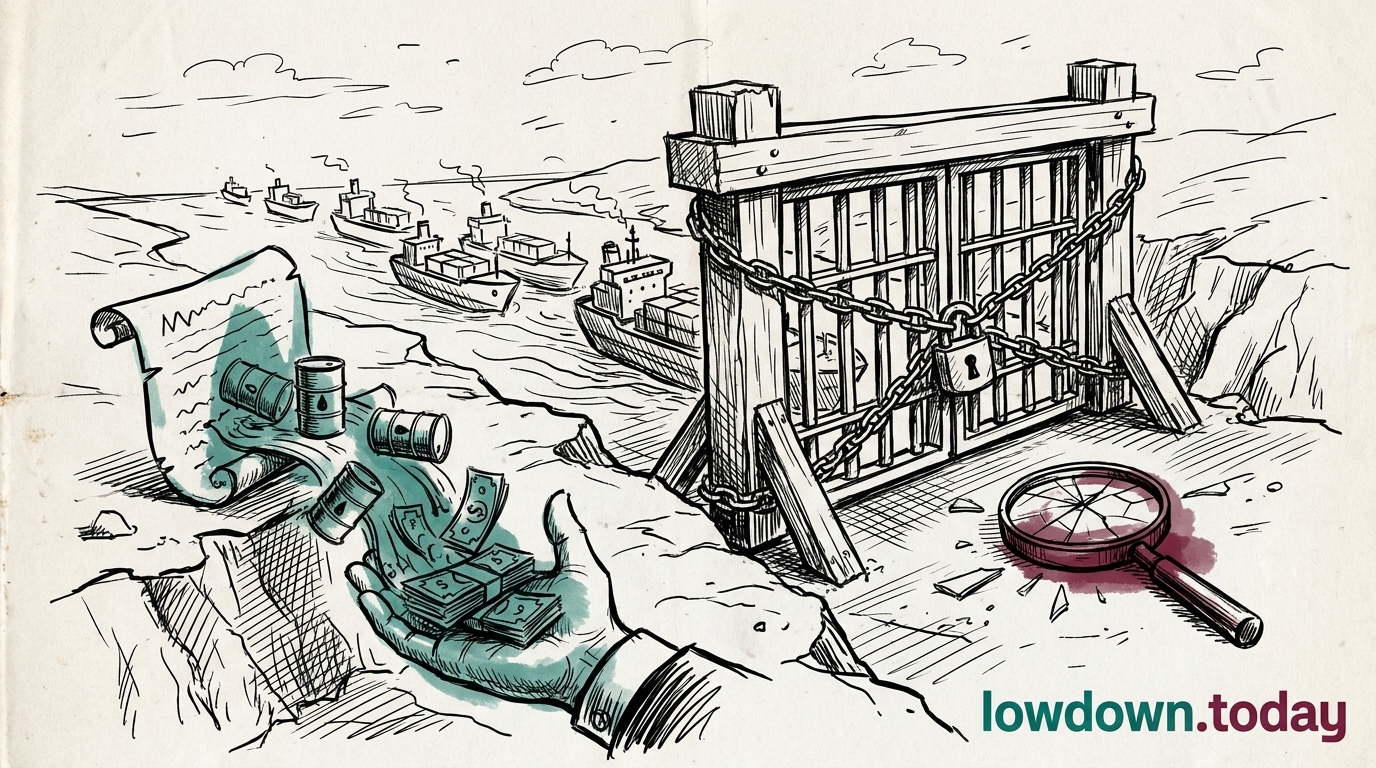
Washington can lock the frozen cash, but Iran's oil income answers to no escrow.

Treasury Secretary Scott Bessent said on Wednesday 24 June that the disputed $12 billion in frozen Iranian funds would be held in a US-controlled escrow account in Qatar 1. Bessent runs the US Treasury, the department that administers American sanctions. The money could be spent only on American food and medical exports such as corn, wheat and soybeans. Iran rejected the United States dictating how it spends its own money, and its officials said any food purchases would turn on price and quality, not Washington's direction .

Iran has framed the same package as a two-tranche release with no strings attached, while the US has insisted the figure was agreed with conditions all along . The same oil licence that earns Iran billions each month carries none of the escrow's conditions, so Washington can lock the contested cash while the crude keeps sailing to China.


Deep Analysis

In plain English

Iran has money frozen in accounts overseas that it cannot access because of US sanctions. Most of it sits in Qatar. The US Treasury Secretary said on 24 June that this money, around $12 billion, could be released into a special account in Qatar, but Iran could only use it to buy American food and medical supplies like corn, wheat, and soybeans. Iran said no. Iranian officials argued they should be able to spend their own money however they choose, and that buying specifically from the United States at prices and terms Washington sets is not freedom. Meanwhile, Iran is already earning billions selling oil freely under a separate US permission that has no such conditions attached.

Deep Analysis
Root Causes

Two distinct pools of money are in play simultaneously, and Washington has imposed tight conditions on only one of them. GL X, the 60-day oil export licence, carries no escrow and no cap; Iranian crude revenue flows freely to China. The frozen $12 billion in Qatar is subject to strict US end-use conditions. This asymmetry is the core structural tension: Iran earns freely under GL X while its frozen cash sits under Washington's control.

Iran's legal position rests on the distinction between asset ownership and asset access. Iranian officials and their legal advisers in international forums consistently argue that the frozen funds belong to Iran under applicable law, and that imposing conditions on their use is a unilateral violation of the Algiers Accords and later UN General Assembly resolutions on economic coercion. Several non-Western jurisdictions have endorsed this position in international legal proceedings.

The domestic political constraint in Tehran reinforces the rejection. Hardline Majlis members who are already threatening sit-ins over the MOU would use any acceptance of US-directed spending conditions as evidence of capitulation. Pezeshkian's government cannot accept a structure that allows US officials to veto how Iran spends Iranian money without triggering a domestic political crisis.

What could happen next?
  • Risk

    Iran's ongoing rejection of escrow conditions, combined with GL X oil income running parallel and uncapped, removes any financial urgency for Tehran to accept Washington's frozen-assets framework before GL X lapses.

    Short term · Assessed
  • Consequence

    The escrow dispute hardens the gap between US and Iranian framings of what the MOU agreed, making the 60-day talks window increasingly unlikely to produce a final deal before August deadlines converge.

    Medium term · Assessed
  • Precedent

    If the US succeeds in imposing agricultural end-use conditions on frozen Iranian assets, it establishes that Washington can direct how any sanctioned state spends its sovereign funds, a precedent several non-Western governments are watching closely.

    Long term · Suggested
First Reported In

Update #139 · A commander dies, the deal binds no one

CNBC· 26 Jun 2026
Read original
Different Perspectives
Turkiye
Turkiye
Erdogan followed the Pakistani delegation to Jeddah for an instrument that has not been signed. Ankara's entry widens Saudi Arabia's defence architecture beyond the existing Pakistan pact, adding a second non-Gulf military partner mid-conflict.
Oman
Oman
Muscat is the corridor's broker but has published nothing about the arrangement Fars describes on its behalf. The account leaves Oman administering outbound traffic only, a narrower role than the shared route its mediation has rested on since 1979.
Pakistan
Pakistan
Islamabad sent Sharif, Munir and Dar to Jeddah to widen a defence commitment it has honoured in cheaper registers since March, when Dar invoked the Saudi mutual defence pact. Jeddah tests whether that hedge becomes a binding trilateral instrument with Turkiye.
United States
United States
Washington rejected the Majlis Hormuz bill outright while CENTCOM's own tally kept climbing to 49 vessels redirected since 14 July. Both instruments tightened in the same week Trump promised the strait would reopen soon.
Iran
Iran
Iran's foreign ministry is selling a phased Hormuz corridor through Oman and denying any percentage cargo tariff, while its own Majlis is legislating fines to 20% and a bar on Israeli-linked cargo. The two accounts, from the same government, do not agree with each other.
Saudi Arabia
Saudi Arabia
Riyadh published a target forecast, not an attribution, for the campaign it says the Najran strike previewed. That keeps an Article 51 case available while it formalises a trilateral defence architecture with Pakistan and Turkiye.



