Skip to content
You can now search across every topic, entity and event.What's new
Iran Conflict 2026
21JUN

Six Arc7 carriers face binary maintenance fork

4 min read
17:51UTC

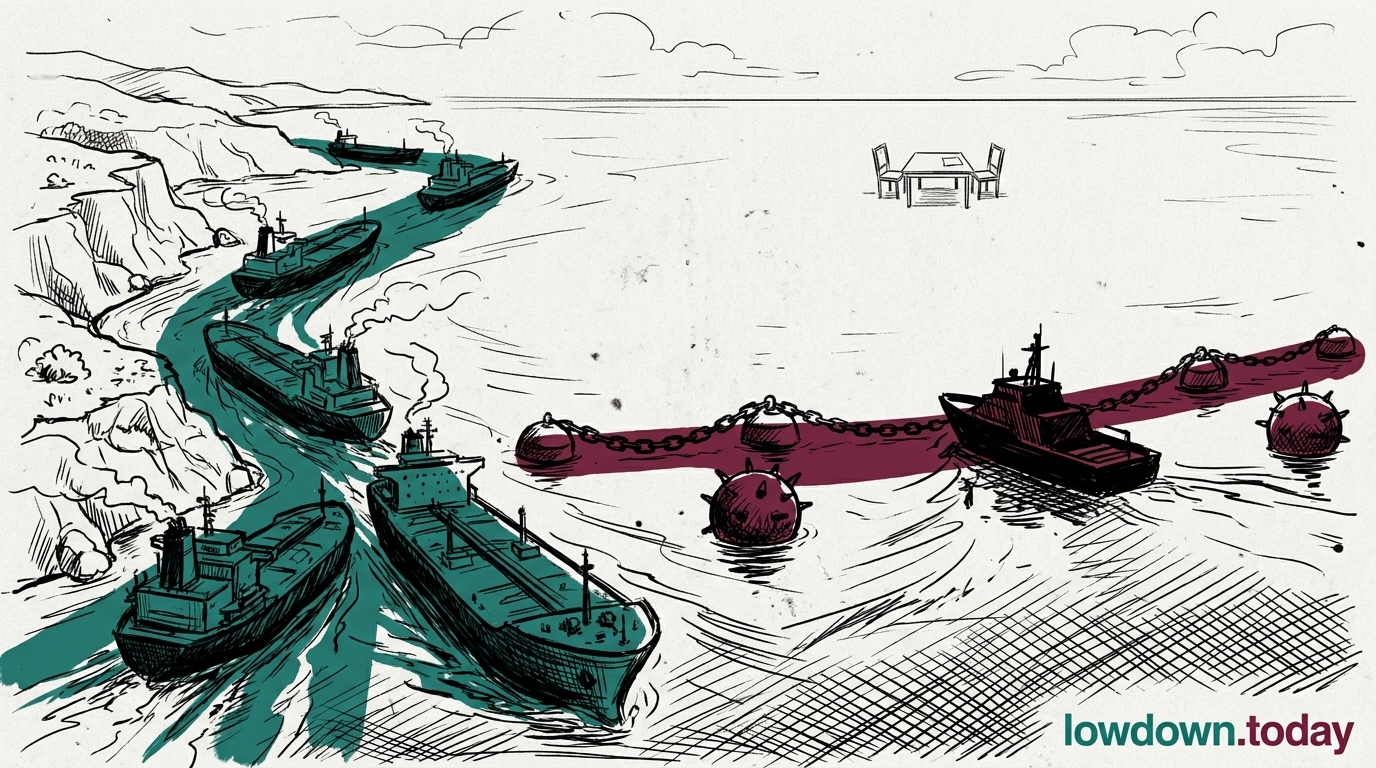
The EU 20th sanctions package banned EU yards from servicing Arc7 ice-class LNG carriers from 25 April. Six named vessels are due dry-dock across summer 2026; all six were last serviced in France or Denmark in 2023.

ConflictAssessed
Key takeaway

Six Arc7 carriers must reach Singapore, China or the UAE this summer or face the 2026/27 Arctic season uncertified.

The EU 20th sanctions package, adopted by EU Council on 23 April and operative from 25 April, banned EU yards from servicing Arc7 ice-class LNG carriers 1. Six named vessels are due for dry-dock across summer 2026: Rudolf Samoylovich, Georgiy Brusilov, Boris Davydov, Vladimir Vize, Nikolay Zubov, and Nikolay Yevgenov. All six were last serviced in France or Denmark in 2023, on the standard three-year ice-class certification cycle.

Operators face a binary fork on operating mechanics: reach non-EU yards in Singapore, China or the UAE inside the summer window, or push servicing into the 2026/27 Arctic operating season after sea ice returns. Push the work past the window and an ice-class certification gap opens at the moment the vessel most needs it. If even two or three of the six fail to secure servicing, Yamal LNG breakdown risk rises sharply through next winter. EU Council blocked the full maritime services ban at adoption ; only the Arc7-specific maintenance ban passed. That partial scope concretes the risk: the chokepoint sits on yard access, not vessel certification.

This sits outside every published EU refill model. Bruegel's three-scenario refill model prices LNG cargo costs at given TTF levels; the ACER modelling prices a 26 bcm Qatar-offline shortfall. Neither prices supply continuity for Russian Arctic LNG flow that the EU is gradually choking through a maintenance side-door. Even if EU storage lands at 80% on 1 November, winter 2026/27 reliability still depends on volumes the sanctions architecture is now indirectly disrupting.


Deep Analysis

In plain English

Yamal LNG is a massive gas liquefaction facility built on a remote Arctic peninsula in Russia. The specialised ships that carry its gas, called Arc7 carriers, are built to break through several metres of ice and operate in temperatures below -50°C. Like any ship, they need periodic maintenance in a dry-dock. They were last maintained in France and Denmark in 2023, so several are due for their next service this summer. The European Union has now banned its own shipyards from doing that work as part of sanctions against Russia. The carriers must now find yards in Singapore, China or the UAE to do the work instead, but those yards have limited space for such unusual vessels. If they cannot get serviced before autumn ice returns, they will not be able to operate safely through next winter.

Deep Analysis
Root Causes

The Arc7 maintenance ban creates a non-substitutable chokepoint for three interlocking structural reasons.

First, Arc7 ice-class certification is technically specific. The designation requires testing of hull steel behaviour at -52°C, propulsion performance in 2.1-metre consolidated ice, and rescue system functionality in Arctic conditions. These tests cannot be conducted in tropical yards; they require ice-class testing facilities in northern Norway or Finland, both now barred under the 20th package, or the equivalent in Russia, which lacks the modern testing infrastructure.

Second, Arctic sea ice returns to the Northern Sea Route by mid-September, setting a hard calendar deadline for any vessel that needs dry-dock time. Vessels operating after that date without current ice-class certification face flag-state detention risk and lose the ability to navigate the route that Yamal LNG depends on for cargo export.

Third, the EU deliberately scoped the ban to maintenance only, excluding full maritime services. That partial scope was a political compromise within the Council but it does not reduce the operational consequence: the maintenance ban is the binding constraint, and the services carve-out does not help vessels that cannot get into a yard.

What could happen next?
  • Risk

    If two or more Arc7 vessels fail to clear non-EU yards by September, Yamal LNG faces a reliability reduction of up to 30% through winter 2026/27, a risk priced in no published EU refill model.

    Medium term · 0.65
  • Precedent

    The partial scope of the EU Arc7 ban, maintenance only, maritime services excluded, creates a sanctions architecture loophole that Russia may exploit via TsNIIMF provisional certification extension, setting a precedent for future ice-class sanctions evasion.

    Medium term · 0.58
  • Risk

    Singapore and Keppel yards' three-hull capacity for Arc7 servicing against six vessels needing work means at least three operators will miss Q3 2026 yard slots unless Chinese yards (Hudong-Zhonghua) agree to receive Russian-sanctioned vessels under their own flag-state framework.

    Short term · 0.62
First Reported In

Update #7 · Storage pace 0.21 vs 0.257; floor not yet met

Hill Dickinson· 4 May 2026
Read original
Different Perspectives
Turkiye
Turkiye
Erdogan followed the Pakistani delegation to Jeddah for an instrument that has not been signed. Ankara's entry widens Saudi Arabia's defence architecture beyond the existing Pakistan pact, adding a second non-Gulf military partner mid-conflict.
Oman
Oman
Muscat is the corridor's broker but has published nothing about the arrangement Fars describes on its behalf. The account leaves Oman administering outbound traffic only, a narrower role than the shared route its mediation has rested on since 1979.
Pakistan
Pakistan
Islamabad sent Sharif, Munir and Dar to Jeddah to widen a defence commitment it has honoured in cheaper registers since March, when Dar invoked the Saudi mutual defence pact. Jeddah tests whether that hedge becomes a binding trilateral instrument with Turkiye.
United States
United States
Washington rejected the Majlis Hormuz bill outright while CENTCOM's own tally kept climbing to 49 vessels redirected since 14 July. Both instruments tightened in the same week Trump promised the strait would reopen soon.
Iran
Iran
Iran's foreign ministry is selling a phased Hormuz corridor through Oman and denying any percentage cargo tariff, while its own Majlis is legislating fines to 20% and a bar on Israeli-linked cargo. The two accounts, from the same government, do not agree with each other.
Saudi Arabia
Saudi Arabia
Riyadh published a target forecast, not an attribution, for the campaign it says the Najran strike previewed. That keeps an Article 51 case available while it formalises a trilateral defence architecture with Pakistan and Turkiye.



