Skip to content
You can now search across every topic, entity and event.What's new
Iran Conflict 2026
21JUN

Brent falls below its pre-war level

3 min read
17:51UTC

Brent crude fell more than 4% to a $72.64-$73.72 range on 25 June, dropping under its pre-war February level and erasing the war premium that had pushed it past $116 at the height of the IRGC closure.

ConflictDeveloping
Key takeaway

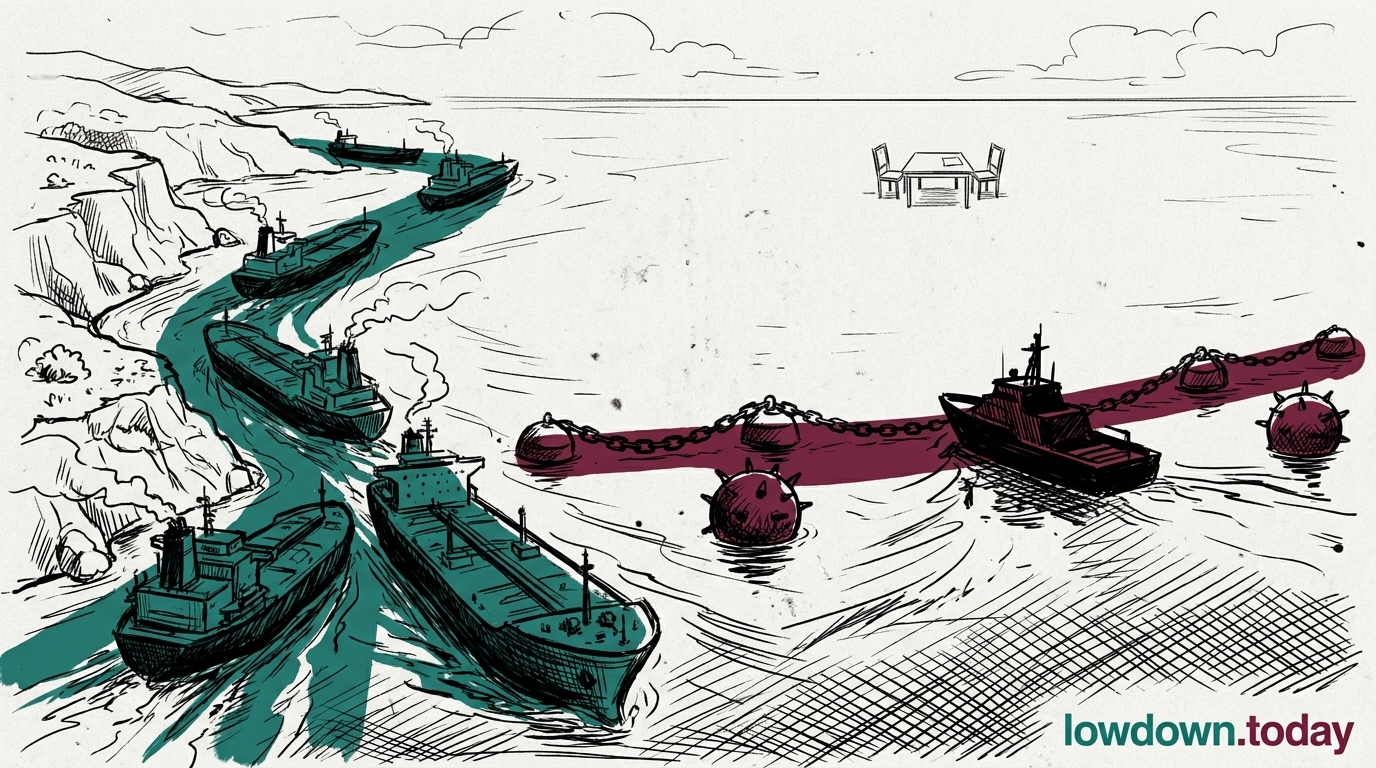
Oil has declared the war over at $72-73, but the minefield and the underwriters have not.

Brent Crude fell to a range of $72.64 to $73.72 on Thursday 25 June, down more than four per cent in a single session and below its pre-war February level 1. Brent is the global oil benchmark that sets the price of roughly two-thirds of internationally traded crude, so its level feeds directly into petrol, diesel and inflation worldwide. The war premium that pushed it past $116 at the height of the IRGC closure is now entirely gone.

The fall extends a steady reversal. Brent traded at $76.14 only the day before , and held near $80.59 while Iran's Islamic Revolutionary Guard Corps (IRGC) still enforced its Hormuz closure . Traders have now priced the benchmark below where it sat before the 28 February strikes, on the same morning the IRGC rejected the Oman corridor and ordered vessels onto Channel 16.

The market is pricing a normalisation the water has not delivered. Mines remain uncleared and need 40 to 50 days of minimum sweeping, foreign-flag commercial flow runs at a fraction of the pre-war 94 transits a day, and no Protection and Indemnity club has reinstated war-risk cover. Traders are treating the corps's threats as bluff and the Korean sailings as the true signal. Because the premium is fully priced out, a single mine strike or one boarding would reprice the entire curve with no buffer to absorb it.


Deep Analysis

In plain English

Oil's global price is set by traders in markets like London, who buy and sell contracts based on what they expect the situation to be in the future. On Thursday, those traders decided the Iran crisis was effectively over and sold their 'war premium', the extra they had been charging because of the danger, pushing the price of oil below where it was before the war started. On the water, nothing has changed. Mines seeded by the IRGC in June remain uncleared. Shipping insurers still will not cover ships crossing the strait. And Iran's military declared that same morning that it would not accept the new safety route. Oil traders are betting everything will be fine; the mines and the insurers are not.

Deep Analysis
Root Causes

Futures markets price the expected outcome of a geopolitical resolution, not the physical state of the supply chain on the day of trading. The Korean transits and the diplomatic language of both Oman and the GCC signalled to algorithmic trading systems that the closure was ending, producing a cascade sell-off of the war premium regardless of whether ships could actually transit with cover.

Chinese buyers received Iranian crude throughout the conflict via the shadow fleet, suppressing the actual supply shortfall below the headline numbers implied by a closed Hormuz. With GL X now authorising Iranian oil sales through 21 August , the partial legalisation of those flows removed residual uncertainty about Chinese purchasing volumes, accelerating the premium sell-off.

A price floor no longer exists: because the premium is fully priced out, a single mine incident or IRGC boarding would reprice from zero premium rather than from a cushioned level. Spot price carries none of the tail-risk cost that physical insurance markets are still pricing at 20 times pre-war rates.

What could happen next?
  • Risk

    Brent with zero war premium has no downside cushion: a single mine strike or IRGC boarding would produce a larger proportional price spike than any event during the conflict, because traders would be repricing from a fully discounted base.

  • Consequence

    Gulf producer state budgets, sized for $80-90 Brent, move into deficit at sustained $72-73, pressuring Saudi Arabia in particular to push OPEC+ for production cuts that would reverse the price decline and contradict their diplomatic stance on Hormuz normalisation.

First Reported In

Update #138 · Three flags over Hormuz, none enforced

Gulf News· 25 Jun 2026
Read original
Different Perspectives
Shipping and insurance industry
UKMTO counted about 20 US-facilitated Hormuz transits a day to 11 September against only 6 visible on AIS, with traffic still around 90% below the 138-a-day pre-war baseline. War-risk underwriters cannot price hulls they cannot see, or resolve whether the tanker El Gaia hit a mine, as Iran claims, or a missile and drone, as CENTCOM says.
European refiners
European refiners
European refiners, including Poland's Orlen, absorbed a roughly $26 gap between Dated Brent at $130.80 on 15 September and ICE Brent futures settling at $103.87 on 18 September, a spread that widened from $13.45 on 9 September rather than newly opening. Their futures hedges no longer cover what they now pay for physical barrels.
Saudi Arabia
Saudi Arabia
Saudi Aramco zeroed European term customers' October allocations and rerouted roughly 60 million barrels to Asia through Ras Tanura and Sohar, using Red Sea and Gulf terminal capacity built years ago to cut Hormuz exposure. Riyadh reallocated existing supply rather than negotiating a shortfall with Europe.
Qatar
Qatar
Qatar's energy minister Saad al-Kaabi told Bloomberg at the Qatar Economic Forum on 20 September that Bessent's two-year Hormuz-obsolescence forecast is wrong, and that Doha has deliberately built no bypass pipeline. Qatar's gas exports run through one waterway by choice, not oversight.
Iran (foreign ministry and Majlis)
Iran's foreign ministry and 130 Majlis deputies moved toward NPT withdrawal this week, with lawmaker Hossein-Ali Haji Deligani filing a triple-urgency bill on 20 September that Speaker Qalibaf has not yet scheduled. Tehran treats treaty membership as leverage still on the table, not yet spent.
Russia and China
Russia and China
Moscow and Beijing vetoed the Panel of Experts' renewal, maintaining Resolution 2231 lapsed in October 2025 and the 2025 snapback was never validly triggered, so the sanctions architecture the Panel enforces has no current legal standing. Both governments frame the veto as upholding law, not shielding Tehran.



