Skip to content
Welcome, thoughtbot's Giant Robots listeners!Start here
Iran Conflict 2026
21JUN

Brent drops below $90 on ceasefire bet

3 min read
17:51UTC

Brent crude fell about 4 per cent to $89.25 on 12 June, below $90 for the first time in the conflict window, as traders priced the ceasefire as more likely than not.

ConflictDeveloping
Key takeaway

Oil fell on ceasefire odds, not new barrels, so a missed signing would snap it straight back.

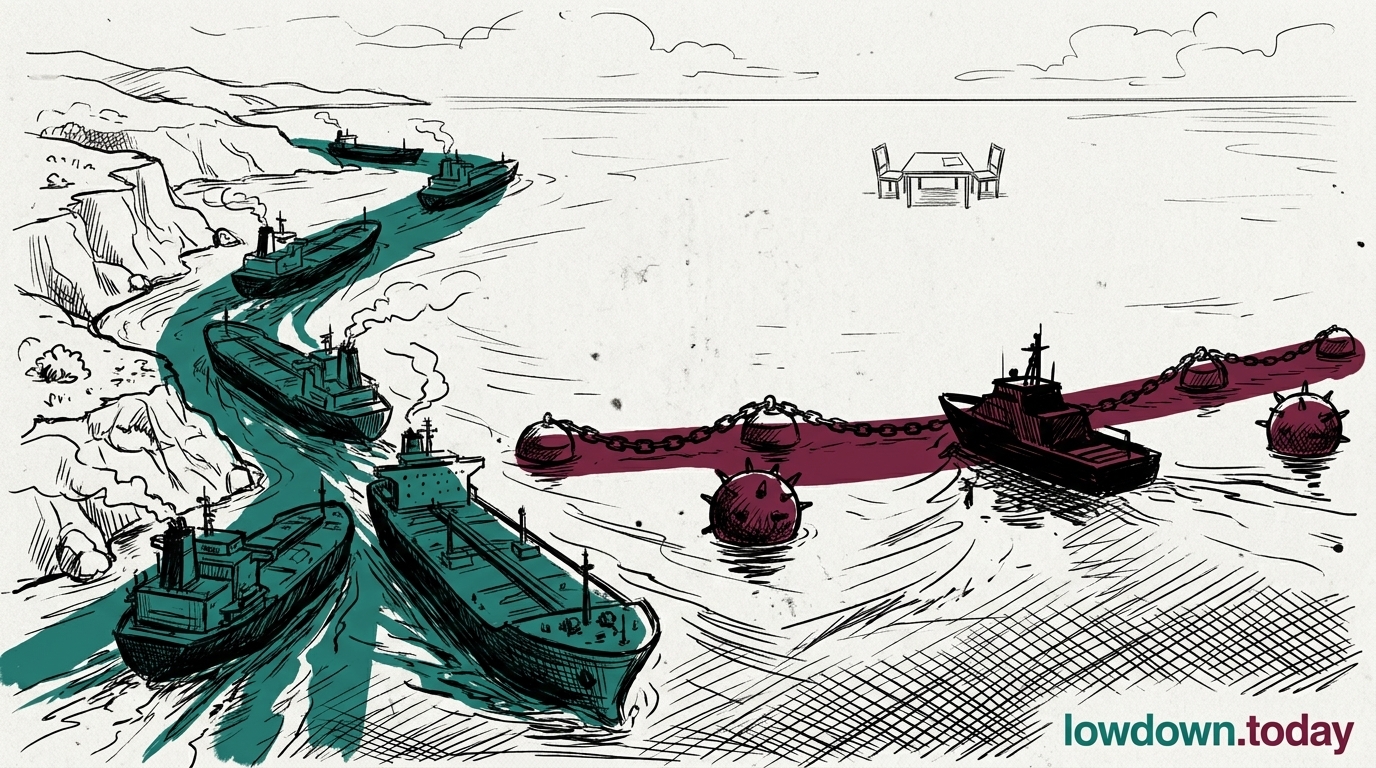
Brent Crude fell about 4 per cent to $89.25 on 12 June, slipping below $90 for the first time in the conflict window "after Trump suspended planned attacks"⁠1. The drop reverses the prior session, when Brent had reached $96.34 on the US-Iran exchange repricing Hormuz risk and then settled at $94.71 on CENTCOM (US Central Command)'s strikes-complete call. The $5.46 fall completes a round-trip on the de-escalation signal.

Iran's exports have tightened to between 209,000 and 260,000 barrels a day, down roughly 86 per cent from the 1.84 million before the war, with the physical supply picture barely changed this week. That collapse is old news to the market. The move is sentiment, not supply: the price tracks no new barrels, it tracks the odds of a ceasefire.

The market read Trump's stand-down as the real turn and Esmail Baghaei's denial as noise, putting the futures desk on the opposite side of Iran's own foreign ministry. One of them is wrong, and a weekend signing or a missed one will settle which by the close.

Deep Analysis

In plain English

Oil prices dropped sharply on Thursday because investors around the world bet that the fighting between the US and Iran was winding down. When conflicts in oil-producing regions calm down, oil prices usually fall because traders stop charging a "risk premium", the extra money built into the price in case the situation gets worse. The catch is that very little oil has actually started flowing again through the strait of Hormuz. Iran's oil exports have been cut to almost nothing by the blockade, and that had not changed this week. The price fell because of hope, not because of new supply. If the deal Trump announced is not signed by the end of the weekend, expect oil prices to bounce back up just as fast as they fell.

Deep Analysis
Root Causes

Oil markets price Hormuz risk via a conflict premium that has no direct supply-chain transmission mechanism: Brent can fall 4 per cent on a stand-down even when zero additional barrels clear the strait, because the premium reflects a probability-weighted expectation of future supply, not current flows.

Kpler and Vortexa data confirm Iran's exports at 209,000-260,000 barrels per day are unchanged from the prior week. Kpler and Vortexa data confirm Iran's exports at 209,000-260,000 barrels per day are unchanged from the prior week, so the $5.46 fall prices ceasefire probability, not new barrels.

Lloyd's of London has not repriced Hormuz war-risk cover because its trigger requires a UN Security Council resolution or government certification, not a presidential statement. Until Lloyd's reprices, tanker insurance costs remain elevated and the strait stays commercially inaccessible regardless of the Brent spot move. Spot price and shipping-market reality pointed in opposite directions on Thursday, with the divergence persisting until a formal legal resolution of the conflict is certified.

What could happen next?
  • Consequence

    A sustained sub-$90 Brent reduces the economic pressure on Iran that Washington has cited as the blockade's primary coercive leverage, creating a narrow window in which both sides have an incentive to close a deal before the price recovers.

    Immediate · Assessed
  • Risk

    Lloyd's of London's war-risk cover for Hormuz will not reprice until a UN Security Council resolution or government certification is issued. Until that threshold is met, tanker insurance costs remain elevated and the strait stays commercially inaccessible regardless of the spot Brent move.

    Short term · Reported
  • Opportunity

    South and Southeast Asian oil-importing economies, including India, Indonesia, Pakistan and Bangladesh, stand to gain approximately $1 billion per year per dollar of sustained Brent reduction at current consumption levels, partially offsetting the supply disruption costs they have absorbed since February.

    Medium term · Suggested
First Reported In

Update #125 · Trump halts strikes, touts deal Iran denies

Trading Economics· 12 Jun 2026
Read original →
Different Perspectives
Office for Budget Responsibility
The OBR's 28 October forecast assumed $82 oil for 2026 and 2027, from market prices for the ten working days to 19 August, and blamed dearer wholesale energy on the war without naming Iran. It expects CPI inflation close to 4% in early 2027 even at that price.
Hengaw, Kurdish rights group
Hengaw reported the 3 November hangings of Amirhossein Maleki and Amirhossein Ebrahimi in Isfahan, saying Ebrahimi was tortured into confessing and that nine of 12 people sentenced to death in the case have now been hanged. Iran's judiciary holds that the defendants killed members of the security forces.
FINTRAC, Canada's financial intelligence unit
FINTRAC worked with the US Treasury on the 6 November designation of eight money services businesses in British Columbia, Ontario and Quebec. Treasury says the businesses still operate, some under new names, so closing them falls to Ottawa.
Abdul Qadir al-Dakhil, Governor of Nineveh
Al-Dakhil cancelled three Mosul International Airport contracts on 7 November over alleged links to armed groups, after meeting Prime Minister Ali al-Zaidi in Baghdad. He named no group or company, and said the contracts will go to international companies.
Kuwait
Kuwait
Kuwait condemned the Houthi missile fired towards the Madinah region on 5 November and restated its support for Saudi Arabia, the Qatar News Agency reported. Its state tanker company, Kuwait Oil Tankers Company, is among the Gulf state fleets on Iran's expanded Hormuz list.
Scott Bessent, US Treasury Secretary
Treasury designated an alleged Chandigarh false-flag network on 4 November and eight Canadian exchangers on 6 November, while State sanctioned alleged MANPADS intermediaries. None of the actions touches an oil buyer; they target the paper, cash and procurement around Iran's trade.

Written with AI from Lowdown's published reporting. Not individually reviewed by an editor. Editorial standards.
