Skip to content
You can now search across every topic, entity and event.What's new
Iran Conflict 2026
21JUN

Brent slips to $94.71 the day Hormuz is declared shut

4 min read
17:51UTC

Brent eased about 1.7 per cent to $94.71 on 11 June, with WTI near $91.84, pulling back from the prior day's peak even as the IRGC declared the Strait of Hormuz closed.

ConflictDeveloping
Key takeaway

Oil fell the day Hormuz was declared shut, the market betting the closure is words, not a sealed strait.

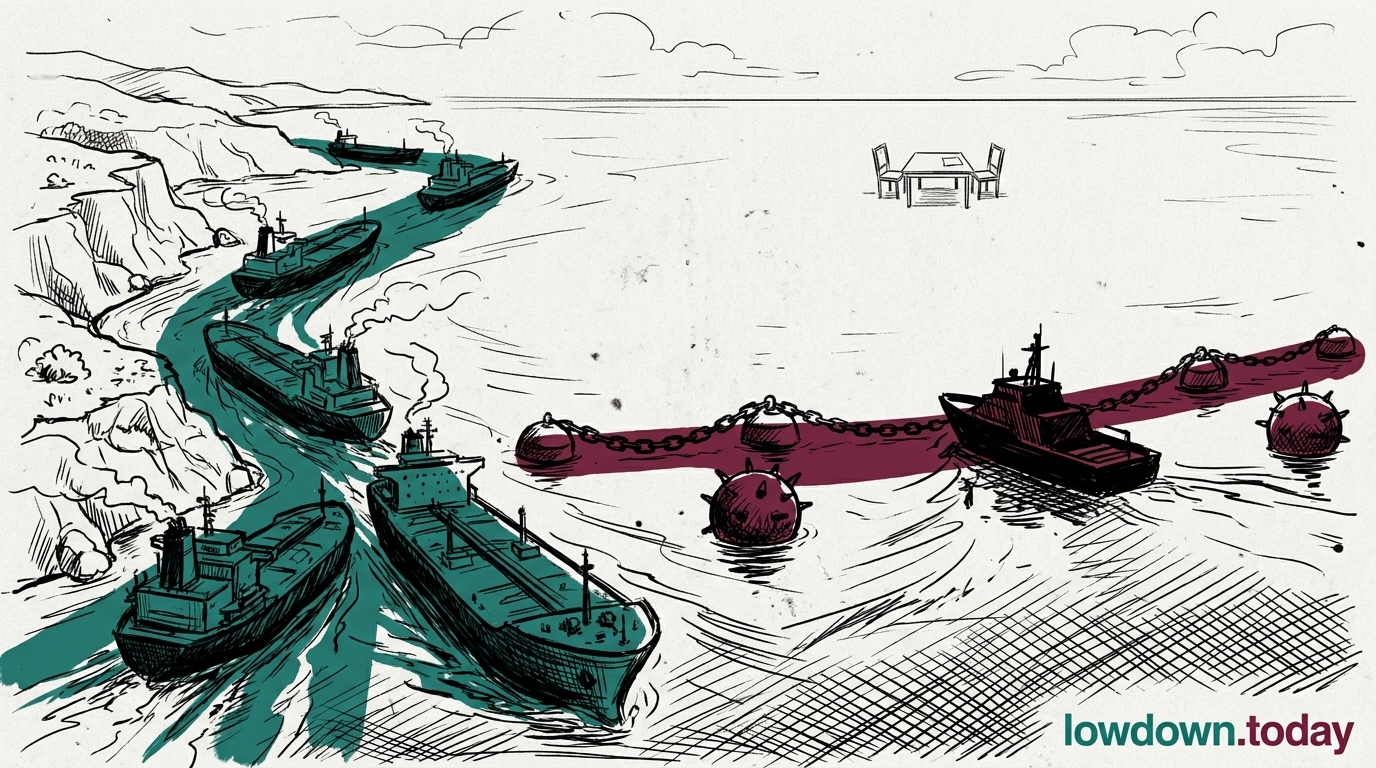
Brent Crude eased about 1.7 per cent to $94.71 on 11 June, with WTI near $91.84, on the very day the IRGC declared Hormuz closed to all traffic. The move was a pullback from the $96.34 peak Brent reached on 10 June , and it came after CENTCOM said its strikes were complete. A closure announcement that sends oil down, rather than up, is the market reading the words and discounting them.

A strait genuinely sealed, with enforcement that held, does not let crude fall. Traders priced the IRGC order as rhetoric, weighing it against CENTCOM's denial that transit had stopped and against the absence of any independently verified incident. The "strikes complete" line did the rest, removing the immediate threat of further escalation that had driven the prior day's spike.

Futures and insurance now point opposite ways. The futures market is betting the closure is a declaration that will lapse, while marine insurers are repricing the legal risk of a war-risk zone that exists on paper whether or not a ship is ever stopped. The gap between the two prices is the gap between what the IRGC said and what anyone can confirm it did.


Deep Analysis

In plain English

The price of oil dropped slightly on the day Iran's military declared the Strait of Hormuz closed. That sounds backwards. Usually, closing a major oil route would send prices up, because less supply reaching markets means higher costs. Traders weighted CENTCOM's 'strikes complete' statement over the IRGC's Telegram post, driving Brent down 1.7 per cent to $94.71 rather than up. The US military said ships were still sailing through normally, and Iran's military has threatened to close the strait before without following through. So oil markets took the closure announcement as words on a screen, not an actual blockage. However, shipping insurance companies, which move more slowly and need official government sign-offs to change their assessments, did not drop their risk premiums. This means the cost of actually insuring a cargo ship through the strait stayed high even as the headline oil price fell.

What could happen next?
  • Risk

    If Windward or Kpler record transit volumes falling below three vessels in a 24-hour window, futures markets will reprice immediately and the Brent discount will reverse sharply, likely to above $100.

    Immediate · Assessed
  • Consequence

    Lloyd's of London's continued war-risk listing of Hormuz means every cargo transiting the strait now carries an elevated insurance cost regardless of futures pricing, increasing the effective landed cost of Gulf oil for European refiners.

    Short term · Reported
  • Meaning

    Markets pricing CENTCOM's 'strikes complete' statement as a de-escalation signal over the IRGC's closure declaration shows that traders have shifted their primary price signal from Iranian statements to US operational announcements.

    Immediate · Assessed
First Reported In

Update #124 · IRGC declares Hormuz shut; US strikes again

Gulf News / NBC News / Business Standard· 11 Jun 2026
Read original
Different Perspectives
Hengaw
Hengaw
The Norway-based monitoring group reported the Urmia executions of Omid Behzad and Pouria Safvat, the only source to do so, consistent with its documented pattern of recording far more executions than the Iranian state acknowledges. Iran's government has not confirmed either execution.
Shipping and insurance underwriters
War-risk premiums price the Houthi campaign because the group announces its targets in advance, but a reopening Trump has promised without a published text gives underwriters no benchmark to reprice Hormuz cover against. Insurers want a text before they move rates, not a promise.
Houthi movement
Houthi movement
Spokesman Yahya Saree claimed strikes on two tankers in the Red Sea and Gulf of Aden on 5 August, only one of which UKMTO could confirm. The group's campaign against shipping continues on its own schedule, independent of any Hormuz arrangement further north.
Oman
Oman
Muscat has brokered the coordinates both Tehran and Washington's wire sources now describe differently, but has published no account of its own. Oman's position depends on treating Hormuz as a shared route, which is not what Iran is currently describing.
United States Central Command
CENTCOM raised its interdiction tally from 35 to 44 redirected vessels and disclosed its first boardings on 3 August, the day before Trump promised a reopening. The command's own enforcement record does not yet reflect the release the President has described.
Iran's Foreign Ministry
Spokesman Esmaeil Baghaei described the agreed Hormuz coordinates as a wholly new corridor under Iranian management, not a split of the existing route, days after his own deputy rejected Oman's lane proposal. Tehran wants the arrangement read as a change of ownership, not a compromise on access.



