Skip to content
You can now search across every topic, entity and event.What's new
Iran Conflict 2026
13JUN

Sharif attends; the West sends no one

2 min read
10:52UTC

Pakistan's Prime Minister Shehbaz Sharif attended the Tehran funeral in person, the highest-ranking serving leader among the guests. China sent a National People's Congress deputy, and no Western government sent a delegation.

ConflictDeveloping
Key takeaway

Pakistan's in-person attendance against Western absence tightens Islamabad's grip on the US-Iran back-channel.

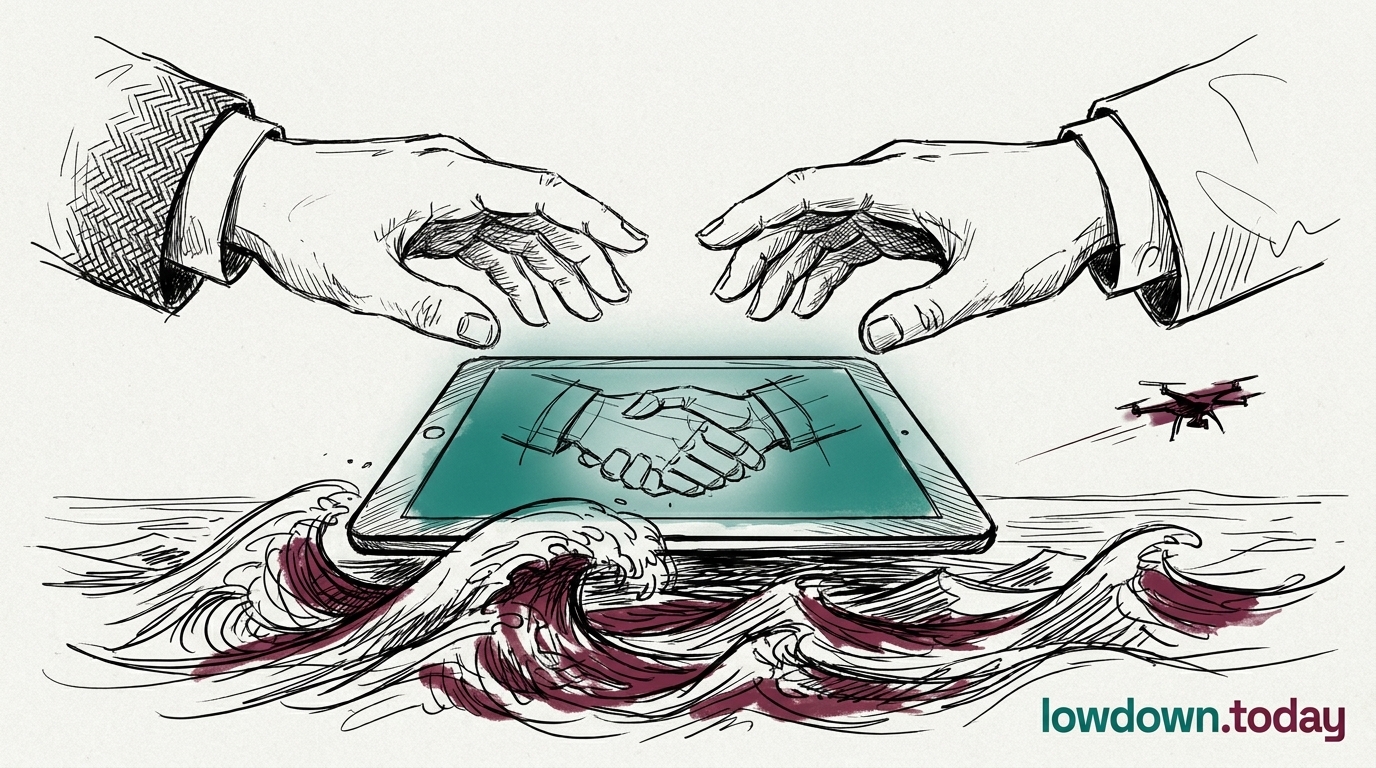
Pakistan's Prime Minister Shehbaz Sharif attended the Tehran funeral in person, the most senior sitting head of government confirmed among the guests 1. China sent He Wei, a vice-chair of its National People's Congress (NPC) standing committee, China's national legislature, rather than a head of state. No Western government sent a delegation at all.

Iran claimed more than 100 countries were represented, but the named delegations skewed to deputy level: India's deputy foreign minister, a state governor, envoys rather than principals. Russia sent Dmitry Medvedev, deputy chairman of its Security Council, as Vladimir Putin's personal envoy rather than the president. Sharif's decision to come himself sits apart from that tier.

Islamabad is the one capital both Washington and Tehran still use to pass messages, and it set the signal that the next US-Iran round is pencilled for Doha in late July . Sending its prime minister to Tehran while keeping that Washington line open puts Pakistan in a position no other government holds. Army Chief Asim Munir's April shuttle to Tehran produced the only nuclear-monitoring movement of the conflict, and Sharif's appearance converts that back-channel utility into open diplomatic standing.

Deep Analysis

In plain English

When a country's leader dies, other countries usually send someone to the funeral, and how senior that person is signals how close the relationship is. Pakistan's Prime Minister Shehbaz Sharif went to Tehran himself, the most senior head of government confirmed among the guests. China, by contrast, sent a deputy from its parliament rather than its president or premier, and no Western government sent anyone at all. The gap in seniority tells its own story. Pakistan has spent months positioning itself as the main go-between for the US and Iran, and Sharif's presence in person underlines that. China wants to keep trading with Iran without being seen to endorse a leadership handover many governments still view as unresolved, and the West is simply staying away.

Deep Analysis
Root Causes

Pakistan's mediation channel runs through two principals, Army Chief Asim Munir on the security track in Tehran and Sharif on the civilian, public-facing track, a division of labour running since May that gives Islamabad more invested political capital in the outcome than any other outside power.

China's calculus points the other way. Beijing joined Bahrain, Kuwait, Oman, Qatar, Saudi Arabia, the UAE and the US in re-designating Hezbollah's financial network on 30 June , aligning itself with the US-Gulf sanctions consensus rather than with Tehran specifically.

Sending a National People's Congress vice-chair instead of a head of state keeps Beijing's economic relationship with Iran intact without endorsing a succession still treated as unresolved; Ali Khamenei's own casket had arrived only a day earlier with Mojtaba Khamenei's attendance left unresolved .

First Reported In

Update #145 · Iran's heir skips the funeral built for him

Al Jazeera· 4 Jul 2026
Read original
Different Perspectives
Iran's Supreme Leader's office and Iranian households
A letter published through state media named Lebanon's territorial integrity and an end to Israeli operations there as the war's ending condition; the same week, spokesperson Mohajerani cut the subsidised petrol ration from 70 to 50 litres a month. Iranian agencies still disagree on who inside the office signed the letter.
Oman
Oman
Muscat proposed a voluntary-funded coalition to police Hormuz, the corridor its own coastline gives it standing to manage, while Iran wants control and toll rights over shipping and Washington insists on free navigation. Oman's remit stops at the strait; it has no comparable claim over Iraq, the Caspian, or Lebanon.
Kyiv
Kyiv
President Volodymyr Zelenskyy confirmed the Caspian strike on an Iranian vessel carrying military cargo from Russia's Astrakhan region, opening a front that ties Iran's war to its supply relationship with Moscow rather than to anything the Gulf mediators are discussing.
Riyadh
Riyadh
Maj Gen Turki Al Malki named Iraq as the launch point for drones intercepted over the Eastern Province and Riyadh, the first time this war has reached Saudi Arabia from that direction rather than from Yemen. Nothing landed, but a second launch geography aimed at Saudi oil now exists alongside the Houthi front.
Baghdad
Baghdad
Iraq's Foreign Ministry summoned its own ambassador in Riyadh after Saudi Arabia's Defence Ministry said the drones came from Iraqi territory, while the same day drones struck Iranian-Kurdish opposition camps inside Iraq. Baghdad is disowning attacks it did not launch from territory it does not fully control.
The Pentagon and Congress
Acting press secretary Joel Valdez attributed the toll's reversal to site anomalies, the same explanation the department gave for the opposite cut on 24 July; Representative Thomas Massie called the category change an absurd ruse designed to reset the war's legal clock. Neither side agrees on which explanation, or which war, is real.