Skip to content
You can now search across every topic, entity and event.What's new
Iran Conflict 2026
13JUN

Iran's Hormuz Toll Matures Into Permanent Institution

3 min read
10:52UTC

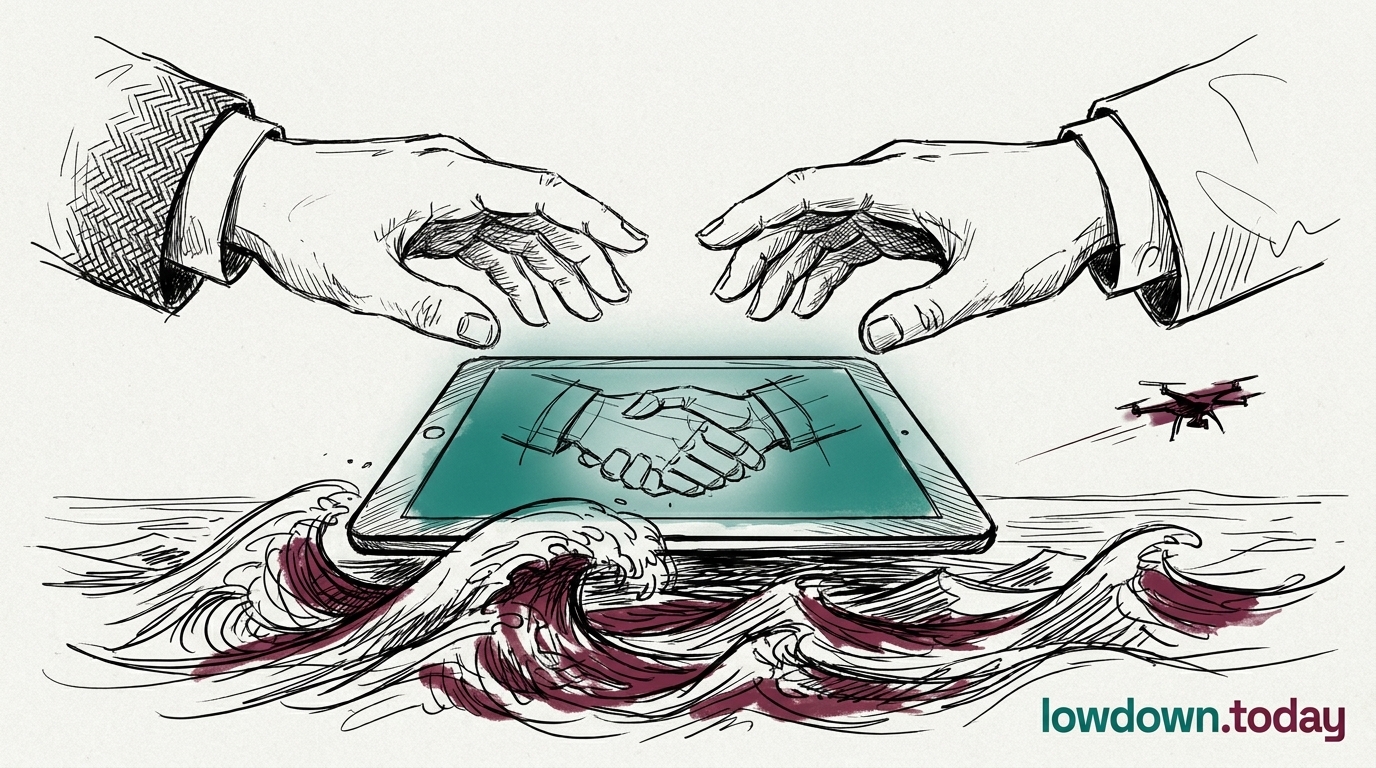
The IRGC built a customs authority, not a blockade. The infrastructure is designed for permanence, and the currency is yuan.

ConflictAssessed
Key takeaway

Iran built a customs authority, not a blockade; the infrastructure is permanent.

the strait of Hormuz toll system has matured from improvised blockade into something closer to a functioning customs authority . Claims Journal and Bloomberg detail the mechanics: $1 per barrel paid in yuan or stablecoins. A Very Large Crude Carrier carrying two million barrels pays roughly $2 million per transit.

The IRGC's Hormozgan Provincial Command runs background checks on all vessels. Five tiers of country classification determine access. Ships must raise the flag of a deal-country, broadcast passcodes over VHF radio, and receive an IRGC patrol escort through the corridor. Some vessels are required to change flag registration entirely. Pakistan has secured deals for 20 vessels.

Weekly transits have risen to 53, up from 36 the previous week, driven by bilateral exemptions: the Philippines , France, Japan , Oman, and Iraq . But pre-war volume was roughly 966 transits per week. The recovery runs through Tehran's licensing desk. Each new deal normalises Iran's sovereignty claim over international waters. Ali Vaez of the International Crisis Group assessed that Hormuz control is much more potent than even a nuclear weapon. The yuan, not the dollar, is the currency of this chokepoint.

At $1 per barrel, the IRGC's annual revenue from Hormuz tolls, if pre-war volumes resumed, would exceed $7 billion. Even at current reduced volumes, the toll generates hundreds of millions annually. The stablecoin payment option creates a sanctions-resistant financial channel. This is a new revenue stream for the IRGC that exists independently of any ceasefire agreement.

Deep Analysis

In plain English

Iran is not just blocking ships; it has built a full toll system with security checks, country rankings, and digital payments in Chinese currency. Ships pay roughly $2 million each time they pass through. This looks like a permanent operation, not a temporary war measure. It affects the price of everything that moves through the strait, which carries roughly one-fifth of global oil supply.

Deep Analysis
Root Causes

The toll system emerged from a blockade that the US threatened to break but never did (five deadline extensions).

Each unfulfilled threat gave Iran more time to institutionalise its control. The bilateral exemption pattern (Philippines, France, Japan, Oman, Iraq, Pakistan) further normalises the system by giving individual nations incentives to cooperate rather than collectively resist.

Escalation

The toll system is itself an escalation that has been normalised through repetition. Each new bilateral deal raises the cost of reversing the system. The transition from blockade to customs authority represents a permanent alteration of the maritime order in the Persian Gulf that no ceasefire framework currently addresses.

What could happen next?
  • Yuan as the currency of Hormuz transit accelerates de-dollarisation of global energy trade

    months · Assessed
  • Precedent for sovereign toll claims on international waterways could spread to other chokepoints

    years · Suggested
  • Insurance and shipping markets must price IRGC compliance costs into every Hormuz-dependent route

    weeks · Assessed
First Reported In

Update #60 · Pakistan's Ceasefire Plan Fills the Vacuum

Claims Journal / Bloomberg· 6 Apr 2026
Read original
Different Perspectives
Turkey
Turkey
Golden Global Portfoy Yonetimi closed three funds to new money a day after telling regulators they were legally separate from its sanctioned parent, and the central bank held its rate at 37 per cent citing energy-driven inflation risk. Ankara is absorbing balance-sheet and monetary costs from a war it is not fighting.
Qatar
Qatar
Qatar's foreign ministry said it was coordinating with China during a Beijing visit to restart negotiations, while filing hundreds of letters at the UN documenting Iranian strikes on its own civilian facilities. Doha is mediating for a neighbour it is also formally accusing, a contradiction the referral's clean vote count does not show.
China and Russia
China and Russia
China and Russia voted against the IAEA referral alongside Niger, and Iran's ambassador told the Board that inspections were impossible during a war Iran did not start. Beijing is separately mediating between Doha and Tehran, meaning the same power blocking the West's legal track is running the diplomatic one that might actually end the war.
Jordan
Jordan
Jordan said it intercepted 18 of the 20 Iranian ballistic missiles fired at its territory on 8 September, the war's first sustained salvo against a state that is not a combatant. Amman's 90 per cent interception rate held, but a tenfold jump in missiles fired in a single volley raises what the next one might carry.
United States
United States
CENTCOM said its strikes disabled five Iranian tankers only after two failed missile attempts on a US warship, and Treasury moved the same week to a presumption of denial on all Iran licences. Washington now treats commercial shipping and financial plumbing as one enforcement front rather than two separate tracks.
Iran / IRGC
Iran / IRGC
Iran's foreign ministry called the CENTCOM tanker strikes a war crime and a breach of the UN Charter, while the IRGC named two US destroyers it says it damaged without releasing images. Tehran expects the claims, unverifiable either way, to sustain domestic morale after losing five tankers in a single day.