Skip to content
Foundations rebuilt, and the first new thing is here: search across every topic, entity, and event.Try search
Iran Conflict 2026
11JUN

OFAC sb0502: 50 entities, 19 vessels, no refinery

3 min read
09:17UTC

The 19 May Treasury action hit Amin Exchange and UAE, Turkey, Hong Kong and China-registered shells routing IRGC oil; no mainland Chinese refinery joined the SDN list.

ConflictDeveloping
Key takeaway

OFAC keeps designating Iran's logistics layers while leaving every MOFCOM-protected mainland refinery untouched.

OFAC issued action sb0502 on Tuesday 19 May, designating more than 50 entities and 19 vessels for routing IRGC oil and Iran-related sanctions evasion, including Amin Exchange 1. The action reached UAE-, Turkey-, Hong Kong- and China-registered shells, individuals across Gaza, Turkey, Spain, Belgium, Jordan and Iran, and named vessels including BRIGHT GOLD, FEADSHIP, LUNA LUSTER, MIDAS and QUANTUM STAR.

What sb0502 deliberately did not do is add a single mainland Chinese refinery to the Specially Designated Nationals (SDN) list, continuing the pattern from the 11, 12 and 15 May rounds . The 15 May round had named three IRGC officials (Mohammadi Zadeh, Fathi Salami, Ashrafi Ghehi) and nine entities including five Hong Kong shells (Hong Kong Blue Ocean, Hong Kong Sanmu, Jiandi HK, Max Honor International Trade, Atic Energy FZE), all carefully routed away from the mainland. The architecture leaves Treasury free to designate downstream layers while preserving the political space China created with MOFCOM Announcement No. 21.

Treasury is calibrating the round to apply pressure short of rupture. Designations on shells in third jurisdictions raise the cost of Iran's oil-logistics network without triggering the broader US-China collision that an SDN designation of Sinopec or CNPC would force. Iran's parallel diplomatic push toward Beijing ran alongside the sb0502 round; Treasury's restraint preserves Beijing's room to interpret the action as ritualised pressure rather than rupture.

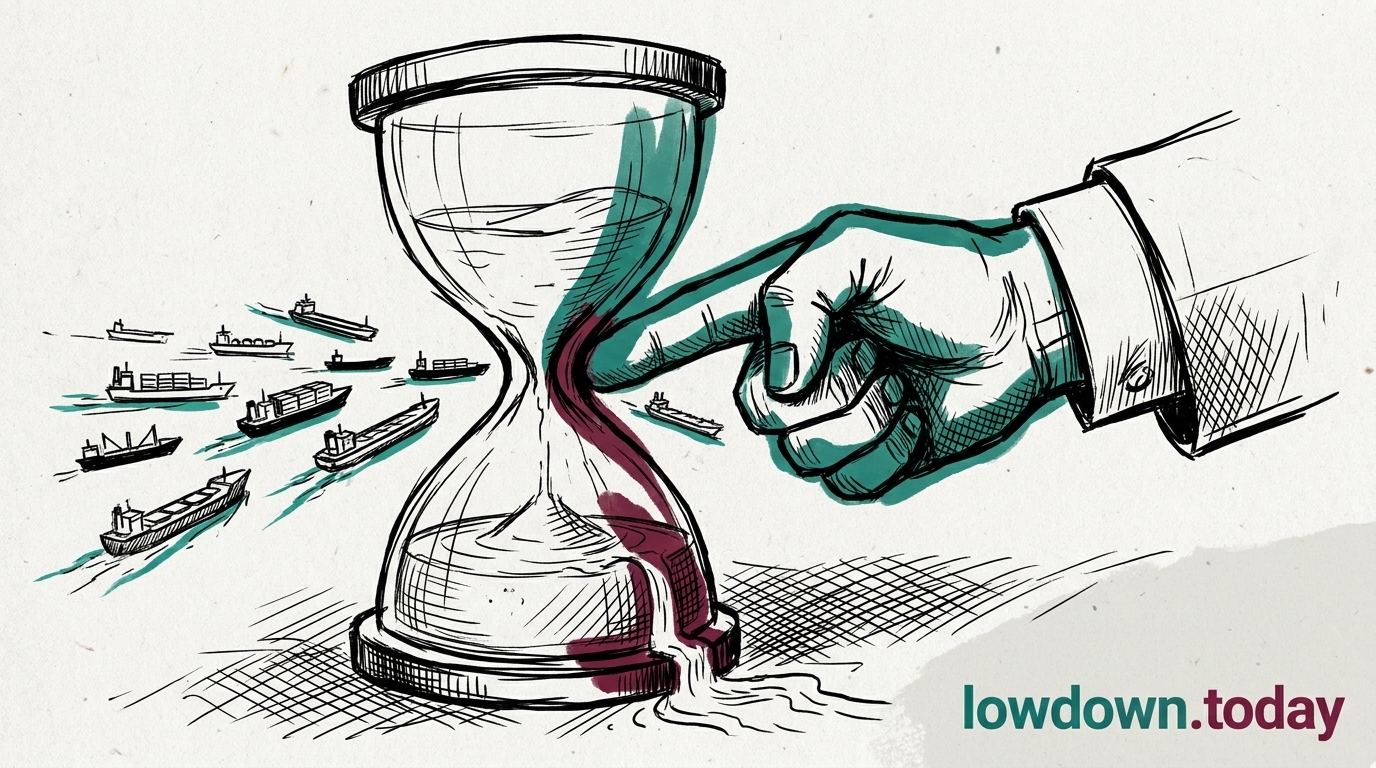
General Licence V on Hengli operates as the live exception to that calibration. Every other sanctions instrument is open-ended; the Hengli wind-down has a date. sb0502 names downstream vessels; Hengli is upstream production. The deliberate avoidance of mainland refineries in sb0502 leaves the Hengli expiry on Sunday 24 May as the cleanest test case OFAC has produced of whether secondary-sanctions credibility can survive a head-on collision with a Chinese blocking statute. If sb0502 had named a mainland refinery the question would have been answered already; by withholding, Treasury reserved that test for the date the calendar already wrote.

Deep Analysis

In plain English

Every few weeks, the US Treasury releases a new list of companies and ships it is banning from doing business with American banks or US-linked financial institutions. On 19 May 2026, Treasury added more than 50 entities and 19 ships to this list for helping Iran sell oil despite sanctions. The key pattern is what Treasury did not do: it added no new Chinese oil refineries on the mainland, even though it had already added one (Hengli) in April. This is deliberate. The US is trying to squeeze the edges of Iran's oil network the middlemen in Dubai, Hong Kong, and Turkey without yet triggering a full confrontation with Beijing over China's state-protected refineries. The Hengli wind-down on 24 May remains the one moment where that confrontation becomes unavoidable.

What could happen next?
  • Consequence

    Designating Amin Exchange removes a major Iranian hard-currency mechanism, tightening liquidity pressure on Tehran's war-financing capacity alongside the existing Hormuz revenue disruption.

    Short term · Reported
  • Meaning

    The continued exemption of MOFCOM-shielded mainland Chinese refineries documents that OFAC is calibrating its enforcement to the diplomatic timeline rather than maximum pressure; the Hengli wind-down remains the only hard-dated step in that calibration.

    Immediate · Assessed
  • Precedent

    If sb0502 targeting of Turkey-registered shells produces diplomatic friction with Ankara, it may complicate Turkey's mediation role at a moment when the Pakistan-Turkey dual-channel architecture is the primary diplomatic instrument.

    Short term · Suggested
First Reported In

Update #104 · Three days to Hengli

ANI / Tribune India / Business Standard· 21 May 2026
Read original
Causes and effects
Different Perspectives
Oil markets / Lloyd's underwriters
Futures markets priced CENTCOM's strikes-complete statement as a de-escalation signal and pushed Brent down 1.7 per cent to $94.71, even as the IRGC declared Hormuz closed. Lloyd's war-risk premiums held elevated because institutional de-listing requires a UN Security Council resolution that Russia and China have just shown they will block.
Pakistan (mediator)
Pakistan (mediator)
Interior minister Mohsin Naqvi carried dual civilian and military letters to Mojtaba Khamenei in Tehran on 6-7 June with no public response. The IRGC's Hormuz closure on 11 June shows the corps is acting independently of the channel Pakistan is using, making the mediation structurally unable to produce a binding commitment without direct IRGC access.
Russia and China
Russia and China
Russia and China voted against GOV/2026/40 at the IAEA Board, following through on the blocking position coordinated with Grossi in Geneva on 5 June; both states continue to oppose Western institutional pressure on Iran at every multilateral venue.
E3 and IAEA (UK, France, Germany)
The E3 co-sponsored IAEA resolution GOV/2026/40, adopted 21-3-10 on 10 June, demanding Iran disclose 440.9 kg of unaccounted HEU and admit inspectors to four denied facilities. The 10 abstentions and Russia-China noes leave any Security Council referral without a viable enforcement path.
IRGC / Iran military command
The corps declared Hormuz closed to all traffic on 11 June and claimed two vessels struck, overriding the MoU its own civilian negotiators were pursuing through Pakistan. The closure order used the Persian Gulf Strait Authority apparatus to convert a toll mechanism into a military prohibition.
Trump administration / CENTCOM
CENTCOM completed a second day of strikes on Tehran, Sirik and Minab, rejected the IRGC Hormuz closure as inconsistent with observed transit, and said strikes were complete. Hegseth framed the bombing explicitly as the negotiation: the method is coercive deal-making with no stated pause threshold.