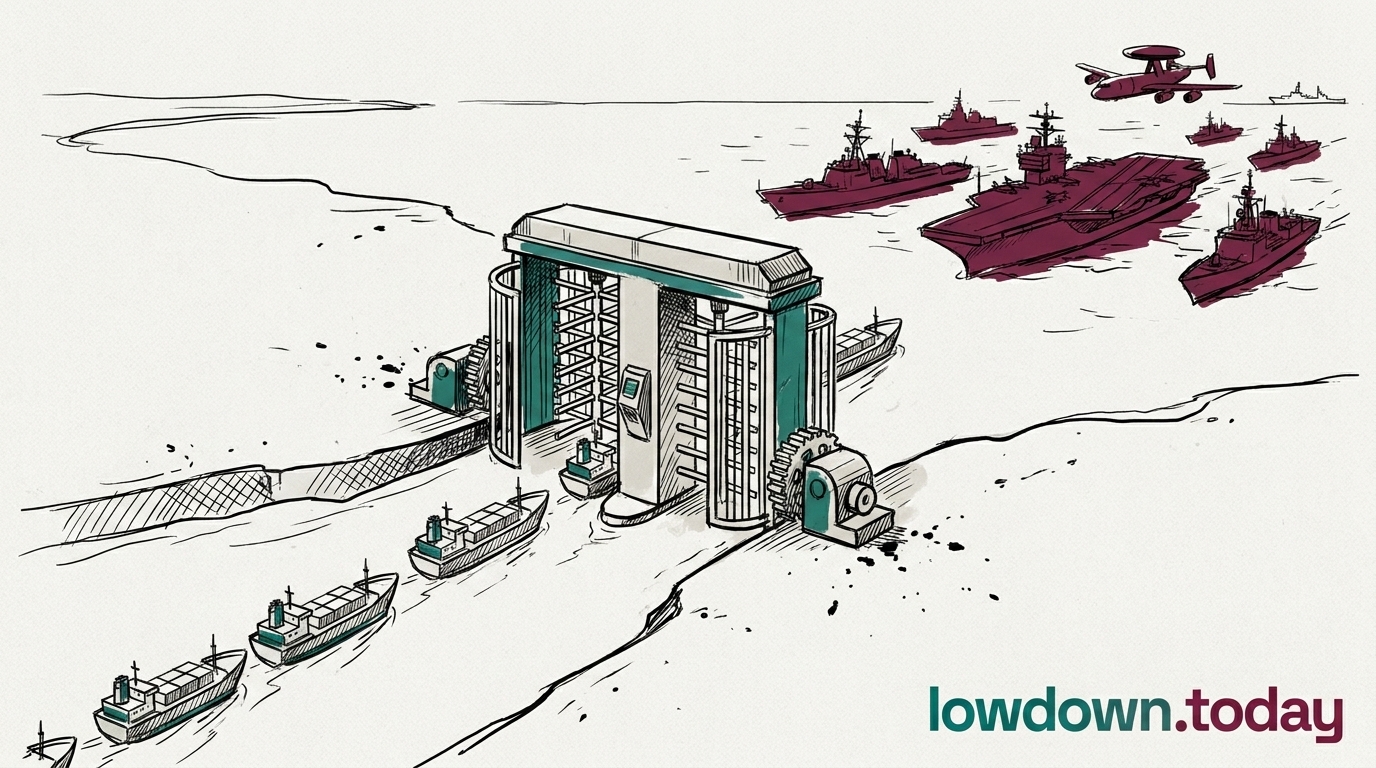
US Central Command (CENTCOM), the US military command for the Middle East, logged 55 merchant vessels carrying roughly 17 million barrels through the Strait of Hormuz on 21 June, against a pre-war daily rate of 941. That is well over half the normal traffic on the day after Iran's Islamic Revolutionary Guard Corps (IRGC) declared the waterway closed through its Khatam al-Anbia headquarters, citing the Lebanon strikes as a breach of the 16 June memorandum.
Three India-linked supertankers, the Desh Vibhor, Desh Vaibhav and Sanmar Herald, re-emerged in The Gulf of Oman carrying Iraqi and Kuwaiti crude, not Iranian. They moved through Oman's territorial waters, the lane the Joint Maritime Information Center, a US-led naval coordination cell, cleared as safe while warning of mines in the strait's traffic-separation scheme. The cargo is the tell: Gulf producers are moving their own oil through a chokepoint Iran says it has sealed.
The shipping intelligence firm Windward said the Iranian statement and the vessel data "were pointing in different directions", and Vance said he had "seen no evidence the strait is closed". The IRGC has run this play before, charging a dollar a barrel since April rather than physically interdicting traffic. A real closure would cut Iran's own China-bound exports and invite the strikes Trump threatened, so the declaration works as a bargaining lever and a price floor, not an interdiction.


