Skip to content
You can now search across every topic, entity and event.What's new
European Tech Sovereignty
8JUL

OFAC sb0502: 50 entities, 19 vessels, no refinery

3 min read
09:50UTC

The 19 May Treasury action hit Amin Exchange and UAE, Turkey, Hong Kong and China-registered shells routing IRGC oil; no mainland Chinese refinery joined the SDN list.

TechnologyDeveloping
Key takeaway

OFAC keeps designating Iran's logistics layers while leaving every MOFCOM-protected mainland refinery untouched.

OFAC issued action sb0502 on Tuesday 19 May, designating more than 50 entities and 19 vessels for routing IRGC oil and Iran-related sanctions evasion, including Amin Exchange 1. The action reached UAE-, Turkey-, Hong Kong- and China-registered shells, individuals across Gaza, Turkey, Spain, Belgium, Jordan and Iran, and named vessels including BRIGHT GOLD, FEADSHIP, LUNA LUSTER, MIDAS and QUANTUM STAR.

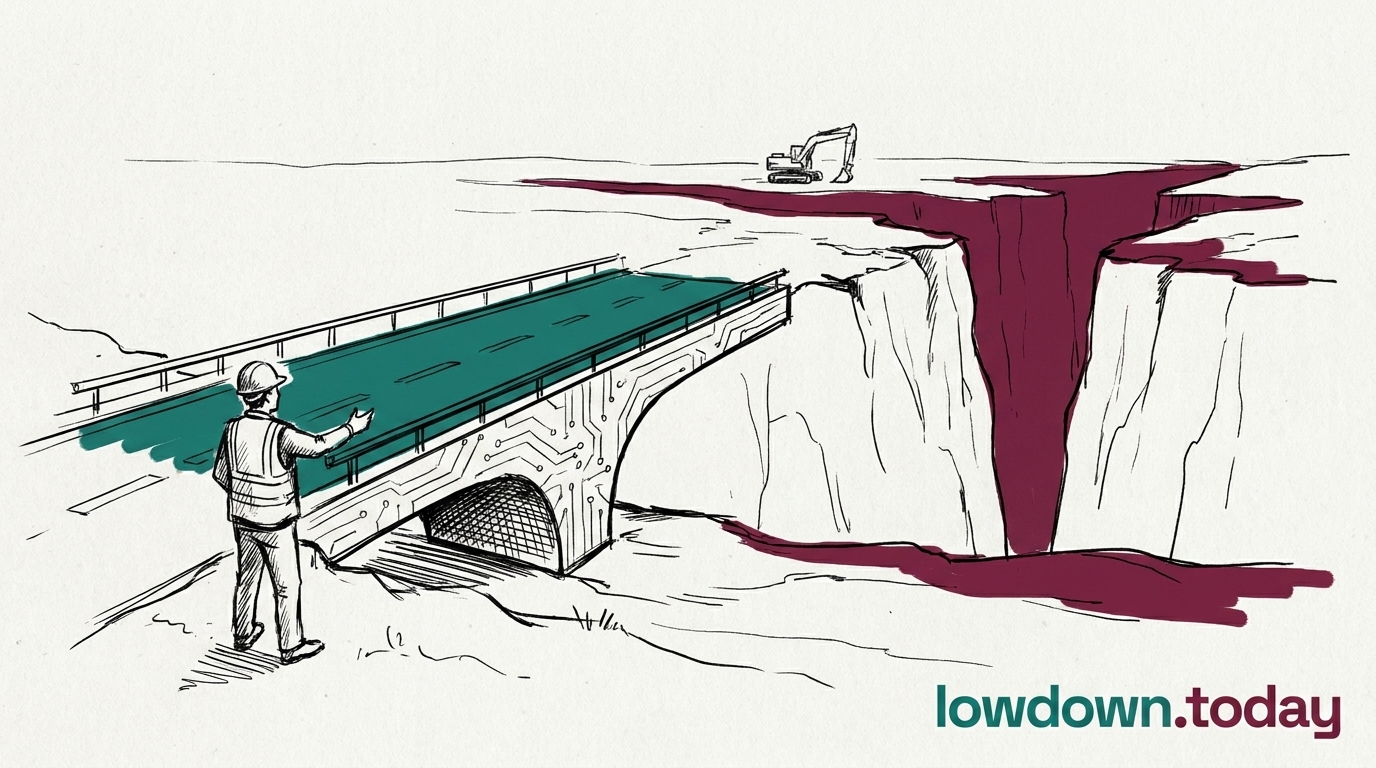
What sb0502 deliberately did not do is add a single mainland Chinese refinery to the Specially Designated Nationals (SDN) list, continuing the pattern from the 11, 12 and 15 May rounds . The 15 May round had named three IRGC officials (Mohammadi Zadeh, Fathi Salami, Ashrafi Ghehi) and nine entities including five Hong Kong shells (Hong Kong Blue Ocean, Hong Kong Sanmu, Jiandi HK, Max Honor International Trade, Atic Energy FZE), all carefully routed away from the mainland. The architecture leaves Treasury free to designate downstream layers while preserving the political space China created with MOFCOM Announcement No. 21.

Treasury is calibrating the round to apply pressure short of rupture. Designations on shells in third jurisdictions raise the cost of Iran's oil-logistics network without triggering the broader US-China collision that an SDN designation of Sinopec or CNPC would force. Iran's parallel diplomatic push toward Beijing ran alongside the sb0502 round; Treasury's restraint preserves Beijing's room to interpret the action as ritualised pressure rather than rupture.

General Licence V on Hengli operates as the live exception to that calibration. Every other sanctions instrument is open-ended; the Hengli wind-down has a date. sb0502 names downstream vessels; Hengli is upstream production. The deliberate avoidance of mainland refineries in sb0502 leaves the Hengli expiry on Sunday 24 May as the cleanest test case OFAC has produced of whether secondary-sanctions credibility can survive a head-on collision with a Chinese blocking statute. If sb0502 had named a mainland refinery the question would have been answered already; by withholding, Treasury reserved that test for the date the calendar already wrote.

Deep Analysis

In plain English

Every few weeks, the US Treasury releases a new list of companies and ships it is banning from doing business with American banks or US-linked financial institutions. On 19 May 2026, Treasury added more than 50 entities and 19 ships to this list for helping Iran sell oil despite sanctions. The key pattern is what Treasury did not do: it added no new Chinese oil refineries on the mainland, even though it had already added one (Hengli) in April. This is deliberate. The US is trying to squeeze the edges of Iran's oil network the middlemen in Dubai, Hong Kong, and Turkey without yet triggering a full confrontation with Beijing over China's state-protected refineries. The Hengli wind-down on 24 May remains the one moment where that confrontation becomes unavoidable.

What could happen next?
  • Consequence

    Designating Amin Exchange removes a major Iranian hard-currency mechanism, tightening liquidity pressure on Tehran's war-financing capacity alongside the existing Hormuz revenue disruption.

    Short term · Reported
  • Meaning

    The continued exemption of MOFCOM-shielded mainland Chinese refineries documents that OFAC is calibrating its enforcement to the diplomatic timeline rather than maximum pressure; the Hengli wind-down remains the only hard-dated step in that calibration.

    Immediate · Assessed
  • Precedent

    If sb0502 targeting of Turkey-registered shells produces diplomatic friction with Ankara, it may complicate Turkey's mediation role at a moment when the Pakistan-Turkey dual-channel architecture is the primary diplomatic instrument.

    Short term · Suggested
First Reported In

Update #104 · Three days to Hengli

Infineon Technologies AG· 21 May 2026
Read original
Causes and effects
Different Perspectives
United States (Google/Alphabet)
Alphabet lost its final Android appeal on 2 July with no further court to hear it, a result its Computer and Communications Industry Association allies frame as precedent, not deterrence, since the €4.1bn fine changed nothing about Google's Play Store terms across eight years of litigation.
UK Department for Science, Innovation and Technology
DSIT opened its £96m second Sovereign AI wave on 3 July, switching from April's equity stakes to fixed-price contracts because Britain has no domestic hyperscaler or Bpifrance-style lender to fund capacity another way. It is betting on buying outcomes it controls alone rather than joining an EU-wide framework.
German federal government
Berlin backed both German deliverables this week, Infineon's fab and Aleph Alpha's merger, but is finding one far harder to close than the other. It wants enforceable protective rights inside Cohere's cap table before the merger closes, a legal instrument the Bundeskartellamt has no filing to review yet.
European Commission
European Commission
The Commission banked a clean CJEU win on the eight-year Android case on 2 July, removing Google's last comparator argument before President von der Leyen rules on the far larger DMA self-preferencing fine due 27 July. Brussels treats Infineon's early Dresden delivery as proof the Chips Act mechanism works, at the node Europe already led.
Bruegel (EU industry sceptics)
Bruegel economist Mario Mariniello argued the EU sovereignty package mimics US and Chinese strategy while EU cloud providers hold roughly 15% of their home market; using nationality as a proxy for security without fixing the underlying capital and energy gaps that drive the dependency creates €86bn of migration cost without the security benefit it is sold as delivering.
France
France
France published a joint sovereignty definition with Germany at VivaTech and mobilised €13bn under Tibi Phase 3, placing SAP's partnership with Mistral as the working proof that a German enterprise-software giant running a French sovereign model inside public administration is what digital sovereignty looks like in practice.
