Skip to content
You can now search across every topic, entity and event.What's new
European Tech Sovereignty
8JUL

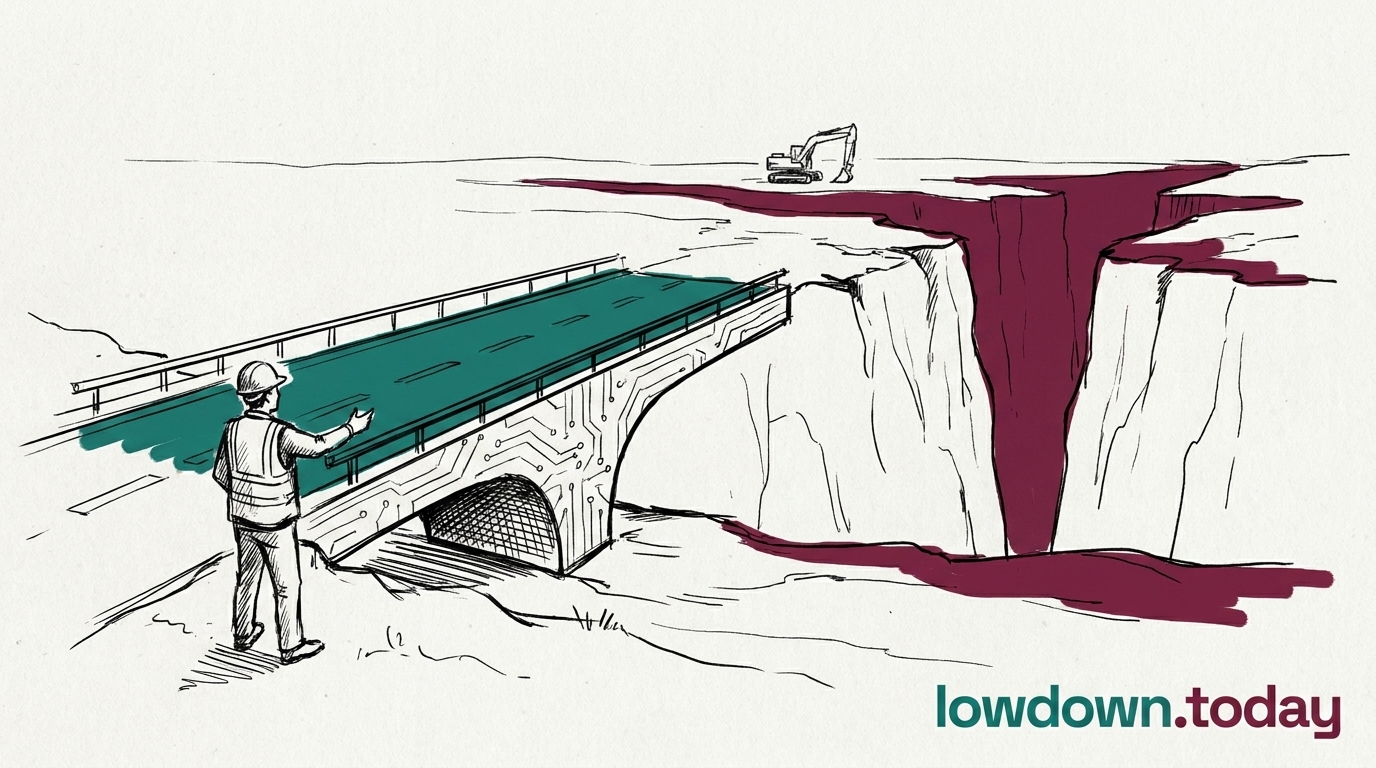
Dresden delivers, the logic gap stays open

1 min read
09:50UTC

Infineon opened its €5bn Dresden power-chip fab on 2 July, months early, the first Chips Act flagship to deliver after Magdeburg and Crolles collapsed. The win lands at the power and analog node, not the leading-edge logic where Europe's real dependency sits. Brussels' court win over Google, a stalled Cohere-Aleph Alpha merger and a fresh UK procurement round fill out a week of sovereignty machinery grinding unevenly forward.

Key takeaway

Chip delivery, court enforcement and AI consolidation are moving on three separate, decoupled sovereignty clocks.

This briefing mapped
Loading map…
Infrastructure
Legal
Competitive
Domestic

Infineon opened its €5bn Dresden power-chip fab on 2 July, months early, the first EU Chips Act flagship to deliver after Magdeburg and Crolles collapsed.

Sources profile:This story draws on neutral-leaning sources

Infineon opened its €5bn Smart Power Fab in Dresden on 2 July, months ahead of schedule, doubling the site's capacity and adding around 1,000 jobs.

It's the first EU Chips Act flagship to open, unlike Intel's and GlobalFoundries' scrapped fabs. But power chips aren't the cutting-edge kind Europe still can't make. 

The Court of Justice dismissed Google and Alphabet's last appeal on 2 July, confirming a €4.1bn Android fine and exhausting an eight-year antitrust fight.

Sources profile:This story draws on neutral-leaning sources

Handelsblatt reported on 3 July that the €20bn Cohere-Aleph Alpha tie-up has stalled on employee transfers, leadership and German protective-rights terms.

Sources profile:This story draws on centre-leaning sources from Germany
Germany
LeftRight

The Cohere-Aleph Alpha merger, valued at around $20bn, is running behind schedule. Handelsblatt reported on 3 July that talks are stuck on employee transfers, leadership and German government protective rights.

Berlin wants an enforceable say over the combined firm despite its mostly Canadian and US backers. No one has built that legal structure before. 

Sources:Handelsblatt

DSIT opened a £96m second wave of Sovereign AI procurement around 3 July, offering contracts up to £5m each to March 2030 across seven sectors.

Sources profile:This story draws on neutral-leaning sources from United Kingdom
United Kingdom

The UK's Department for Science, Innovation and Technology launched a second Sovereign AI procurement wave around 3 July. It is worth £96m, with contracts up to £5m each running to March 2030.

Unlike April's equity-based first wave, this round buys finished AI work directly. It spreads thin across seven sectors from health to defence. 

Sources:The Register
Closing comments

Sideways, tipping toward two named dates. The enforcement track escalates: the CJEU's exhausted €4.1bn Android appeal strengthens the Commission's position ahead of President von der Leyen's 27 July ruling on the DMA self-preferencing fine, which she has personally held since March 2026. The consolidation track stays under pressure without resolving: the $20bn Cohere-Aleph Alpha merger has no Bundeskartellamt filing as of May 2026 and must close its protective-rights terms before its 2 August GPAI compliance deadline under the EU AI Act. The industrial track is the one genuine de-escalation this week, Infineon's €5bn Dresden fab needing no rescue unlike TSMC's 2024-era Arizona subsidy top-ups, though it does nothing to move the EU's €4.12bn EuroHPC AI Gigafactories call, which remains unopened.

AI-assisted, human-edited under the editorial responsibility of Bannermedia Ltd. Reviewed by Ed Woodcock on 8 July 2026. Editorial standards.

Different Perspectives
European Commission
European Commission
The Commission banked a clean CJEU win on the eight-year Android case on 2 July, removing Google's last comparator argument before President von der Leyen rules on the far larger DMA self-preferencing fine due 27 July. Brussels treats Infineon's early Dresden delivery as proof the Chips Act mechanism works, at the node Europe already led.
German federal government
Berlin backed both German deliverables this week, Infineon's fab and Aleph Alpha's merger, but is finding one far harder to close than the other. It wants enforceable protective rights inside Cohere's cap table before the merger closes, a legal instrument the Bundeskartellamt has no filing to review yet.
UK Department for Science, Innovation and Technology
DSIT opened its £96m second Sovereign AI wave on 3 July, switching from April's equity stakes to fixed-price contracts because Britain has no domestic hyperscaler or Bpifrance-style lender to fund capacity another way. It is betting on buying outcomes it controls alone rather than joining an EU-wide framework.
United States (Google/Alphabet)
Alphabet lost its final Android appeal on 2 July with no further court to hear it, a result its Computer and Communications Industry Association allies frame as precedent, not deterrence, since the €4.1bn fine changed nothing about Google's Play Store terms across eight years of litigation.
