Skip to content
You can now search across every topic, entity and event.What's new
European Oil Markets
18JUN

OFAC signs GL 134C, third Russia bridge

3 min read
12:45UTC

Bradley T. Smith signed General License 134C at 14:05 EDT on Monday 18 May, reinstating Western vessel services on Russian crude loaded by 17 April and reversing the cliff the market had priced two days earlier.

EconomicDeveloping
Key takeaway

GL 134C reopened insurance and classification cover, not a price number, so Urals stabilises rather than rallies.

OFAC Director Bradley T. Smith signed General License 134C at 14:05 EDT on Monday 18 May, authorising in-transit completions on Russian-origin crude loaded on or before 17 April and running through 12:01 a.m. EDT on 17 June 1. This is the third consecutive 30-day bridge, and it reverses the read that Treasury had ruled out a successor after GL 134B lapsed on 16 May . The licence reinstates the full vessel-services umbrella, insurance, crewing, bunkering, piloting, classification and salvage, while paragraph (b)(1) holds the Cuba, Iran and DPRK carve-out in place 2.

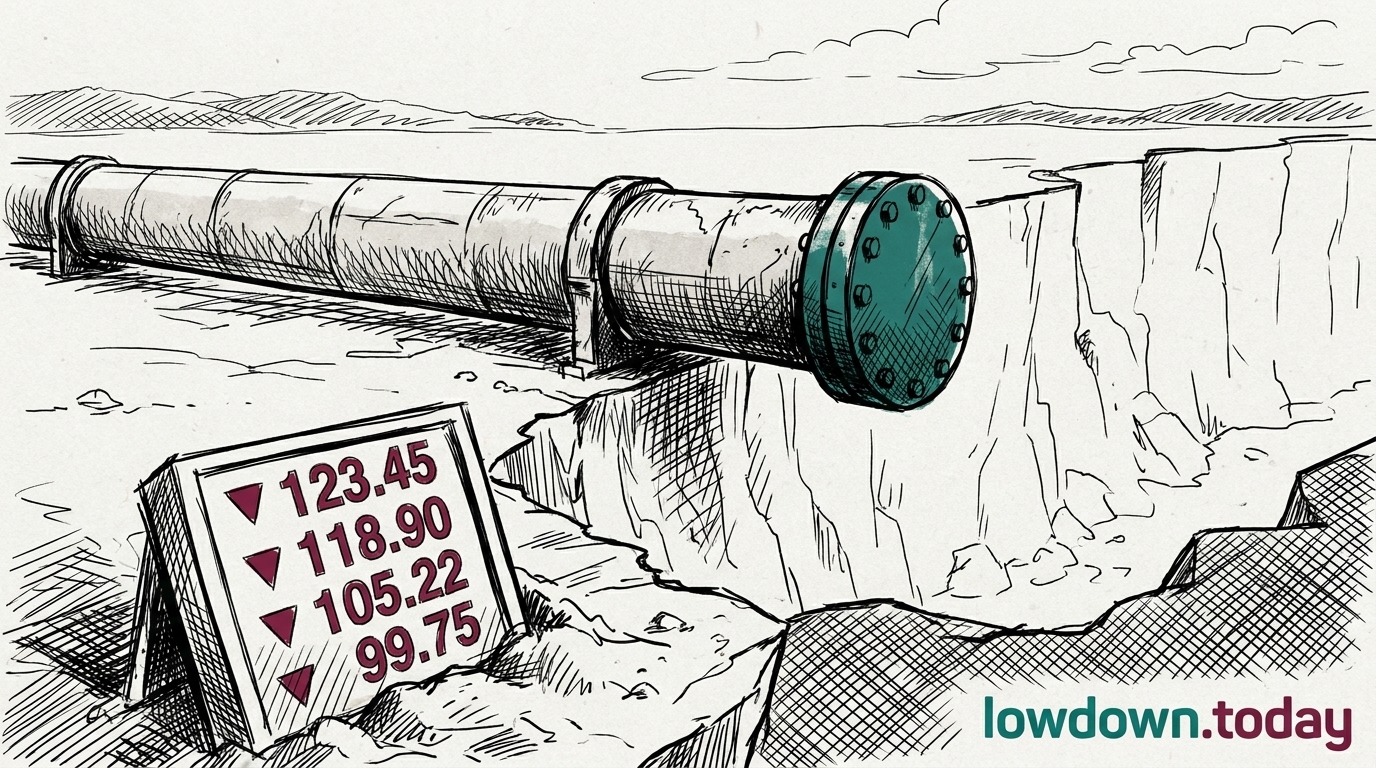
The P&L moves straight off that paragraph. The cliff that priced as an exit-or-face-OFAC binary on 16 May is now an insurance-rate normalisation problem for KEBCO and Urals term holders. Cover runs through commercial vessel services, not a price-cap number, so it is the insurance and classification chain that reopens, not the discount math. Urals-Brent is stabilising on the news rather than rallying, because the variable that moved is P&I availability for pre-17-April cargoes.

Set that against the Druzhba southern leg , where MOL and Slovak refiners keep roughly 175-200kbd of exempt pipeline barrels at a feedstock advantage that has touched $40/bbl. Seaborne cargoes carry a freight-and-insurance compliance cost the pipeline crowd never pays, so 134C narrows the gap without closing it. The 17 June expiry now becomes the next binary: a fourth bridge, or the first hard cliff the freight desk has had to price.


Deep Analysis

In plain English

The US government allows companies to temporarily move Russian oil even while Russia is under sanctions ; using a legal permit called a General Licence. When the previous permit (GL 134B) expired in May, there was confusion about whether a new one would be issued. On 18 May, a new one called GL 134C was signed, giving companies until 17 June to complete oil shipments that were already in progress. Think of it like an extension on a moving deadline: the rules are getting stricter over time, but companies get a window to finish what they started. Cuba was specifically excluded ; any shipment that passed through Cuba loses the protection entirely.

Deep Analysis
Root Causes

GL 134C's existence reflects a structural trilemma: the US wants Russian oil revenue curtailed, but abrupt vessel-services withdrawal would simultaneously spike European energy costs (at current Brent above $96), expose allied refineries to supply disruption, and push marginal Russian barrels fully into shadow-fleet channels that Western sanctions cannot reach.

The 30-day rolling structure is a product of this trilemma. Each extension reduces the waiver window (loading cutoffs predate the waiver by 31 days) while maintaining the fiction of a wind-down ; the pre-17 April loading cutoff in GL 134C means the eligible cargo universe is already shrinking without Treasury having to announce a formal termination.

What could happen next?
  • Consequence

    Without a GL 134D by 17 June, term holders of pre-17 April Urals and KEBCO cargoes face the same forced-exit or compliance-risk binary that GL 134B's expiry created on 16 May.

    Short term · Reported
  • Precedent

    The Adani $275m settlement on the same day as GL 134C establishes simultaneous carrot-and-stick enforcement as an explicit OFAC template for commodity sanctions.

    Medium term · Assessed
  • Risk

    Each successive loading cutoff (17 April for GL 134C) shrinks the eligible cargo universe; at some iteration the waiver covers so few barrels that terminal expiry becomes economically painless for Washington but logistically disruptive for NWE refiners.

    Medium term · Assessed
First Reported In

Update #2 · GL 134C reverses the cliff, Brent -$14

OFAC· 26 May 2026
Read original
Causes and effects
This Event
OFAC signs GL 134C, third Russia bridge
The 16 May exit-or-face-OFAC binary becomes an insurance and classification re-rating, not a forced unwind of Russian term positions.
Different Perspectives
Gulf oil producer
Gulf oil producer
Secured OPEC's confirmed 188,000 b/d September increment with the next meeting set for 6 September, but the Secretariat's own 2 August release says nothing about the fourth quarter. Output guidance beyond September remains undisclosed even as delegate sourcing keeps filling that gap.
Money manager positioned in WTI
Added 21,402 lots to a 108,307 net long in NYMEX WTI in the week to 28 July, against just 1,485 added to Brent's 15,740, a roughly fourteen-to-one split. Conviction sits in the American benchmark even as the European diesel story sets the record.
Indian refiner buying Urals
Bought Russian crude at a discount that narrowed to $1-2 a barrel in the week to 29 July from over $10, as Hormuz risk pushed it toward Urals. If that risk eases with the strike now called off, the discount it is currently enjoying could re-widen just as fast.
Russian diesel exporter
Novak tied any lifting of the diesel export ban, due to lapse 31 July, to an unspecified market recovery with no date, and pushed the gasoline ban to end-2026. An open-ended constraint suits an exporter benefiting from the record European crack it feeds.
War-risk underwriter
Withdrew war-risk cover for Saudi-linked hulls on 24 July and has not reinstated it, holding Bab el-Mandeb tanker transits near 7.5 a day. A cancelled strike does not by itself trigger the committee review needed to re-accept the class.
Northwest European refiner
Sources only 17% of diesel imports from Saudi Red Sea ports against the Mediterranean's 24%, so the ARA crack at $85.86 trails the Med print by $5.81. Lower Red Sea exposure is cushioning it against the rerouting cost, not eliminating it.



