Skip to content
You can now search across every topic, entity and event.What's new
European Oil Markets
23JUL

UK leads 40-nation rival coalition against blockade

3 min read
19:27UTC

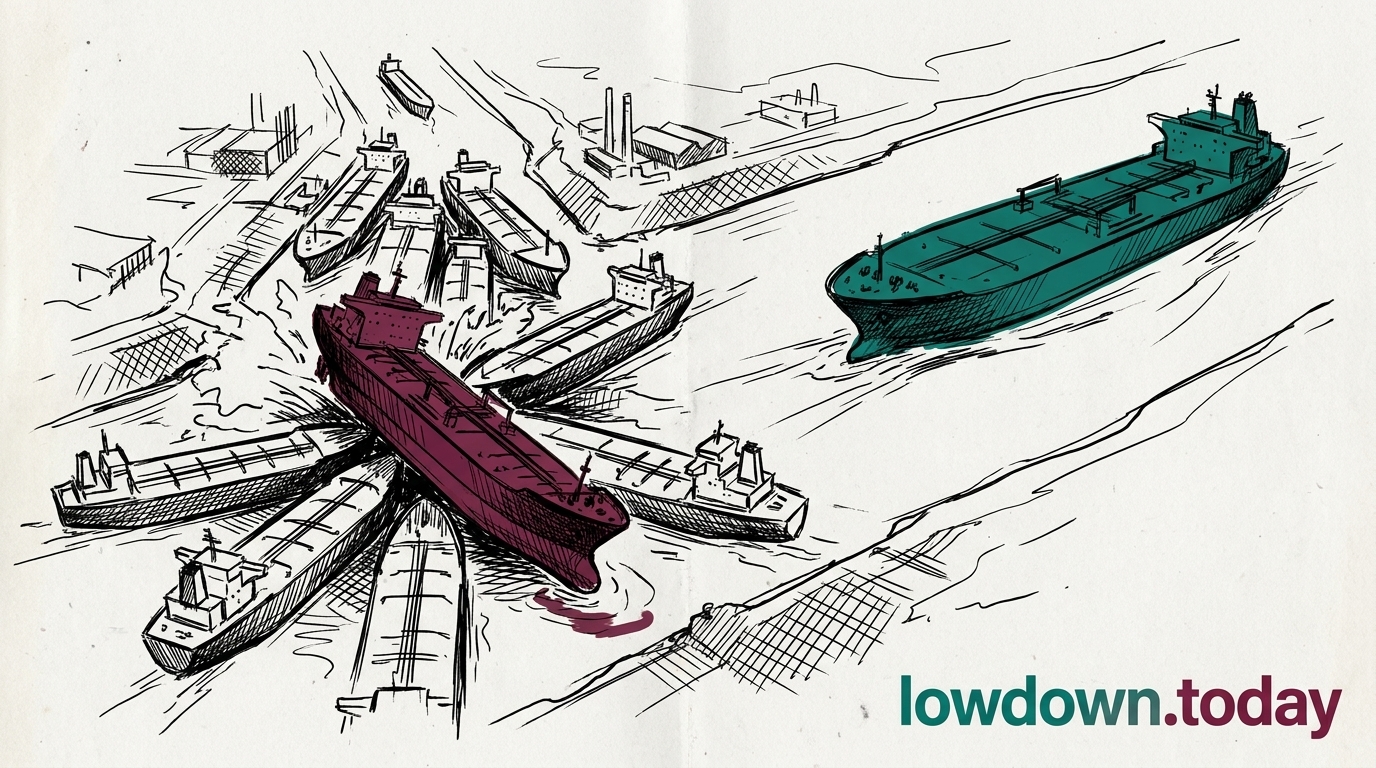
The US blockade attracted only two Gulf host-base states, while the UK assembled 40 nations pursuing the opposite strategy: reopening Hormuz through minesweeping rather than closing it through interdiction.

EconomicDeveloping
Key takeaway

The blockade coalition is smaller than the coalition opposing it.

UK, Germany, and Australia refused the blockade. Only UAE and Bahrain joined, both host-base states with US military installations on their soil and limited room to decline. Trump had claimed "other countries will be involved." The blockade coalition is smaller than the coalition opposing it.

UK Prime Minister Keir Starmer said: "It is vital that we get the strait open and fully open." A NATO official disclosed the UK is leading a separate 40-nation coalition planning to reopen Hormuz through minesweeping, commercial shipping reassurance, and diplomatic pressure 1. France, Germany, Italy, the Netherlands, Japan, Canada, and South Korea are part of it .

Two parallel Western strategies now compete over the same waterway: the US blockading Iranian ports unilaterally, the UK leading a multilateral reopening effort. France and Japan present the starkest case. Both paid Tehran's tolls in early April; both joined the UK coalition; both now appear on the list of vessels Trump ordered interdicted. Senator Mark Warner captured the strategic gap: "I don't understand how blockading the strait is somehow going to push the Iranians into opening it" .


Deep Analysis

In plain English

The United States is trying to close Iranian ports using its navy. The United Kingdom , one of America's closest allies , assembled 40 other countries to do the opposite: reopen the Strait of Hormuz through minesweeping and diplomacy. These are not two complementary approaches. They are directly opposed. The US wants ships blocked from reaching Iran; the UK wants all ships free to pass. Two incompatible strategies are now operating over the same waterway, led by the same side in the same alliance. This is unusual enough to represent a genuine crisis in the Western alliance, a genuine rupture in the Western alliance, not a mere disagreement about tactics. To make it more complicated: France and Japan , both members of the UK coalition , have ships that paid Iran's toll, making them potential targets under Trump's separate interdiction order. They are simultaneously trying to reopen Hormuz and potentially subject to seizure by the US.

Deep Analysis
Root Causes

The UK's counter-coalition reflects three structural divergences from the US position that accumulated across the war's 45 days.

First, European energy dependency on Gulf supplies is existentially more acute than US dependency following America's shale revolution. Germany imports 98% of its oil; the UK, despite North Sea production, imports significant crude for refinery capacity reasons. The blockade damages European consumers more than American ones.

Second, the legal framework matters more to European governments constitutionally and electorally. A blockade without a UNSC resolution or an Article 5 invocation lacks the parliamentary authorisation most European coalition members would need to participate. The UK's minesweeping mission is framed as freedom of navigation , which is legally defensible domestically.

Third, France and Japan's toll-paying ships are potential US interdiction targets pattern. These states cannot join the US coalition without authorising the seizure of their own commercial vessels. Joining the UK coalition is the only available alternative.

What could happen next?
  • Precedent

    Two incompatible Western strategies operating simultaneously over the same waterway sets a precedent for alliance fragmentation that will outlast this conflict: other contested waterways (Taiwan Strait, South China Sea) will be assessed in light of whether the Western alliance can maintain operational unity.

    Long term · 0.82
  • Risk

    UK minesweeping assets and US blockade enforcement vessels operate in the same chokepoint without coordination protocols, creating daily risk of incident that would force both governments to define their operational relationship publicly.

    Immediate · 0.75
  • Consequence

    France and Japan, members of the UK coalition and potential US toll-interdiction targets, are in an operationally untenable position: their flag vessels are simultaneously protected by the UK coalition framework and targeted by US presidential order.

    Immediate · 0.88
First Reported In

Update #67 · Trump blockades Iran on a tweet

Euronews / Al Jazeera· 13 Apr 2026
Read original
Different Perspectives
US money managers (CFTC-tracked)
US money managers had trimmed WTI net long positioning into July's rally, doubting the Hormuz premium would hold without freight or war-risk confirmation, and the crude stock build reported for the week to 17 July gives that scepticism a fundamentals basis. The 25 July CFTC data will show whether Brent's move above $100 changed their calculus.
Asian distillate buyers (Singapore)
Singapore's distillate holders kept retaining middle-distillate barrels as the East-West arbitrage window narrowed further this week, a pattern that sharpened as Fujairah light distillates hit a record low. Cargoes are being held rather than released west into the tightening Mediterranean market.
Bulgaria
Bulgaria
Bulgaria secured the removal of Lukoil founder Vagit Alekperov and Patriarch Kirill from the 21st package, with President Rumen Radev calling a personal listing 'shooting ourselves in the foot'. Sofia is protecting its position in Lukoil's EUR 3bn compensation claim over the 2023 Neftohim Burgas nationalisation.
Russia
Russia
Russia loses the roughly $14 a barrel of legal headroom the price-cap formula would have released toward $58, even as Urals continues trading below Moscow's $59 budget floor. The shadow-fleet insurance workaround that lets sanctioned crude clear above $44 in practice remains untouched by the freeze itself.
European Union
European Union
The EU adopted its 21st sanctions package on 23 July, freezing the $44 Russia oil cap for 12 months rather than letting the formula drift it toward $58, and listed shadow-fleet support vessels for the first time. The package cleared only after three failed Coreper votes.
Marine war-risk underwriters (Lloyd's-linked syndicates)
War-risk syndicates lifted southern Red Sea hull premiums 150% to about 0.75% of hull value after the 20 July blockade declaration, still a seventh of the roughly 5% Hormuz band. Underwriters reset on realised loss, not declared threat, so the 23 July Encelia and Layla strikes set up the next re-mark.