Skip to content
You can now search across every topic, entity and event.What's new
European Oil Markets
20JUL

Brent spikes to $116, record since 1988

4 min read
10:00UTC

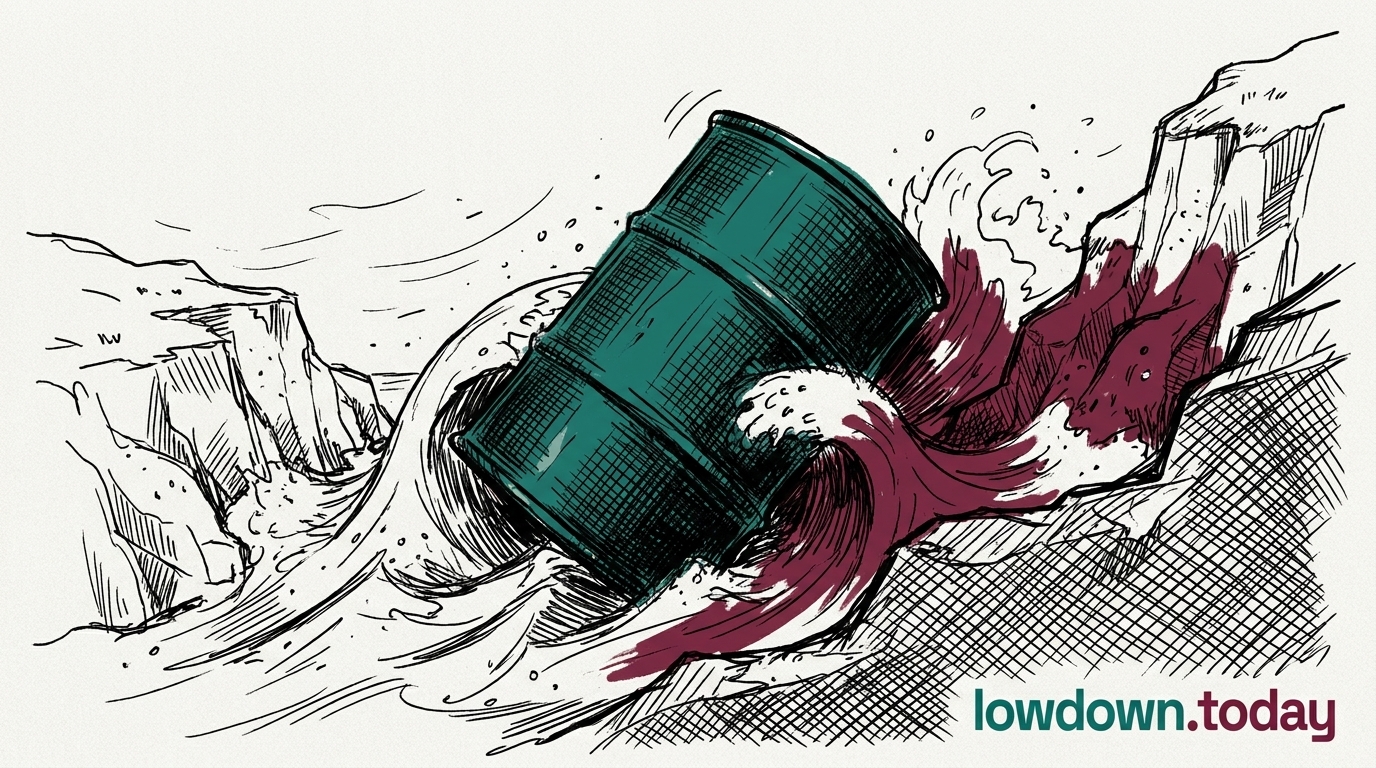
Brent crude hit $116.08 — a 72% rise in ten trading days, matching the speed of the 1990 Kuwait invasion price shock in less than a quarter of the time.

EconomicDeveloping
Key takeaway

The rate of price increase — not just the level — has outpaced the hedging and contractual adjustment mechanisms that normally buffer consumers from oil shocks, making this shock immediately damaging in ways a gradual rise to the same level would not be.

Brent Crude spiked 26.1% to $116.08 per barrel on Monday. WTI surged 27.6% to $116.03. Both represent the largest single-day percentage gains since late 1988 — the tail end of the Iran-Iraq tanker war, the last time Gulf Energy infrastructure faced sustained military attack.

The numbers tell a story of compounding disruption. Brent closed at $67.41 on 27 February, the day before Operation Epic Fury began. It reached $92.69 by Friday , already the largest weekly gain in US crude futures history . Qatar's energy minister warned of $150 per barrel if Hormuz remained closed . By Monday, it had blown past the $100 threshold traders had been watching and kept climbing. A 72% rise in ten trading days matches the price effect of Iraq's 1990 invasion of Kuwait — but that doubling took two months, not two weeks.

The price is driven by at least four independent supply constrictions operating simultaneously. Kuwait Petroleum Corporation's force majeure on all exports and Iraq's Rumaila shutdown have removed roughly 3.5 million barrels per day of Gulf production capacity from market. VLCC freight rates hit an all-time high of $423,736 per day , adding $3–4 per barrel in shipping costs alone. Three of the world's largest container lines suspended Gulf service. Every major Protection and Indemnity club cancelled War risk coverage effective 5 March — meaning that even crude not physically blocked by Hormuz cannot find insurance to move.

The fourth factor is structural and longer-term. China's direct negotiations with Iran over bilateral Hormuz transit are creating a two-tier strait: Chinese-linked commerce flows; everyone else waits. If roughly 60% of Gulf oil bound for Asia resumes under Chinese terms while the 40% destined for Western markets remains blocked, the price divergence between Asian and Atlantic basin crude could become a permanent feature of this war's economic geography. The oil price has ceased to be a barometer of the conflict. It is now a variable within it — each Israeli strike on Iranian fuel infrastructure , each IRGC strike on Gulf energy assets , and each day Hormuz remains closed feeds directly into a price mechanism that punishes every oil-importing economy on earth.


Deep Analysis

In plain English

Oil underpins the cost of nearly everything: petrol, plastics, food transport, heating, and industrial manufacturing. Normal economic shock-absorbers — long-term supply contracts, hedging instruments, strategic reserves — were designed for gradual price moves or short disruptions, not a 72% rise in ten trading days. Businesses that locked in fuel costs months ago are protected temporarily, but as those contracts expire, the full price will hit simultaneously across many sectors. Governments face an immediate choice between subsidising fuel (expensive) and allowing prices to pass through to consumers (inflationary and politically painful).

Deep Analysis
Synthesis

The combination of physical supply disruption with financial market amplification means the reported price simultaneously reflects genuine scarcity and speculative premium. These components will unwind at very different speeds: speculative premium can deflate in hours on a de-escalation signal, but physical supply restoration requires weeks to months. The policy implication is that strategic reserve releases will partially suppress the price without resolving the underlying shortage — a temporary fix that buys diplomatic time rather than economic recovery.

Root Causes

The global shift away from long-term oil supply contracts toward spot-market pricing since approximately 2010 means buyers carry far less contractual insulation from sudden price moves than during the 1973 or 1979 shocks. Combined with VLCC freight rate spikes that make re-routing cargoes prohibitively expensive, the normal arbitrage mechanisms that dampen price spikes are themselves impaired.

Escalation

The IEA's emergency strategic reserve release mechanism covers approximately 1.5 billion barrels globally — roughly 15 days of world demand. If Hormuz remains closed beyond that deployment window, the scenario shifts from price shock to physical shortage, with rationing and allocation mechanisms replacing market pricing. Neither the narrative nor current diplomatic signals suggest Hormuz reopening is imminent.

What could happen next?
  • Consequence

    Airline hedge contracts rolling off over 6–18 months will trigger a second wave of transport cost inflation well after any conflict de-escalation, making aviation sector distress a structural consequence rather than a crisis-period phenomenon.

    Medium term · Assessed
  • Risk

    IEA strategic reserve deployment cannot replace Hormuz throughput; if the strait remains closed beyond 30–60 days, physical shortage — rationing and allocation rather than market pricing — becomes the operative scenario.

    Short term · Assessed
  • Consequence

    Petrol, heating, and food transport prices will rise sharply within days in unsubsidised markets; supermarket price inflation follows within 4–8 weeks as logistics and packaging costs transmit through supply chains.

    Immediate · Assessed
  • Risk

    The speed of the price move forces central banks — particularly the Fed and ECB — into a stagflationary bind: inflation argues for rate rises, but growth collapse argues for cuts, and both pressures are now simultaneously present.

    Short term · Assessed
First Reported In

Update #30 · Mojtaba named leader; oil $116; acid rain

CNN· 9 Mar 2026
Read original
Causes and effects
Different Perspectives
Kuwait
Kuwait
Kuwait absorbed the Iranian strike that knocked generating units offline at a combined power-and-desalination plant on 17 July, the event that finally moved freight and insurance in lockstep with Brent. The strike hit essential civilian infrastructure, not a trading desk's benchmark.
Asian buyers (Singapore)
Singapore's middle distillates rose 12% month-to-date to 8.91m barrels and fuel oil passed 19m barrels on a 105% net-import surge, buyers retaining barrels as the East-West arbitrage window narrows. Cargoes are being stockpiled ahead of further Hormuz-driven freight repricing rather than released west.
Austria (Coreper holdout)
Vienna is blocking the same package over roughly EUR 2bn of frozen Russian assets earmarked for Raiffeisen, a domestic banking dispute with no connection to the oil cap racing toward its 23 July expiry. The linkage forces the whole package to wait on a bilateral compensation fight.
Greece (Coreper holdout)
Athens is holding the 21st sanctions package at the 22 July Coreper vote over Russian LNG re-export rights, a condition unrelated to the oil price cap itself, leaving the $44.10 freeze one day from expiry without a deal. Greece's own tanker registry gives it a direct stake in how any shadow-fleet measures are drafted.
Marine underwriters (Gulf war-risk)
Hull war-risk cover for Hormuz transits widened to a 3-10% band on 17 July with 5% the emerging norm, up from a 3-4% baseline set in late June, the first repricing in six weeks to track a flat-price move rather than lag it. Cover resets on actuarial evidence of loss, not on diplomatic or price signals.
Money managers (CFTC-tracked)
The CFTC's week-to-14-July snapshot, released 17 July, showed WTI managed-money net long collapsing 69% to 19,783 contracts and a standalone 60,141-contract net short on Brent Last Day (NYMEX). Both readings predate the Kuwait strike and the 20 July escalation, so any covering since is not yet visible in public data.