Skip to content
Welcome, thoughtbot's Giant Robots listeners!Start here
European Oil Markets
10JUL

Hormuz goes dark as tankers flee

3 min read
09:40UTC

Hormuz transits fell to about two a day as three vessels were struck overnight, and Iran routed the strait's governance through Oman, yet Brent crude slipped to about $75.80.

EconomicDeveloping
Key takeaway

Ships have stopped crossing Hormuz, yet Brent fell to about $75.80, a physical crisis the oil price refuses to confirm.

Tanker transits through the Strait of Hormuz collapsed to about two on 9 July, from a near-pre-war rhythm of 35 to 51 a day earlier in the month.⁠1 Three vessels were struck overnight as they ran outbound: the liquefied natural gas (LNG) carrier Al Rekayyat, already reported, and the crude tankers Wedyan and Cyprus Prosperity, which earlier coverage never named.⁠2 The 7 July strike was therefore a wider, multi-vessel attack than first recorded.

The Joint Maritime Information Center (JMIC), which advises commercial shipping, holds its Hormuz advisory at "severe", its highest tier. War-risk insurance now runs at 2 to 6 per cent of hull value, below a wartime peak near 10 per cent, but London brokers report fewer quote requests, not more.⁠3 Owners are abandoning the strait rather than paying to cross it: the cost is no longer a premium on a crossing but a route nobody will take.

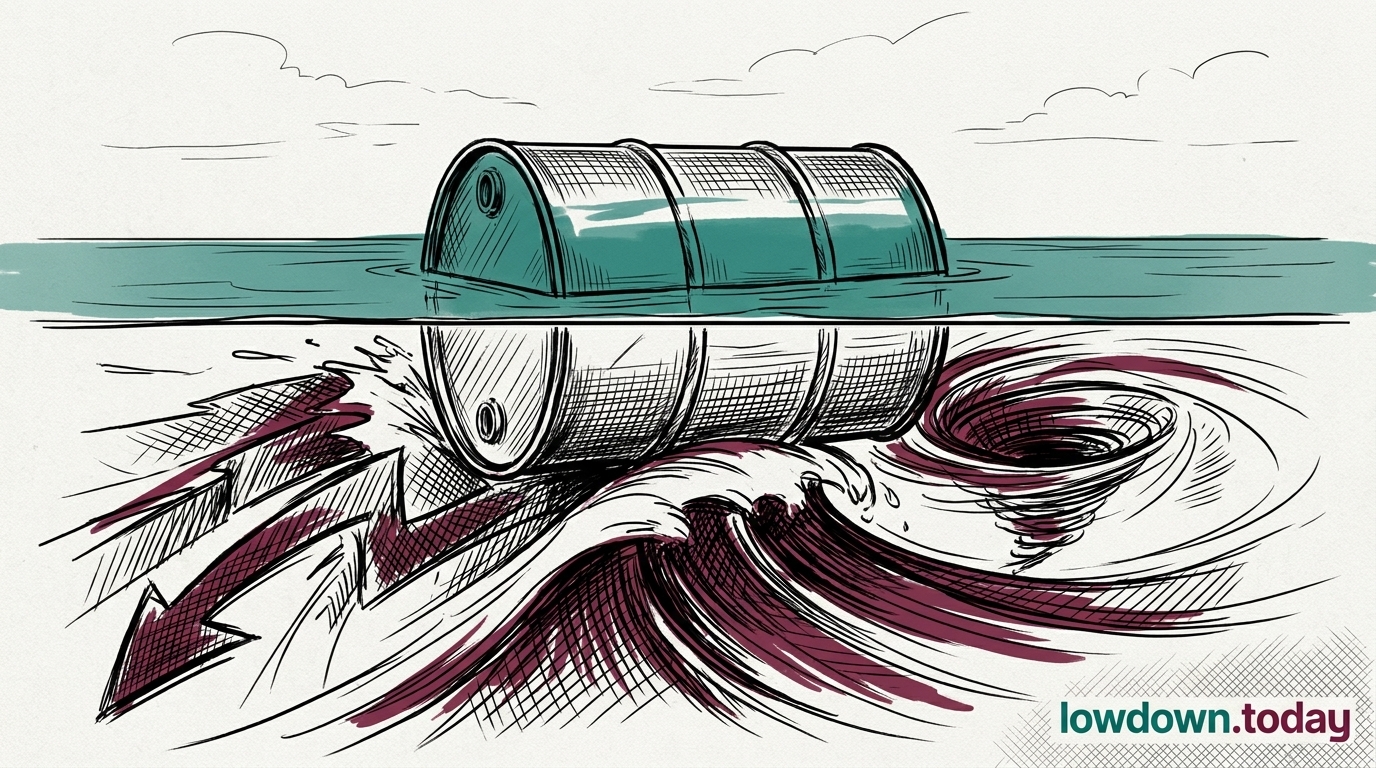
Oil fell anyway. Brent went from $78.67 on 8 July to $76.97 on 9 July and about $75.80 on 10 July, handing back roughly a quarter of the strike gain.⁠4 Physical shipping data reads as crisis; the price reads as contained.

Article 5 of the ceasefire memorandum, over who controls Hormuz, is the sticking point stalling the Witkoff-Kushner Doha channel: Iran wants sole managerial authority, the US wants unrestricted transit.⁠5 With that channel frozen, Mohammad Bagher Ghalibaf, Iran's parliament speaker, says Iran and Oman have reached a separate Hormuz-management agreement based on the same memorandum, routing the strait's governance through Muscat rather than Washington.⁠6 That deal advances a bilateral Hormuz track Tehran and Muscat have been in continuous consultations over since May rather than opening a fresh one, and Ghalibaf had already declared the memorandum violated days earlier. The International Institute for Strategic Studies (IISS) assesses that no military option can reopen the strait for either side, only negotiation.⁠7

Deep Analysis

In plain English

the strait of Hormuz is the narrow sea passage between Iran and Oman that roughly a fifth of the world's oil, and a third of its liquefied natural gas, has to pass through. Ships have almost stopped using it: only around two tankers a day are getting through, down from 35 to 51 a day earlier this month. Three ships were hit overnight, two crude oil tankers and one gas carrier, and insurance companies have made cover so expensive that most shipowners are choosing to avoid the route entirely rather than risk it. Iran's parliament speaker says Tehran has now struck a side deal with neighbouring Oman to manage traffic through the strait, separate from the wider ceasefire talks with the United States that remain frozen.

Deep Analysis
Root Causes

Iran's ability to contest transit at all rests on a legal gap: Tehran has never ratified the UN Convention on the Law of the Sea, the treaty that would otherwise guarantee foreign vessels transit passage through the strait, so its domestic maritime claims face no binding international constraint it has itself accepted.

The collapse in transits is also an insurance-market mechanism alongside the security one. War-risk cover at two to six per cent of hull value makes a single voyage prohibitively expensive without a state guarantee behind it, which is why owners are diverting rather than paying the premium and hoping.

Escalation

The Oman side-deal and the frozen Doha channel are now running as separate tracks. Whether Muscat's narrower arrangement de-escalates the maritime dimension while the wider ceasefire memorandum stays stalled, or whether owners hold out until both resolve, will show in the next transit-count reading.

What could happen next?
  • Consequence

    A bilateral Iran-Oman arrangement running outside the Doha channel means Hormuz's reopening no longer depends solely on US-Iran talks.

  • Risk

    War-risk premiums at two to six per cent of hull value keep the route commercially unviable regardless of any diplomatic deal, until underwriters see a sustained run of unstruck transits.

First Reported In

Update #151 · Iran widens war to Jordan; oil shrugs

U.S. News (Reuters wire)· 10 Jul 2026
Read original →
Different Perspectives
S&P Global
S&P Global
S&P Global said on 12 November that thin refining buffers leave jet fuel exposed to price spikes in 2027. Its view cuts against the pump-lag case, because tight middle distillates would keep jet and diesel dear even as crude falls.
European Union
European Union
The Commission proposed a 22nd package on 23 November that would list more than 70 more tankers and ban Russia-insured ones, after listing Balance Insurance on 16 November. It needs every member state's vote, so Russian tanker insurance becomes the EU's next test of unanimity.
UK households and hauliers
UK drivers paid 193.29p a litre for diesel in the week of 23 November, DESNZ data show, 31.33p more than petrol, and BoilerJuice quoted heating oil at 96.51p a litre before VAT. They pay the gap that crude's fall has not closed, with motor fuels up 33.2% in October's inflation figures.
Saudi Arabia and the OPEC+ Seven
The OPEC+ Seven held December output at September's level on 1 November, and Saudi Aramco priced December Arab Light to Europe below Brent, Attaqa reported. The full group decides on Sunday 29 November whether about 2m b/d of cuts outlast 2026, with Saudi diesel loadings already up 30% in early November.
Eni
Eni
Eni reported a third-quarter standard refining margin of $28.1 a barrel and raised its full-year assumption from $14 to $18. Its finance chief Francesco Gattei said on the 23 October call that the quarter to date was at $18, press coverage reported, so the refiner sees its windfall shrinking.
Gulf oil producer
Gulf oil producer
Secured OPEC's confirmed 188,000 b/d September increment with the next meeting set for 6 September, but the Secretariat's own 2 August release says nothing about the fourth quarter. Output guidance beyond September remains undisclosed even as delegate sourcing keeps filling that gap.

Written with AI from Lowdown's published reporting. Not individually reviewed by an editor. Editorial standards.

