Skip to content
You can now search across every topic, entity and event.What's new
European Oil Markets
10JUL

Three shocks, one week, across the oil spreads

1 min read
09:40UTC

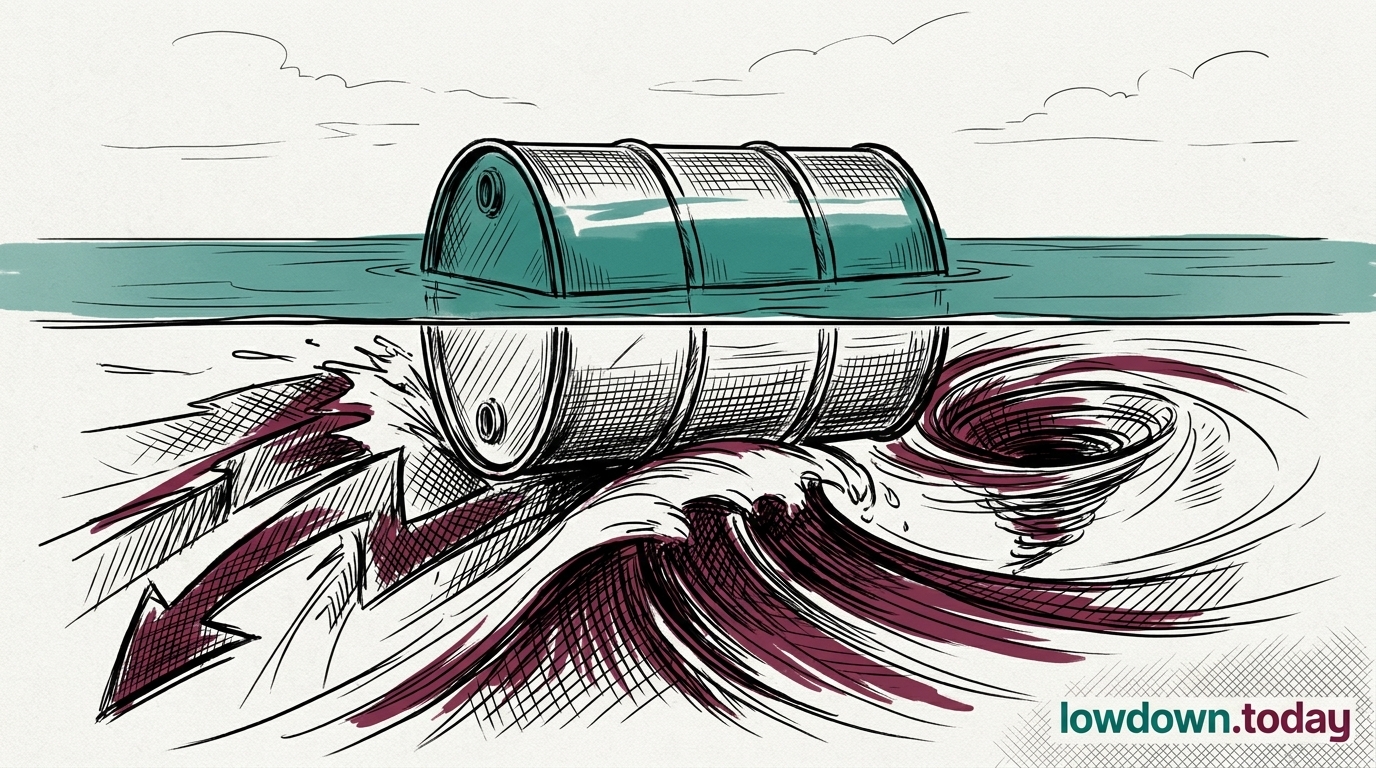
Three unrelated shocks hit European oil inside a single week and are now fighting each other in the term structure. A Hormuz risk premium reflated the Brent-Dubai EFS, OFAC pulled the Iranian-oil waiver five weeks early, and a Russian diesel ban blew the European crack to a record. The flat price near $78 hides almost all of it.

Key takeaway

Four uncorrelated shocks are fighting in the spreads while a flat Brent price near $78 hides all of them.

This briefing mapped
Loading map…
Economic
Regulatory

The Brent-Dubai EFS jumped about 21% to $4.24 a barrel on 8 July as Hormuz risk returned, while flat-price Brent settled up just 5.2% at $78.02.

Sources profile:This story draws on neutral-leaning sources from Qatar
Qatar

The Brent-Dubai spread, a gauge of Gulf shipping risk, jumped 21% to $4.24 a barrel on 8 July after fresh Hormuz tension. Brent Crude itself rose a smaller 5.2%, settling near $78.

The gap shows traders pricing Gulf risk, not a wider shortage. At a fifth of April's $21 peak, markets aren't betting on blockade-era prices returning. 

OFAC revoked General Licence X on 7 July and replaced it with a wind-down-only GL X1, cutting the legal window for Iranian oil more than five weeks short to 17 July.

Sources profile:This story draws on neutral-leaning sources

OFAC (the US Treasury's Office of Foreign Assets Control) scrapped its Iranian oil waiver on 7 July. The replacement, a wind-down-only licence, expires 17 July, five weeks earlier than planned.

The early cutoff squeezes anyone still using US-linked insurers or banks. EU buyers were already locked out by separate rules, so the change mainly hits US-connected shippers. 

Sources:OFAC

Alexander Novak announced a full Russian diesel export ban to 31 July on 8 July; the European diesel crack hit a record $60.17 a barrel the same day.

Sources profile:This story draws on centre-left-leaning sources from United States
United States

Russia banned all diesel exports through 31 July on 8 July, widening an earlier restriction that only covered producers. The same day, the European diesel refining margin hit a record $60.17 a barrel.

Russian diesel exports were already down 39% in June, so the ban squeezes an already tight European market. Refiners now earn record margins turning crude into diesel. 

Sources:Bloomberg

The Urals discount to Dated Brent split by route, past $10 a barrel delivered into India on 7 July against a wider $20 discount loading in the Baltic.

Sources profile:This story draws on centre-leaning sources from United Kingdom
United Kingdom
LeftRight

Urals crude's discount to Brent split by delivery point on 7 July. Indian buyers paid over $10 a barrel below Brent, while Baltic loadings at Primorsk held near $20.

Much of that gap is freight and insurance costs for the voyage, already built into the Indian price. Gulf refiners are also processing more Urals into diesel, tightening that market. 

Sources:Reuters
Closing comments

Direction: sideways-to-up on the spreads, flat on the outright price. The tipping mechanism is the EU Foreign Affairs Council's 13 July vote: a three-month price-cap freeze (Greece's position) keeps the Urals-Brent gap event-driven and reversible, while the Commission's preferred freeze to January 2027 locks in the structural widening now splitting the India and Baltic bases. The second trigger is GL X1's 17 July lapse, which will show up as either a clean Iranian wind-down or stranded cargo if insurers can't unwind in time; a stranded-vessel headline would harden the EFS move from a hedge into a physical disruption.

AI-assisted, human-edited under the editorial responsibility of Bannermedia Ltd. Reviewed by Ed Woodcock on 10 July 2026. Editorial standards.

Different Perspectives
OPEC+ (Saudi-led seven-member subgroup)
Approved a fourth consecutive 188,000 b/d August hike on 5 July, Saudi Arabia taking 62,000 b/d of it despite a $108-111 fiscal breakeven that makes every increment a market-share defence, not a revenue move. Hormuz re-escalation and OFAC's licence cut have since pulled against the narrowing bet the hike was priced on.
Russian Deputy Prime Minister Alexander Novak
Announced a full diesel export ban through 31 July on 8 July after Ukrainian strikes cut refinery runs to multi-year lows, protecting the domestic pump price ahead of any repair timeline. The move pushed the European diesel crack to a record $60.17 a barrel the same day.
European Commission
European Commission
Pushes a price-cap freeze to January 2027 at the 13 July Foreign Affairs Council vote, against Greece's three-month alternative backed by Cyprus and Malta. The outcome decides whether the Urals-Brent gap stays event-driven or locks in structurally.
OFAC (US Treasury)
OFAC (US Treasury)
Revoked General Licence X and issued the wind-down-only GL X1 on 7 July, the same day the Hormuz vessels were struck, cutting the legal window for Iranian oil five weeks short to 17 July. The dated deadline gives US-linked insurers and shipowners nine days to exit before secondary-sanctions exposure returns.
Indian refiners
Indian refiners
Regained pricing leverage as Gulf and Iranian barrels returned to the market, pushing the Urals discount delivered into India past $10 a barrel against roughly $20 loading in the Baltic. The split shows Indian buyers extracting a better basis than the headline Urals discount suggests.