Skip to content
You can now search across every topic, entity and event.What's new
European Oil Markets
10JUL

$900 million a day: the war's burn rate

4 min read
09:40UTC

Three major defence institutions independently assess the war's trajectory: CSIS prices it at $900 million a day, IISS warns of an endurance contest, and Chatham House projects $130 oil and eurozone contraction.

EconomicDeveloping
Key takeaway

At $900 million daily, three months of conflict consumes Iraq War-level spending in a fraction of the time.

CSIS calculated that Operation Epic Fury costs the United States nearly $900 million per day 1 — consistent with the centre's earlier estimate of $16.5 billion over the war's first 12 days . The daily rate has stabilised as initial deployment surges give way to sustained operational expenditure: munitions, fuel, air defence interceptors, and force protection across a theatre from the eastern Mediterranean to the Persian Gulf.

The International Institute for Strategic Studies described the conflict as at risk of becoming a "battle of endurance" 2. Israel entered with depleted interceptor stocks from the Twelve-Day War ; Arrow and David's Sling rounds cost $2–3 million each, and at Iran's firing rate of seven salvos in a single night, Israel's NIS 2.6 billion emergency procurement buys time but not resolution. The IRGC's claim that most missiles fired were produced "a decade ago" — if true — implies newer stocks remain in reserve. Endurance favours the side that can sustain expenditure relative to its resources — a different calculus for a $28 trillion economy burning $900 million a day than for a $400 billion economy absorbing infrastructure destruction it cannot quickly replace.

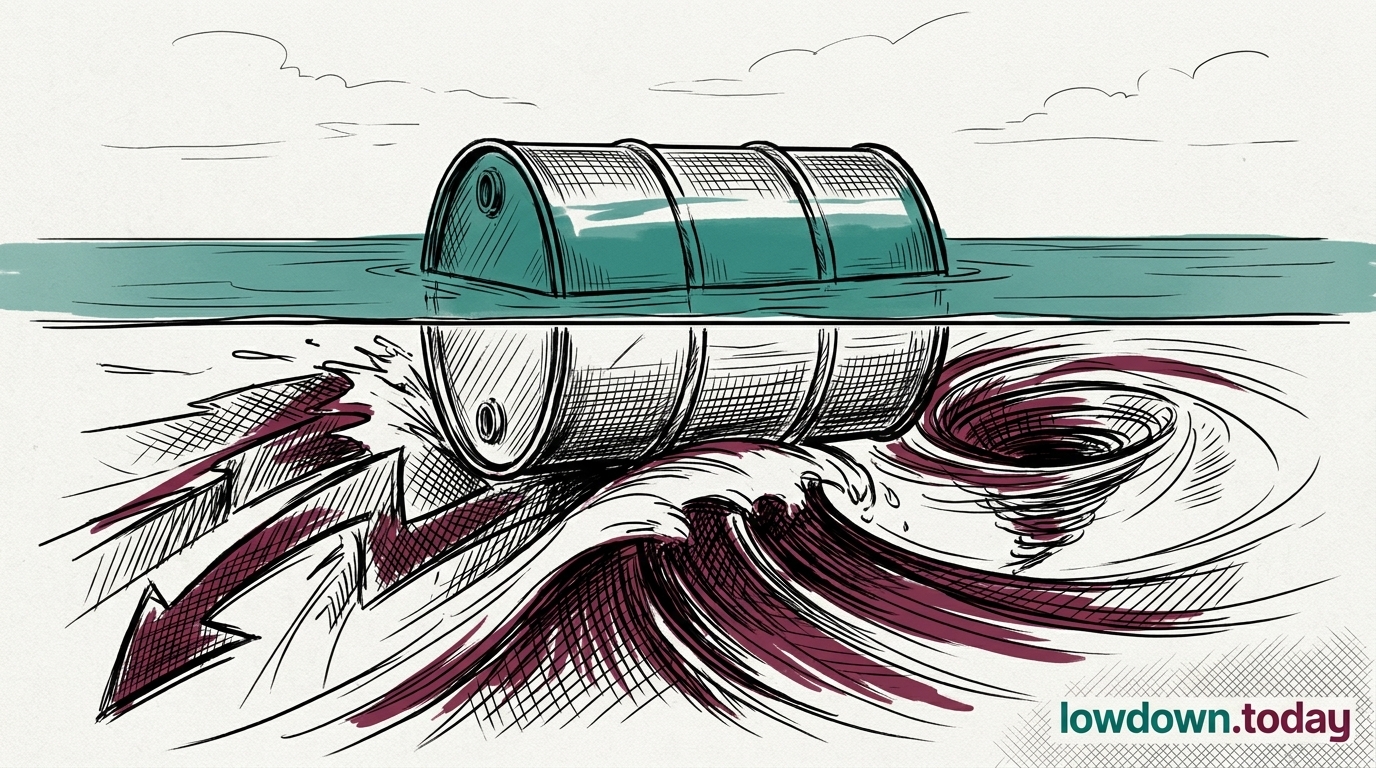
Chatham House assessed that if fighting persists for months, Brent Crude could reach $130 per barrel and the Eurozone would "probably" contract in Q2 3. Brent closed at $100.21 on 17 March — 49% above the pre-war $67.41, with Gulf production down at least 10 million barrels per day in what the IEA called "the largest supply disruption in the history of the global oil market" . US diesel has hit $5 per gallon, up 34% since 28 February, and gasoline $3.79 — prices that feed directly into household budgets and freight costs before second-order inflation effects propagate through supply chains.


Deep Analysis

In plain English

Think of $900 million a day as the combined annual budgets of several mid-sized US cities spent every 24 hours. This covers munitions, interceptor missiles, fuel, logistics, and personnel across multiple theatres simultaneously. Unlike a conventional ground war where costs are spread over years, modern high-intensity air and missile combat burns through expensive precision weapons at a pace that even wealthy nations struggle to sustain. The particular problem is cost asymmetry: Iran's ballistic missiles and drones cost tens of thousands of dollars to build; the interceptors that destroy them cost millions each. The defending side spends far more per exchange than the attacker.

Deep Analysis
Synthesis

The convergence of the CSIS cost figure, the IISS endurance warning, and the Chatham House oil projection creates a single strategic signal that none of the three institutions stated explicitly: the conflict's outcome may be determined by fiscal tolerance rather than military result. The US has greater absolute capacity but faces democratic accountability cycles of two and four years. Iran's regime faces existential stakes, which historically produce higher pain tolerance than alliance politics. This asymmetry — not weapons capability — is the central variable in whether the conflict ends on terms Netanyahu or Araghchi defines.

Root Causes

Three structural factors drive the cost figure beyond battlefield intensity alone. First, the post-Cold War US military was optimised for expeditionary power projection, not sustained homeland-adjacent air defence — meaning logistics chains are longer and more expensive than doctrine assumed. Second, the interceptor-to-threat cost ratio was never designed to absorb 61-wave operations; Patriot PAC-3 missiles at roughly $3–4 million each and Arrow-3 at $2–3 million are consumed against missiles that Iran produces domestically at a fraction of that cost. Third, Israel's small geographic depth means every interceptor failure carries catastrophic risk, forcing over-investment in redundant layered defence.

Escalation

The cost-exchange ratio structurally favours Iranian continuation over Israeli or US continuation. Each Iranian ballistic missile salvo costs Iran far less to launch than it costs the defence to intercept. RAND Corporation analysis pre-conflict identified this asymmetry as a critical vulnerability in US allied air defence architectures. If the IRGC recognises this arithmetic, it has doctrinal incentive to sustain high-tempo launches even at strategic cost, accelerating US fiscal attrition.

What could happen next?
2 risk1 consequence1 meaning1 precedent1 opportunity
  • Risk

    At $900 million per day, a 90-day conflict generates roughly $81 billion in operational costs — approaching peak-year Iraq War spending compressed into a single quarter, before any reconstruction or casualty compensation is counted.

    Short term · Assessed
  • Risk

    Interceptor missile depletion at current consumption rates could leave US and Israeli air defence inventories below minimum deterrence thresholds within months, creating a window of strategic vulnerability.

    Medium term · Suggested
  • Consequence

    If Brent reaches $130, fertiliser and food prices would follow on a 6–12 month lag, shifting the conflict's economic damage from energy markets to global food security.

    Medium term · Suggested
  • Meaning

    The IISS 'battle of endurance' framing signals that Western defence institutions privately assess no rapid military resolution is available — a significant departure from the early-conflict expectation of a short, decisive campaign.

    Immediate · Assessed
  • Precedent

    If this conflict normalises $900 million daily operational costs for regional wars involving US forces, future defence budget planning assumptions across NATO will require structural revision.

    Long term · Suggested
  • Opportunity

    Coordinated strategic petroleum reserve releases by IEA members could dampen the Brent trajectory below $130, buying diplomatic time before eurozone contraction becomes irreversible.

    Short term · Suggested
First Reported In

Update #40 · Larijani dead; Israel hunts the new leader

IISS· 18 Mar 2026
Read original
Causes and effects
This Event
$900 million a day: the war's burn rate
Three independent defence and policy institutions conclude the war's economic trajectory is unsustainable at current intensity, with daily US costs approaching $1 billion and oil markets positioned for further disruption if the conflict extends beyond weeks into months.
Different Perspectives
Indian refiners
Indian refiners
Indian refiners kept lifting discounted Urals as the India/Baltic price split widened past $9-10 a barrel, a gap that only grows as GL X1's Iranian wind-down cuts an alternative discounted grade off the market by 17 July. Cheaper Russian feedstock is being locked in while it lasts.
Chinese refiners
Chinese refiners
Chinese refiners gain leverage as the Urals-Brent discount widens, since Beijing's state buyers already source discounted Russian barrels near the fiscal floor unaffected by Western insurance costs. A wider discount, if it holds past 23 July, lets them lock in cheaper term contracts regardless of the cap's outcome.
US money managers (CFTC-tracked)
Managed money trimmed WTI net length into the rally, positioning that reflects doubt the Hormuz premium survives without freight or war-risk confirmation. The Brent-WTI spread widening almost entirely on the Brent leg supports that scepticism about a broad-based repricing.
OPEC+ (Saudi-led subgroup)
Saudi Arabia is defending market share through a fourth straight 188kbd August hike even as OPEC's own July MOMR cut 2026 demand growth for the fourth consecutive month. At a $108-111 fiscal breakeven, every added barrel costs Riyadh revenue it cannot recoup, so the hike reads as a positioning signal, not a demand bet.
Greek shipping registries
Greece, backed by Cyprus and Malta, is pushing a three-month cap-freeze compromise against the Commission's freeze to January 2027 ahead of the 23 July vote. Athens' and Valletta's combined tanker registrations mean a shorter review gives their insurers more frequent chances to reprice risk on Russian cargoes.
Russia (Deputy PM Alexander Novak)
Novak extended the diesel export restriction to producers on 8 July, the first producer-binding curb of the war, protecting the domestic pump price ahead of any refinery repair timeline. Urals still trades below Russia's $59 budget floor even as Brent gained, so the ban trades export revenue for fiscal stability at home.