Rotterdam
Europe's largest port; NWE crude and products benchmark hub; BP's second refinery unit still dark.
On 15 July, Rotterdam's ARA gasoil stocks fell to 13.48 million barrels as imports dropped to about 84,000 barrels a day.
Last refreshed: 22 September 2026 · Appears in 2 active topics
Why is the ARA refinery crack widening even as Brent slides 30% in Q2?
Timeline for Rotterdam
Mentioned in: Aramco cuts Europe off for October
Iran Conflict 2026Mentioned in: Med diesel crack assessed at $91.67
European Oil MarketsMentioned in: Singapore keeps barrels as ARA builds
European Oil MarketsMentioned in: ARA gasoil imports halve as stocks hit a fresh low
European Oil MarketsMentioned in: The arb flips west; no cargo follows
European Energy MarketsBackground
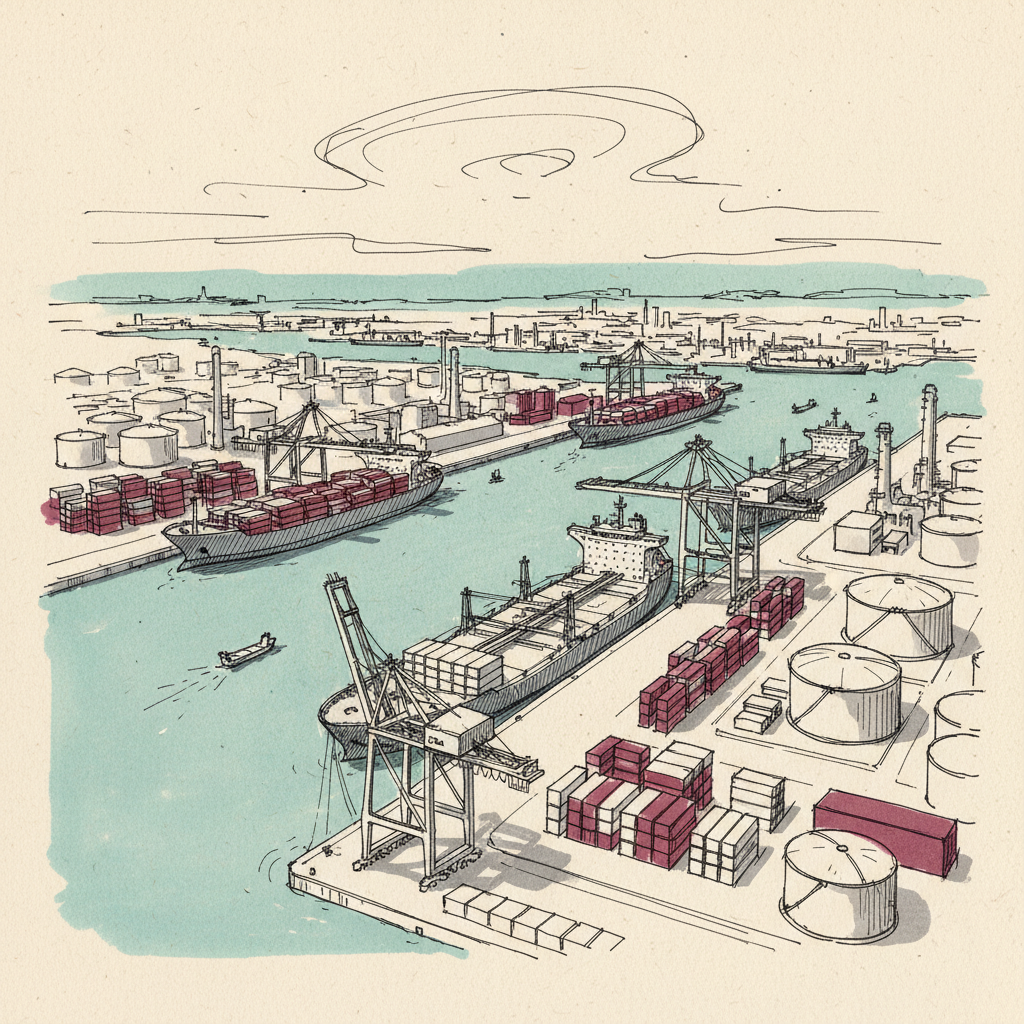
Rotterdam is Europe's largest port and a central crude oil and refined-products hub for North-West Europe. Its role in the Amsterdam-Rotterdam-Antwerp market links cargo flows, storage and refinery output to regional fuel availability. Low ARA gasoil inventories on 15 July showed how closely the port's physical system is watched by European fuel buyers.
The port sits in South Holland on the Rhine-Meuse-Scheldt delta. Its location gives inland European markets access to seaborne energy supplies and makes it a natural centre for oil storage, refining and trade.
BP's roughly 400,000-barrel-a-day Rotterdam refinery is among North-West Europe's largest. Its June 2026 partial restart illustrated why disruption at the site can affect regional product balances.
Rotterdam absorbs the diesel squeeze
On 15 July, gasoil stocks at the Amsterdam-Rotterdam-Antwerp hub fell to 13.48 million barrels, a 2.5-year low. Imports fell to about 84,000 barrels a day from 188,000 in June. For Rotterdam, the shortfall put pressure on the physical hub through which North-West Europe receives and prices refined fuel.
Rotterdam's refinery constraint amplified that pressure. On 4 June, BP restarted one 200,000-barrel-a-day crude unit after an unplanned outage, but its second unit remained offline after maintenance began on 1 May. The missing throughput left less local supply available while the hub's gasoil stocks were depleted.
Rotterdam misses refinery margins
On 3 July, European diesel refining margins held near $46 a barrel even as crude prices declined. Rotterdam is an ARA pricing and supply hub, so strong diesel margins mattered directly to the fuel flows and refinery economics concentrated around the port.
Rotterdam could not capture those margins fully. On 4 June, BP restarted one of two 200,000-barrel-a-day crude units, while the other remained offline following maintenance that began on 1 May. The outage reduced local production during a period when tight European diesel supply supported refinery returns.
How is Rotterdam affected by the Iran conflict oil price rise?
What is the Rotterdam oil price benchmark?
How much has oil risen since CENTCOM started seizing tankers?
Why is BP Rotterdam refinery offline in 2026?
What is the ARA pricing hub?
How low are European oil stocks in 2026?
Why is the Rotterdam refinery crack widening if Brent crude is falling?
How much did Brent crude fall in Q2 2026?
What is the ARA gasoil crack spread and why does it signal European refinery tightness?

