Skip to content
You can now search across every topic, entity and event.What's new
European Oil Markets
3JUL

Trump signs nothing on Iran in two days

5 min read
10:26UTC

Across 4-5 June the Trump administration signed no Iran instrument while Marco Rubio called the deal 95 per cent done; OFAC spent its sanctions docket on Cuba and the Federal Register carried no Iran notice.

EconomicDeveloping
Key takeaway

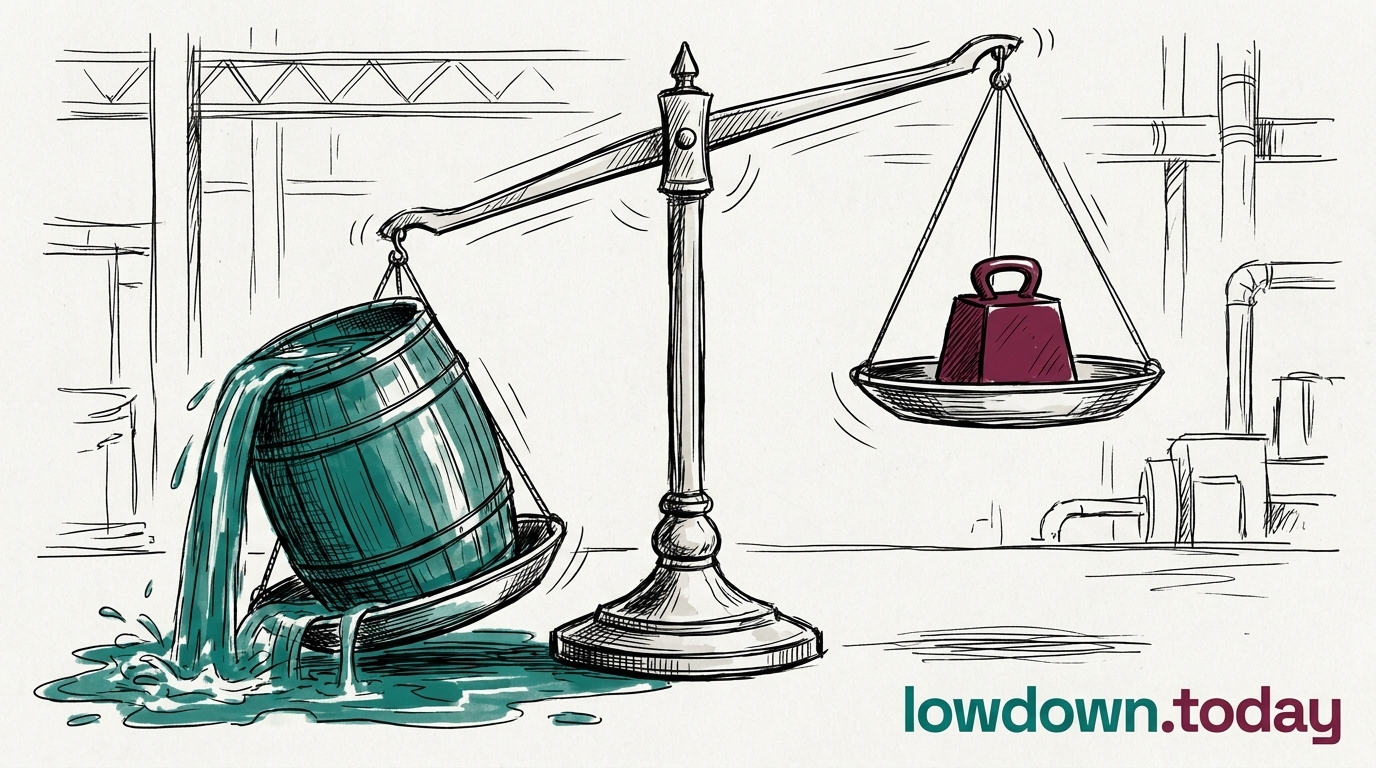
A deal cannot be 95 per cent done when zero of it has reached signed paper.

Across 4 and 5 June the Trump administration signed no Iran instrument at all, even as Secretary of State Marco Rubio put the deal at "95 per cent of the distance covered" 1. Three primary sources confirm the absence: the White House Presidential Actions index lists no Iran executive order, proclamation or memorandum; OFAC (the Treasury's Office of Foreign Assets Control) logged only Cuba designations on 4 June; the Federal Register, the US government's official journal of record, carries no Iran notice 2. The last Iran action, four crypto exchanges sanctioned, was 2 June , so the sanctions track has not moved in three days.

The pattern is not new : Donald Trump ended a Situation Room session unsigned on 29 May and posted conditions instead. What the primary record adds today is a confirmed null result against an on-record "95 per cent" claim from his own Secretary of State, who testified on 2 June that the Strait of Hormuz must reopen before any nuclear talks and that reopening earns no sanctions relief . The counterparties answer to paper, not posts. Lloyd's of London will not reprice Hormuz war risk without a Security Council resolution or a formal de-listing, and the PGSA (Iran's Persian Gulf Strait Authority) stays on the sanctions list, so a nominally reopened strait still routes every vessel through a sanctioned body. With no signed instrument to reprice against, markets and insurers keep the conflict premium intact.

The words ran heavier than the paper. In the Oval Office on 4 June, Trump disclosed that he had weighed, then rejected, a plan to airlift "massive equipment" into Iran to collect its highly enriched uranium (HEU), the stockpile enriched to 60 per cent, and said the material is now "entombed" and beyond reach, even Iran's 3. No independent body can test that claim. The International Atomic Energy Agency (IAEA), the UN nuclear watchdog, has had zero access to Iran's four declared enrichment sites since 28 February 4. The last verified figure, 440.9 kg enriched to 60 per cent, predates the war, so every claim about the stockpile today rests on inference, not inspection. The Bulletin of the Atomic Scientists assessed the material was likely moved into Isfahan's underground tunnels before the strikes, not destroyed 5. Trump's revised MOU had demanded the HEU be unearthed and destroyed , and the 4 June disclosure advances the 27 May custodian beat , when Russia and China were barred as custodians, leaving no agreed location for the same stockpile.

A fair counter-reading holds that signing nothing and ruling out a troop insertion is restraint by design, the "strike and leave" doctrine keeping options open rather than failing to act. The difficulty is that the doctrine rests on a fact, inaccessibility, that no inspector can verify. "Entombed" describes a stockpile the United States cannot see, in tunnels it cannot enter, and a deal called 95 per cent done that still produces no instrument changes nothing for the institutions that must act on it.


Deep Analysis

In plain English

On 4 and 5 June, despite Trump's secretary of state Marco Rubio saying the Iran deal was '95 per cent complete', Trump's government signed no Iran-related paperwork of any kind. Three official US records confirm this: the White House's own list of presidential actions shows nothing for Iran; the US Treasury's sanctions office (OFAC) only designated Cuban targets on 4 June; and the Federal Register, the official US government journal that must record all binding government actions, carried no Iran notice. In the same Oval Office session on 4 June, Trump disclosed a plan that had been considered and rejected: to fly equipment into Iran to collect its stockpile of highly enriched uranium (uranium enriched to a level that can be used in weapons). He also claimed that stockpile is now 'entombed' and does not need to be removed. The problem with that claim is that the international nuclear watchdog, the IAEA (International Atomic Energy Agency), has had zero access to Iran's nuclear facilities since 28 February 2026 and cannot verify whether the uranium is entombed, destroyed, or moved. The last confirmed figure was 440.9 kg enriched to 60%, assessed as having been relocated to underground tunnels at Isfahan.

Deep Analysis
Root Causes

Trump's zero-paper result on 4-5 June runs on a structural logic documented since 29 May : the White House operates two parallel channels, the president's public verbal track and the State Department's formal instrument track, and the two do not converge before being broadcast.

OFAC's only 4 June action was Cuba designations because Treasury designations require a legal finding, a paper process with a mandatory Federal Register delay; presidential posts do not. The divergence is not a communications failure; it is a structural property of how this administration generates foreign-policy output.

The airlift-plan disclosure adds a second structural layer. A uranium airlift into Iran would require an executive agreement or at minimum a classified finding under the National Security Act, neither of which appeared on the Federal Register or the Presidential Actions index. Trump's disclosure that the plan was 'rejected' confirms it was considered but produced no paper; the pipeline from consideration to presidential broadcast has no signed-instrument checkpoint.

What could happen next?
  • Risk

    The 'entombed' claim revises the physical-destruction condition in Trump's own 1 June MOU (ID:3780) without producing a formal text change, leaving US and Iranian negotiators operating against different operative terms as of 4 June.

    Immediate · Assessed
  • Consequence

    The airlift-plan disclosure confirms a US logistical track was considered for Iran's HEU. Its public rejection removes that option from the table without replacing it, narrowing the set of agreed custody solutions to those Iran can accept without Russian or Chinese custodians.

    Short term · Assessed
  • Risk

    Each day without IAEA access to Iranian sites reduces the verifiability baseline for any eventual deal. The 440.9 kg HEU figure dates from before the 28 February strikes; the actual post-strike disposition is unknown to any party with independent verification authority.

    Medium term · Reported
First Reported In

Update #118 · Hezbollah veto stalls Iran-US deal

ABC News· 5 Jun 2026
Read original
Causes and effects
This Event
Trump signs nothing on Iran in two days
A deal called 95 per cent complete produced zero signed paper, so nothing changed for the markets and insurers that must act on it.
Different Perspectives
Greek shipping registries
Flag states dominating the tanker fleet await the EU's 15 July cap-freeze vote. A formula unlock toward $75 would loosen the ceiling squeezing insurance and crewing costs on their registered hulls.
US money managers
US money managers
NYMEX WTI managed-money net long fell 23% to +64,041 in the week to 7 July, trimming length into the rally on doubt the Hormuz premium survives without freight or war-risk confirmation.
European refiners (ARA)
ARA refiners are capturing an $80/bbl US diesel crack as Russian gasoil loadings collapsed to 234kbd before Novak's 31 July export ban even bites, widening the arbitrage straight into refining margins.
OPEC+
OPEC+
The seven-member group confirmed a fourth consecutive 188kbd August hike on 5 July, defending market share even though Saudi Arabia's $108-111/bbl breakeven means every added barrel costs Riyadh revenue it cannot recoup.
Indian refiners
Indian refiners
Refiners kept lifting discounted Urals as the India/Baltic split widened past $9-10 a barrel on 7 July. A wider Urals-Brent gap means cheaper feedstock locked in against Baltic buyers.
Russia
Russia
Urals traded $48.95-55.12 on 12-13 July, below Moscow's $59 budget floor even as Brent gained $6. Oil and gas fund roughly 30% of federal revenue, and Novak's diesel export ban is rationing a shrinking export base.