Skip to content
You can now search across every topic, entity and event.What's new
European Oil Markets
18MAY

Treasury Drops Cuba From Russian-Crude Waiver

4 min read
17:30UTC

OFAC issued General License 134C on Monday 18 May after a 48-hour enforcement gap, extending the Russian-crude waiver another 30 days while explicitly excluding Cuba from coverage from 17 June.

EconomicDeveloping
Key takeaway

The third 30-day bridge confirms the waiver is permanent in fact; Cuba's exclusion makes it a foreign-policy lever.

The Office of Foreign Assets Control (OFAC), the US Treasury sanctions arm that controls Russia-related authorisations, issued General License 134C on Monday 18 May 2026, two days after General License 134B expired at the close of Saturday 16 May . The new licence authorises delivery, offloading and ancillary services for Russian crude loaded on or before 17 April, through 17 June 2026 1. Treasury Secretary Scott Bessent framed the extension as helping 'the most vulnerable nations' access stranded cargoes.

The 48-hour gap between GL 134B's expiry and GL 134C's issuance is the second consecutive enforcement cliff Treasury has run and then patched . GL 134A through GL 134C now form a pattern of monthly bridges rather than termination: Treasury manages the waiver in 30-day windows it can withhold, while the wider sanctions architecture, including the Rosneft and Lukoil Specially Designated Nationals (SDN) redesignations Bessent confirmed on 16 April , remains in place.

The Cienfuegos refinery in Cuba, which had been receiving Russian crude under GL 134B sanctions cover, loses its US licence on 17 June. The new text cuts Cuba from coverage alongside Iran, North Korea and occupied Ukrainian territories. Cuba's grid recovery had been built on that Russian supply line; the island's roughly 337 MW relief contribution from Cienfuegos throughput is now on a clock with no obvious replacement.

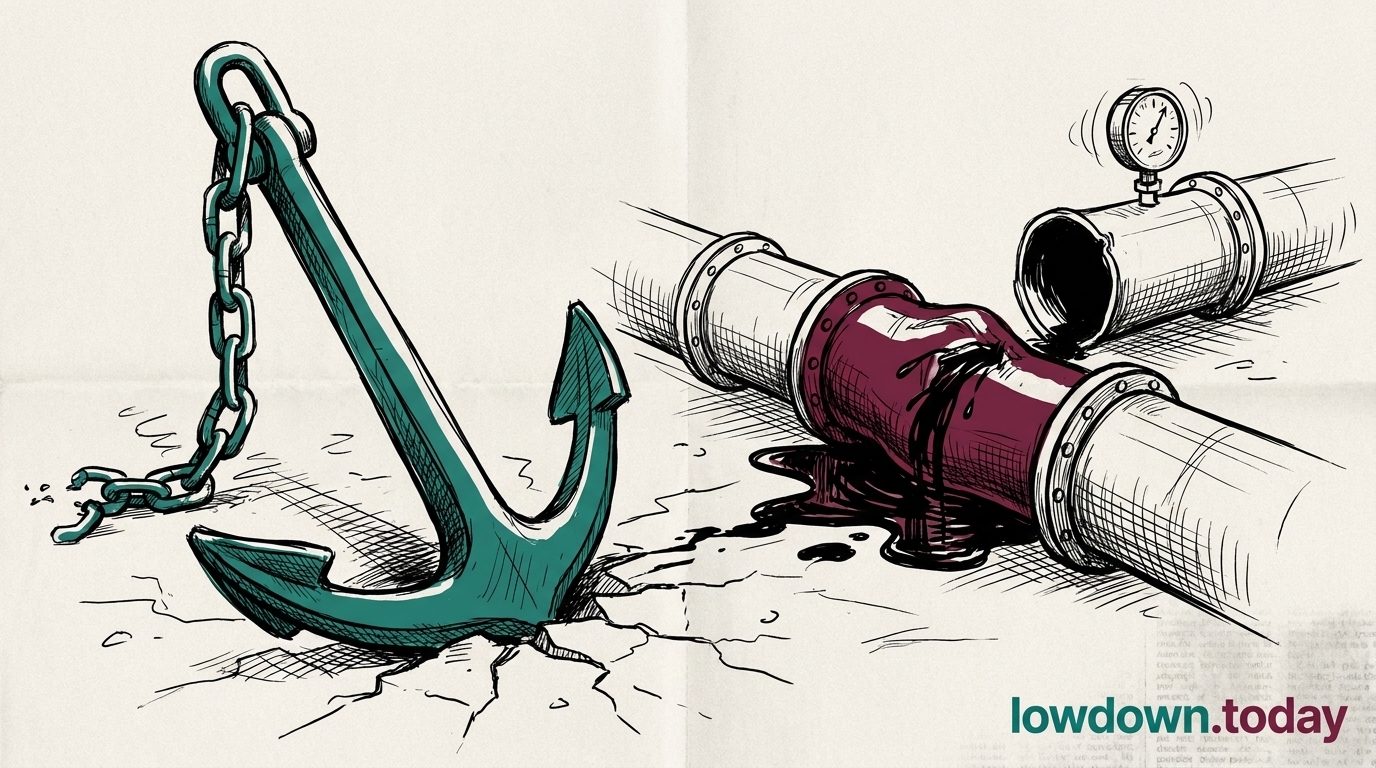
The Cuba carve-out matters because it reveals what the GL 134 series actually is. A pure market-stability instrument would treat all third-country buyers identically; a foreign-policy lever picks winners and losers. Bessent has just used the same authorisation to keep Indian and Chinese refiners covered for another month while pulling cover from a single politically isolated buyer. The enforcement mechanism for in-transit Sovcomflot cargoes already loaded under GL 134B is not detailed in the published licence, which leaves the Cienfuegos restart pathway dependent on Treasury clarification that has not yet arrived.


Deep Analysis

In plain English

The US government controls which countries can legally handle Russian oil through a series of special licences. On 18 May it issued General License 134C, the third monthly bridge, and Cuba lost its coverage. Cuba had been getting Russian oil through a previous version of the licence. Its main refinery at Cienfuegos loses US permission to receive Russian oil from 17 June onwards. Cuba's electricity system has been in crisis for years and depends on that oil. The US is using the monthly licence like a dial it can turn. Countries it wants to keep on-side (India, China) stay covered. Countries it wants to pressure (Cuba, Iran) get cut out. Russia still gets to sell its oil to the covered buyers, but the US controls who those buyers are.

Deep Analysis
Root Causes

The GL 134 rolling series reflects a structural contradiction in US Russia policy: the SDN redesignations of Rosneft and Lukoil on 16 April were politically necessary to maintain sanctions credibility with European allies, but the market impact of hard enforcement on both companies simultaneously would have sent Brent above $120 and created humanitarian fuel shortages in six or seven smaller economies dependent on Russian crude.

The Cuba carve-out has a separate root cause. Cuba's Cienfuegos refinery had been receiving Russian crude under GL 134B with Washington's tacit acceptance. Cutting Cuba specifically while keeping India and China covered signals that Treasury is using the waiver to enforce foreign-policy priorities unrelated to Russia sanctions: Havana's alignment with Moscow and Venezuela on hemispheric issues made it the expendable buyer in the 17 June reset.

What could happen next?
  • Precedent

    The Cuba exclusion establishes that OFAC can use the GL 134 series to impose country-specific costs independent of the wider Russia sanctions regime, turning a market-stability tool into a precision foreign-policy instrument.

    Medium term · Assessed
  • Risk

    If GL 134D does not appear before 17 June, Asian refiners holding in-transit Russian cargoes face a brief period of legal uncertainty that could spike charter rates and insurance premiums for the shadow fleet.

    Immediate · Reported
  • Consequence

    Cuba's grid recovery, which had been partially stabilised by Cienfuegos throughput, faces renewed electricity crisis from 17 June without an identified replacement crude supply.

    Short term · Reported
First Reported In

Update #17 · Istanbul talks, refineries dark, deficit overruns

IAEA· 22 May 2026
Read original
Different Perspectives
Indian refiners
Indian refiners
Indian refiners kept lifting discounted Urals as the India/Baltic price split widened past $9-10 a barrel, a gap that only grows as GL X1's Iranian wind-down cuts an alternative discounted grade off the market by 17 July. Cheaper Russian feedstock is being locked in while it lasts.
Chinese refiners
Chinese refiners
Chinese refiners gain leverage as the Urals-Brent discount widens, since Beijing's state buyers already source discounted Russian barrels near the fiscal floor unaffected by Western insurance costs. A wider discount, if it holds past 23 July, lets them lock in cheaper term contracts regardless of the cap's outcome.
US money managers (CFTC-tracked)
Managed money trimmed WTI net length into the rally, positioning that reflects doubt the Hormuz premium survives without freight or war-risk confirmation. The Brent-WTI spread widening almost entirely on the Brent leg supports that scepticism about a broad-based repricing.
OPEC+ (Saudi-led subgroup)
Saudi Arabia is defending market share through a fourth straight 188kbd August hike even as OPEC's own July MOMR cut 2026 demand growth for the fourth consecutive month. At a $108-111 fiscal breakeven, every added barrel costs Riyadh revenue it cannot recoup, so the hike reads as a positioning signal, not a demand bet.
Greek shipping registries
Greece, backed by Cyprus and Malta, is pushing a three-month cap-freeze compromise against the Commission's freeze to January 2027 ahead of the 23 July vote. Athens' and Valletta's combined tanker registrations mean a shorter review gives their insurers more frequent chances to reprice risk on Russian cargoes.
Russia (Deputy PM Alexander Novak)
Novak extended the diesel export restriction to producers on 8 July, the first producer-binding curb of the war, protecting the domestic pump price ahead of any refinery repair timeline. Urals still trades below Russia's $59 budget floor even as Brent gained, so the ban trades export revenue for fiscal stability at home.