Skip to content
You can now search across every topic, entity and event.What's new
European Energy Markets
13JUL

Hormuz stand-down has not reopened the strait

2 min read
10:12UTC

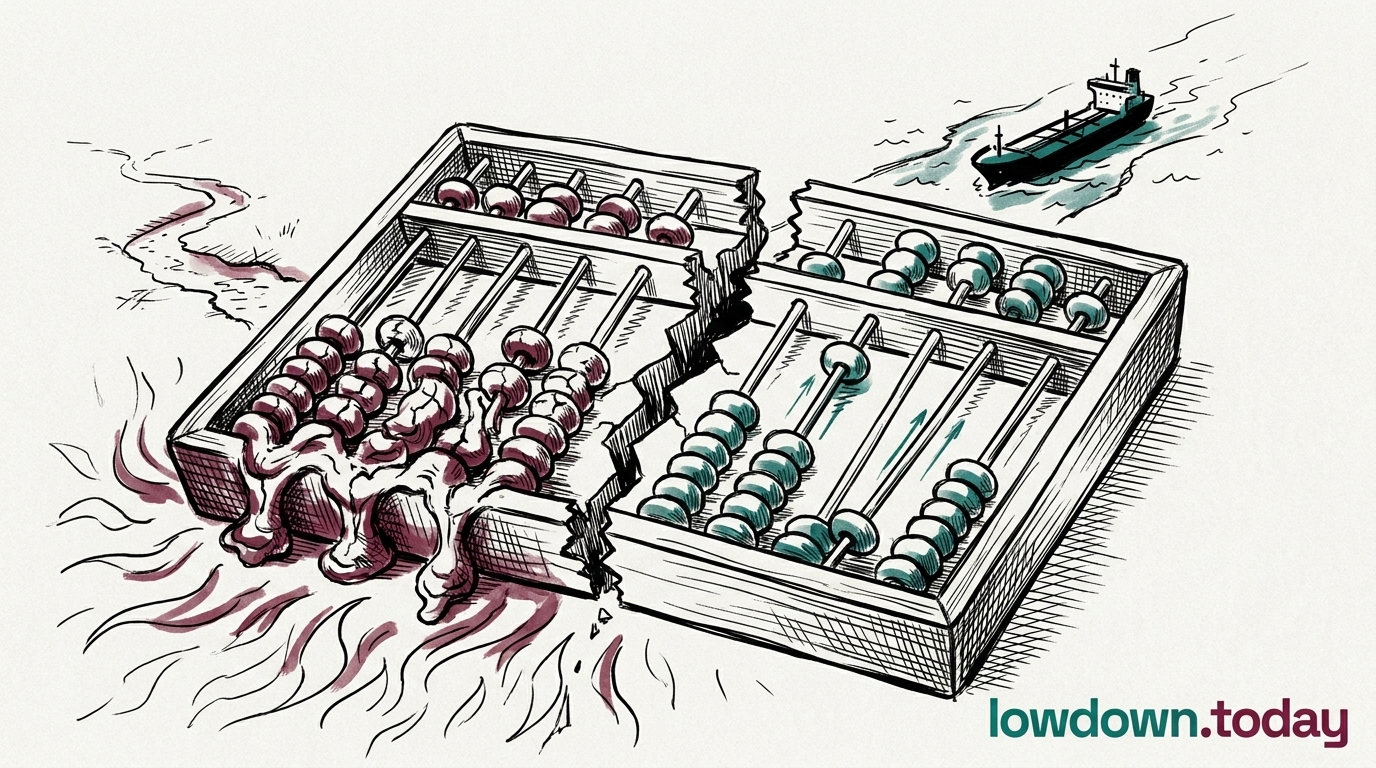
Four days on from the 29 June verbal stand-down, IMF PortWatch counts 27 to 43 Hormuz transits a day against a baseline near 84, and QatarEnergy runs at 35% of nameplate.

EconomicDeveloping
Key takeaway

QatarEnergy is running at 35% of nameplate, below its own guidance, with Hormuz transits still a fraction of normal.

Traffic through the Strait of Hormuz is still running at a fraction of normal, four days after the 29 June verbal stand-down between the warring parties. IMF PortWatch, the Fund's vessel-tracking service, counted between 27 and 43 transits a day at the start of July against a pre-crisis baseline near 84. QatarEnergy, Qatar's state energy company, is running at roughly 35% of its 77 MTPA (million tonnes a year) nameplate.

That trails the 50%-within-a-month restart pace QatarEnergy guided when the strait first reopened . The stand-down unlocked a slow, escorted trickle rather than open lanes, which invalidated the OIES clean-reopening base case built on a smooth late-June restart . This is a follow-up on that thread, not a fresh break: the numbers confirm what the round-trip already signalled.

LNG feels the drag directly. The JKM-TTF arbitrage held near parity while two Qatari trains stayed dark , so Europe is not being outbid for the cargoes that do move; there are simply too few of them clearing the corridor. For a spreads desk that reads as a supply constraint sitting upstream of price, which no de-escalation headline resolves on its own.


Deep Analysis

In plain English

Iran said it would stop threatening ships in the Strait of Hormuz, the narrow sea route Qatar's gas tankers must pass through, four days before this report. But shipping through the strait is still far below normal, and Qatar's gas export company is running well below the recovery pace it promised. Firms that insure ships against war risk want several weeks of calm before cutting their rates, which is why shipowners are holding tankers back from Hormuz until that window passes, not because of any fresh threat.

Deep Analysis
Root Causes

Protection and indemnity clubs and hull war-risk underwriters do not lift elevated premiums on a verbal military stand-down alone; industry practice requires a sustained claims-free window, typically four to eight weeks, before rates come back down. Shipowners holding tankers back from Hormuz are pricing that lag, not a fresh threat.

QatarEnergy's own restart guidance assumed insurers would move faster than they have, which is why the current reading sits below the pace it announced at reopening rather than reflecting a change in the security picture itself.

What could happen next?
  • Consequence

    QatarEnergy's restart lagging its own guidance keeps global LNG scarcer for longer, supporting the near-parity JKM-TTF read rather than a return to the pre-crisis arbitrage.

First Reported In

Update #23 · The EU's own regulator says the ban isn't biting

straits.live· 3 Jul 2026
Read original
Different Perspectives
LNG spreads desk
LNG spreads desk
The JKM-TTF arb flipped to a TTF premium of roughly USD 0.6/MMBtu on 15 July, the first time this cycle Europe has outbid Asia, yet no Atlantic cargo has rerouted west. Until a cargo actually moves, the desk reads the Hormuz premium as unconfirmed and the EUR 55 print as vulnerable to a fast reversal.
United States
United States
Washington reimposed a blockade on Iranian ports and a 20% Strait of Hormuz cargo toll on 13 July, driving TTF's 9% two-session rally to EUR 54.995/MWh. The posture is again setting Europe's gas benchmark by sentiment rather than by any confirmed change in cargo flows.
EDF
EDF
EDF slipped the Bugey 3, Golfech 2 and Chooz 2 restarts to 19, 22 and 25 July, pushing all three past the 20 July Bugey heat exemption, after river-cooling limits on the Rhone, Garonne and Meuse forced the cuts. The same thermal ceiling has capped the fleet in every major heatwave since 2003, and this cycle is no exception.
German power desk
German power desk
German day-ahead power climbed from EUR 126 to EUR 156/MWh over 14-16 July as the heat dome held, flipping the clean spark spread positive for the first time since 14 July. Gas-for-power demand is now back in competition with mandate storage injection right as the injection margin itself is thinning.
EU carbon and storage regulators
EUA carbon broke EUR 81/tonne on 13 July as the ETS Market Stability Reserve's scheduled withdrawals met fresh fuel-switching demand from France's nuclear curtailment. Brussels' mandatory storage-fill rule kept German and French injection running regardless of the TTF swings, the mechanism working as designed four years after the 2022 shock.
Equinor
Equinor
Equinor returned its Asgard field from maintenance on 11 July, lifting Gassco's exit nominations to 319.8 mcm/day just as TTF round-tripped on Hormuz risk. The restart gave Norway spare pipeline capacity to help Europe absorb the gas rally without drawing down storage, reinforcing its role as the post-2022 swing supplier.
