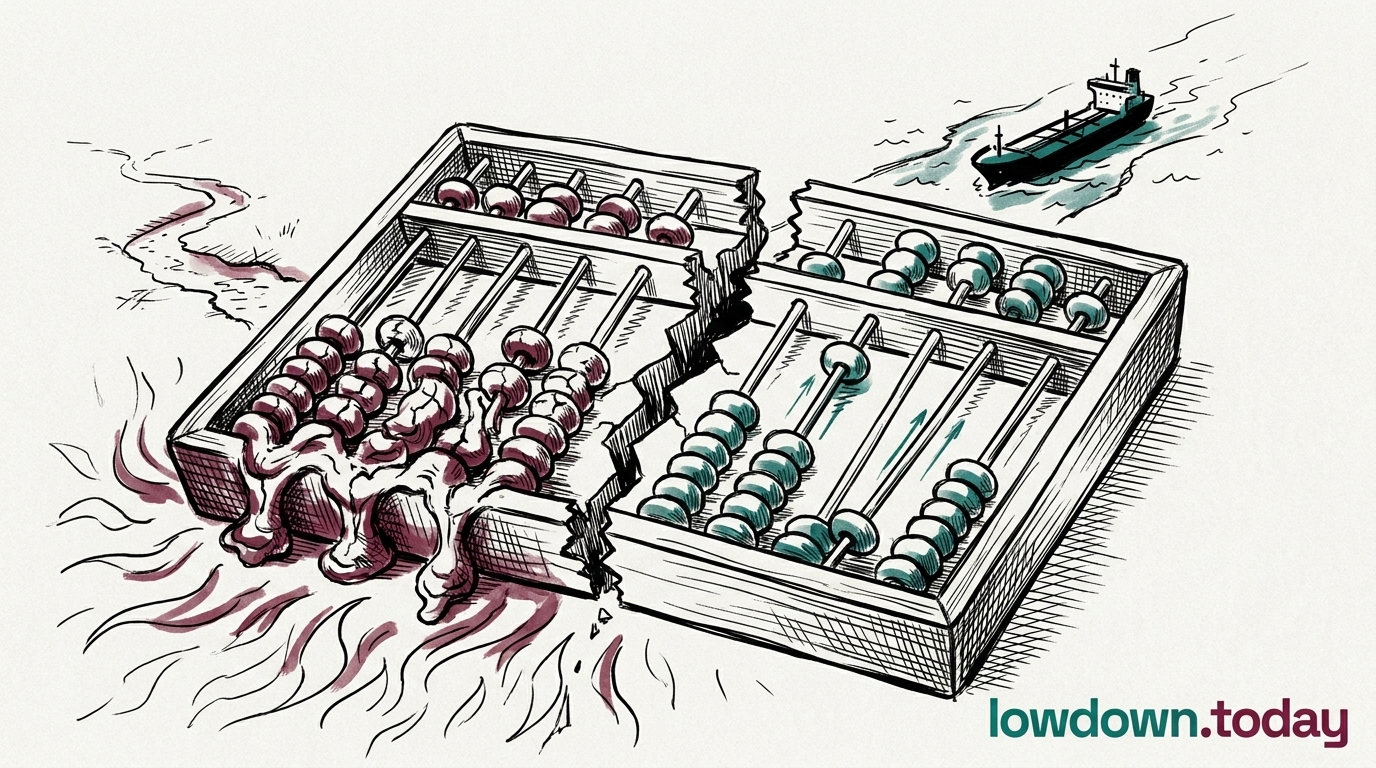
The Oxford Institute for Energy Studies (OIES) built the base case of its June Comment on a mid-year reopening of the Strait of Hormuz, charting EU storage to 74.3 bcm by 1 November, or 69.6% fill1. The 26 to 29 June escalation in The Gulf, followed by a verbal US-Iran stand-down, knocked that assumption out from under the model.
OIES is the energy research arm at Oxford whose storage notes set the reference path desks plan against. Its base case assumed the corridor would reopen mid-year, and the 17 June ceasefire that underpinned it collapsed within nine days. What the institute labelled its base case now reads as the optimistic leg, while the closed-through-October scenario it had sketched as a stress test becomes the line the autumn is measured against.
The 80% floor still needs 354.8 TWh more gas, from 549.62 TWh in store on 28 June2. At the current net pace that gap closes around late September, comfortably before winter. The catch sits in the back half of the season: demand compresses the net rate through the autumn, and the cargoes meant to cover the September-October top-up are the very molecules Hormuz keeps throwing into doubt. OIES's own 2.1 bcm/month shortfall figure and Goldman Sachs's end-July normalisation window both now read as optimistic legs.




