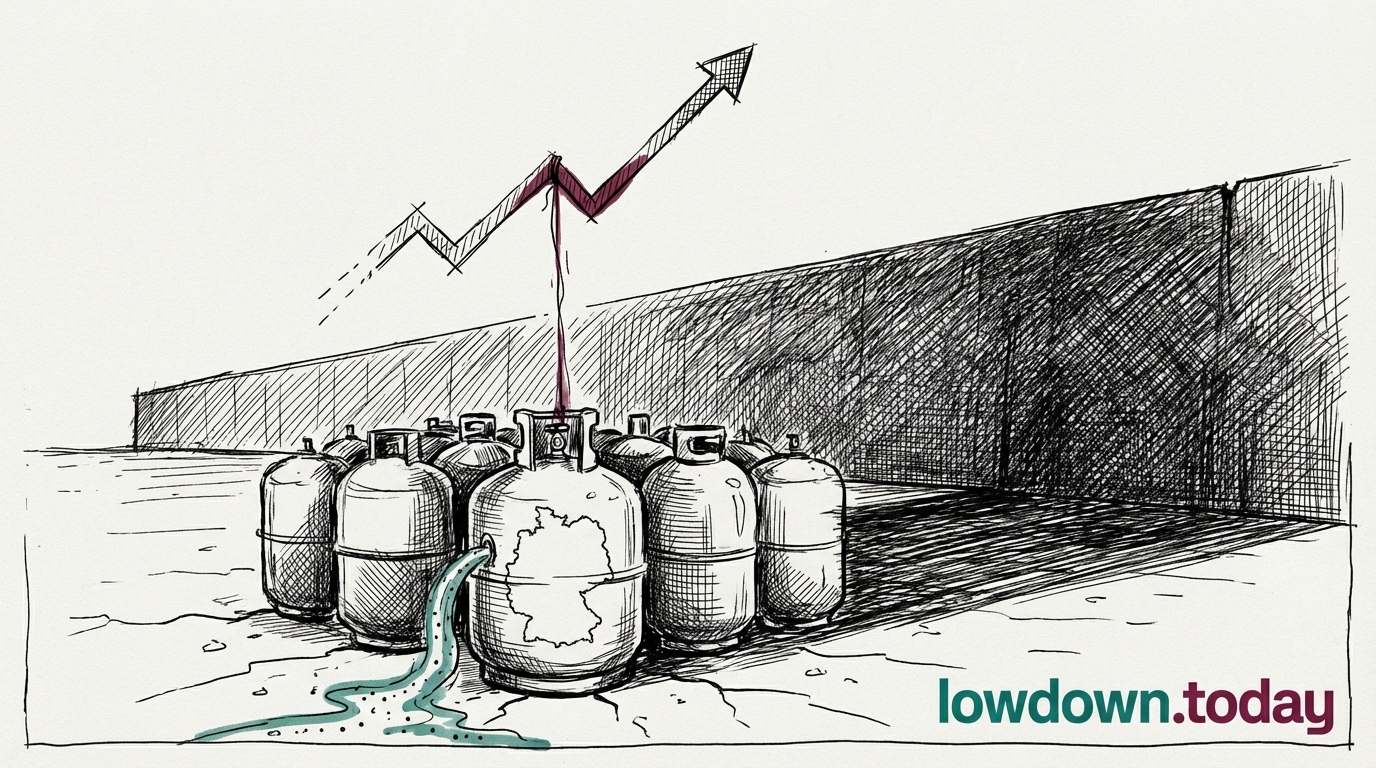
The EU Council's short-term contract ban on Russian LNG enters force on 25 April 2026, ten days from the 15 April print, removing approximately 17 bcm per year, around 13% of EU LNG imports across the first eleven months of 20251. Long-term contracts follow on 1 January 2027. Importers must operate under a prior-authorisation system requiring proof of non-Russian origin for every cargo, and member states must notify the Commission of remaining Russian gas contracts within one month of entry-into-force.
The distinction against the 27 March transshipment measure matters. That instrument covered re-export to non-EU destinations, not inbound volumes; Bruegel's dataset confirms it did not materially reduce Russian LNG arrivals at EU terminals. The new instrument is the first that actually blocks Russian LNG at the European border, and the supply arithmetic changes on day one rather than across a transition.
What is missing from every source reviewed is a named replacement. Ras Laffan force majeure remains in force, Atlantic cargo diversions to Asia are now close to a dozen, and record March 2026 volumes read as front-loading rather than a durable bridge2. At March import patterns the cut displaces roughly 1.3 to 1.6 bcm each month; replacing that from US flexible supply requires winning cargoes on a JKM-TTF spread that has not widened.
For procurement desks the compliance load lands on the 25th and the origin-proof paperwork applies to every non-Russian cargo from the first day. Bruegel's refill estimate did not assume another 17 bcm/yr would be removed on top of an already difficult supply picture. Implementation is certain; the open question is which importer breaks cover first on where the volume will come from.




