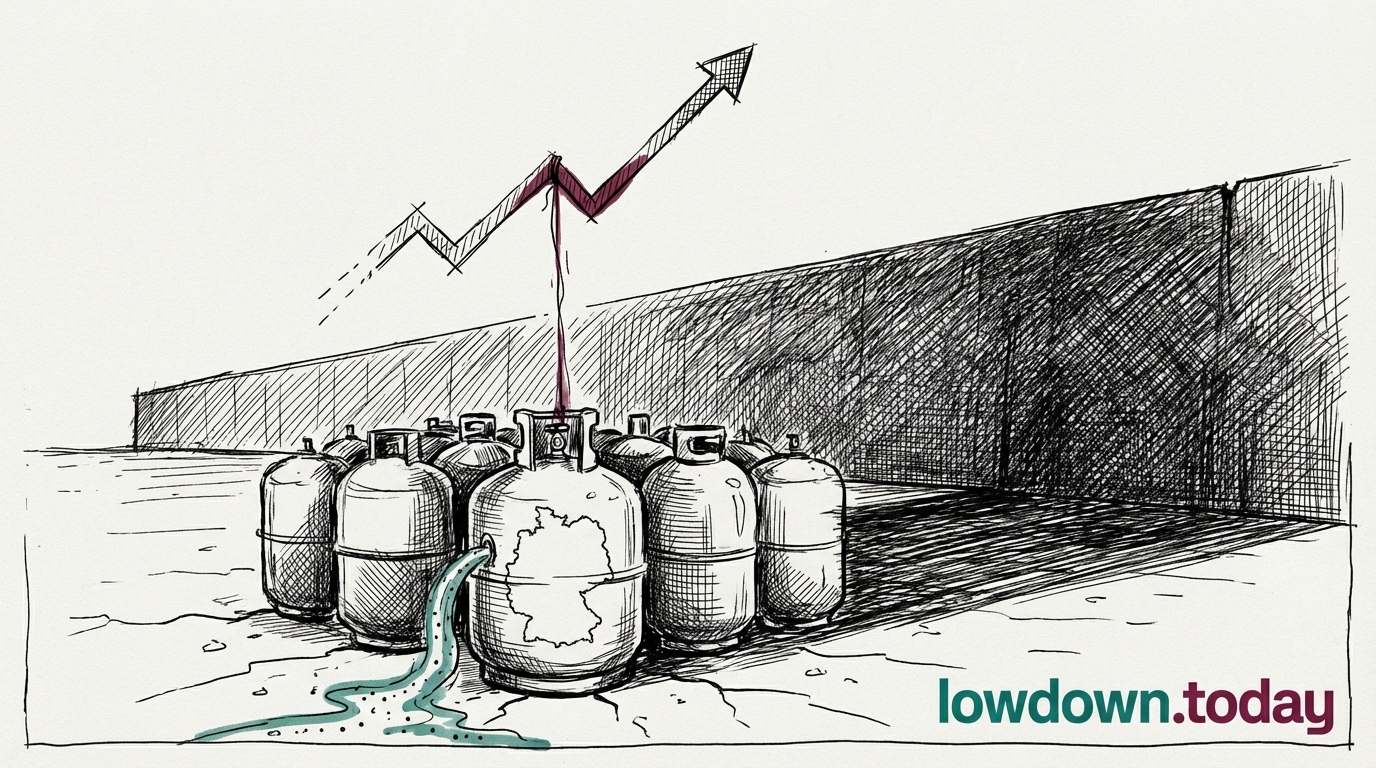
On 5 April 2026, Serbian authorities found two backpacks containing roughly 4 kg of plastic explosives, detonator caps and cord metres from the Balkan Stream pipeline near the village of Velebit in northern Serbia, a TurkStream offshoot carrying Russian gas through the Western Balkans1. Hungary has since deployed its army to protect the Serbia-to-Slovakia segment, and Russia, Turkey, Serbia and Hungary have agreed a joint protection framework. Ukraine denied involvement; Serbian intelligence briefed that US-made explosives were recovered and pointed to a migrant with military training.
TurkStream carries roughly 15 bcm per year to Hungary, Slovakia, Czech Republic and Austria and is the sole remaining Russian pipeline route to central Europe since Ukraine transit ended. Against a shallow aggregate storage fill and the 25 April LNG ban closing the other Russian leg, a successful attack on the 5th would have removed both Russian supply routes in the same week. The intercept is the reason the system did not run that test.
The analytical read is not that Balkan Stream is safer today than it was on 4 April. Pipeline protection on a line that runs through four jurisdictions with varied standards cannot be hardened uniformly by one national deployment. The intercepted plot shows capability and intent against one segment; the route length means the vector count is larger than the vector just addressed.
TTF pricing is not carrying that tail. Implied vol on late-April TTF options is cheap relative to the physical state of the system: a Hormuz ceasefire expiry, a Russian LNG cutoff and an intercepted pipeline sabotage plot sitting inside the same ten-day window. The counter-view is that the plot was caught and protection has been hardened; that is correct for the specific vector, not for the category.




