Skip to content
European Energy Markets
13APR

Bruegel puts refill bill at EUR 35bn

3 min read
22:33UTC

The Brussels think tank's estimate is the most precise public figure for the 2026 injection campaign: 55% above 2025, requiring 180 extra LNG cargoes.

PoliticsDeveloping
Key takeaway

Reaching 80% storage requires 180 extra LNG cargoes at an estimated EUR 35 billion, 55% above 2025.

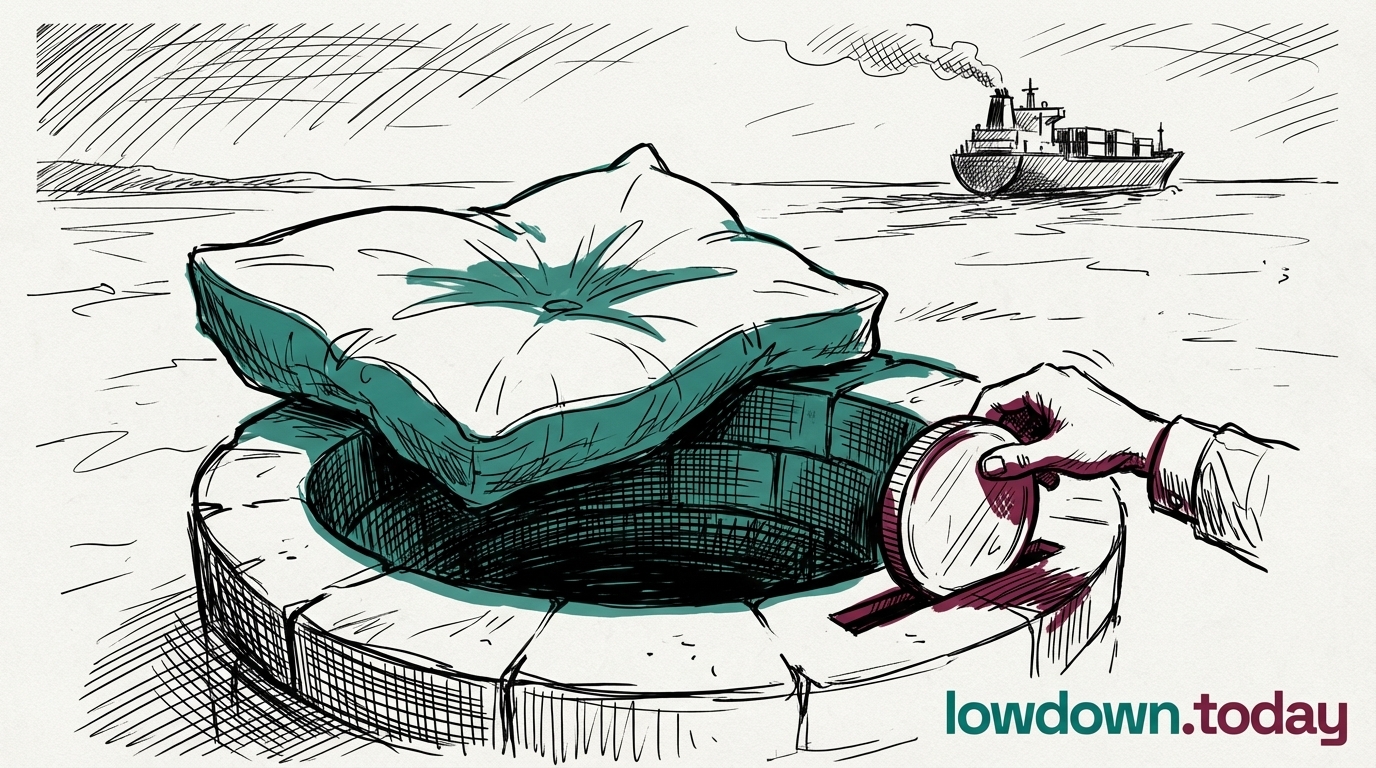
Bruegel, the Brussels-based economic think tank, estimated the cost of refilling EU gas storage to the revised target at EUR 35 billion at EUR 60/MWh, 55% above last year's equivalent costs. Europe needs approximately 180 additional LNG cargoes compared to last summer to reach the revised target by November. A gas price doubling from pre-crisis levels would add EUR 100 billion to the EU's annual import bill, which was EUR 117 billion last year.

Bruegel's policy recommendation includes an untested lever: a buyer coalition with Japan and South Korea, which together with the EU represents 60% of global LNG demand. Coordinated purchasing could counteract the cargo-by-cargo bidding war that currently favours sellers. No such coalition has been attempted at this scale, and the coordination challenges between three blocs with different regulatory frameworks and procurement cycles are substantial.


Deep Analysis

In plain English

A Brussels-based economic research organisation called Bruegel has calculated what it will cost Europe to refill its gas storage this summer. The answer is approximately EUR 35 billion, using current gas prices, and that is just to reach the newly lowered 80% target. Bruegel has also suggested that Europe should try to negotiate as a block with Japan and South Korea, the other major gas importers, to avoid all three bidding against each other for the same limited supply. If they compete separately, prices go up for everyone.

Deep Analysis
Root Causes

The EUR 35 billion refill cost reflects a structural illiquidity in the global LNG spot market. Unlike oil, where OPEC can release swing production within weeks, LNG supply is constrained by liquefaction train capacity that was committed 5-7 years earlier.

The US LNG expansion projects approved in 2019-21 (Sabine Pass Train 6, Calcasieu Pass, Plaquemines LNG) are coming online in 2025-26, but their output is 70-80% pre-committed under long-term contracts. The true spot market available to the EU is therefore a fraction of total Atlantic LNG output.

What could happen next?
  • Opportunity

    A coordinated EU-Japan-South Korea LNG buyer coalition could reduce spot cargo costs by 5-10% through demand aggregation, saving up to EUR 2-3.5 billion on the 180 additional cargo requirement.

  • Risk

    If all 180 additional cargoes must be sourced as spot, uncoordinated member state purchasing will replicate the 2022 competitive premium, pushing actual refill costs above Bruegel's EUR 35bn central estimate.

First Reported In

Update #1 · Europe's thinnest gas cushion since 2018

Bruegel· 13 Apr 2026
Read original
Different Perspectives
European Commission
European Commission
Commissioner Jorgensen formally acknowledged the post-Russia energy security framework cannot absorb the LNG shock, cutting the mandatory storage target from 90% to 80% and explicitly warning that normalisation is not foreseeable even with immediate peace. The Commission is now dependent on coordinated member state LNG purchasing and demand flexibility to bridge the remaining gap.
Germany
Germany
Germany holds the EU's largest storage estate but entered injection season at 23.32% fill with a 4.3 TWh/day injection ceiling that physically prevents any sprint recovery; the Bundeswirtschaftsministerium has maintained its early warning stage since July 2025. An escalation to Alarmstufe, which would trigger compulsory injection obligations, remains live if storage fails to rise through April.
QatarEnergy
QatarEnergy
QatarEnergy declared force majeure on European LNG contracts citing Ras Laffan strike damage, while the Gulf Research Centre assessed the declaration may also reflect a commercial decision to reallocate volumes toward higher-priced Asian spot markets without triggering breach penalties. Independent engineering confirmation of damage extent has not been published, leaving legal and commercial uncertainty unresolved.
Equinor / Norway
Equinor / Norway
Norway remains the EU's largest pipeline gas supplier and benefits from sustained elevated TTF; Norwegian pipeline capacity has partially offset the Russian supply loss but cannot close the structural gap. Norway Zone 4 power prices at EUR 2/MWh on 13 April illustrate how hydro-dominated systems are structurally decoupled from the gas price shock affecting continental Europe.
Italy
Italy
Italy cleared day-ahead power at EUR 133/MWh on 13 April, four to five times the Iberian equivalent, because gas-fired plants set the marginal price for approximately 90% of generation hours. Italy's circa 40 GW of gas-fired CCGT capacity, built when gas was cheap and nuclear was politically blocked, is now a structural liability at EUR 47/MWh TTF.
Spain
Spain
Spain cleared at EUR 29/MWh on the same day Italy paid EUR 133/MWh, the starkest single-day demonstration that its renewable energy investment is translating directly into price shock insulation for industry. Iberian interconnector constraints at the Pyrenees mean Spain cannot export this advantage to northern European markets at scale.
