Skip to content
You can now search across every topic, entity and event.What's new
European Energy Markets
18JUN

Zero pledges for Hormuz coalition

4 min read
09:57UTC

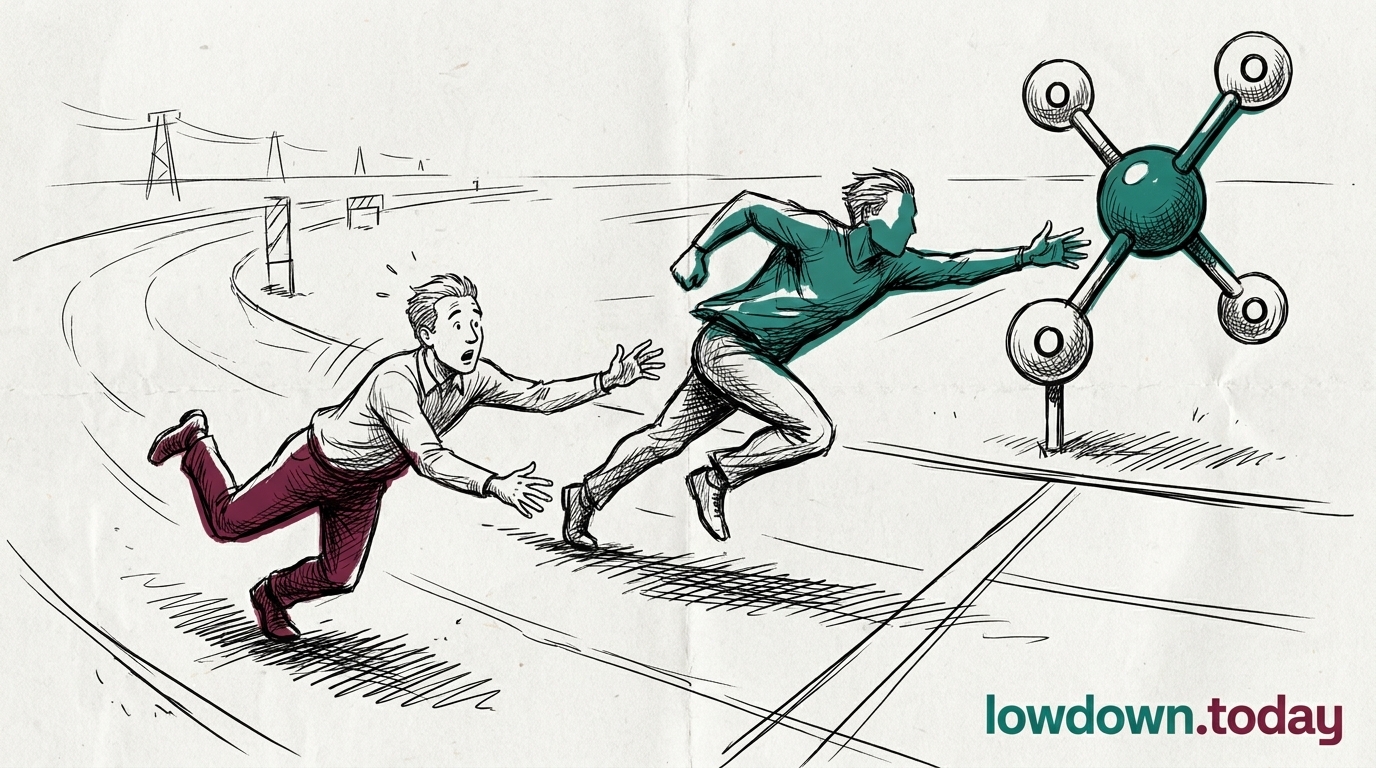
Forty-eight hours after Trump demanded allied warships for the Strait of Hormuz, not a single country has pledged a vessel — not even Japan, which routes roughly 90% of its crude oil imports through the waterway.

EconomicDeveloping
Key takeaway

Zero pledges in 48 hours confirms the coalition failed before it launched.

Not a single country committed warships to President Trump's proposed Coalition to escort commercial vessels through the strait of Hormuz. Forty-eight hours after Trump's call — originally issued on Truth Social — the tally stood at zero pledges 1.

Germany's Foreign Minister Johann Wadephul called the proposal "sceptical" — his word 2. France offered Paris as a venue for Lebanon talks, not frigates for tankers. The UK "discussed importance" in a Saturday phone call with Trump without committing ships 3. Japan and South Korea said nothing — despite both nations' near-total dependence on Gulf crude. Japan imports approximately 90% of its oil through the strait. South Korea roughly 70%.

The refusals are specific to the risk each government has already weighed. Germany and France are absorbing the oil price shock that has pushed Brent from $67.41 on 27 February past $103 . Yet none will send warships into a zone the United States' own officials have described as an Iranian "Kill box" with more than 300 ships stranded . Energy Secretary Wright said on 11 March that the Navy is "simply not ready" for escorts . Allies are being asked to accept military risk in a combat zone for a war they did not start and that Washington itself cannot yet secure.

The last comparable effort — Operation Earnest Will during the 1987–88 Tanker War — succeeded partly because it was confined to escort duty rather than offensive combat, and partly because Cold War alliance structures compelled participation. Neither condition holds in 2026. The US is simultaneously prosecuting a full-scale air campaign against Iran and asking allies to share the maritime risk. Defence Secretary Hegseth's assurance four days earlier that the Hormuz situation need not be worried about contradicted Wright's admission the same week — a dissonance allies noticed. No allied navy appears willing to enter a waterway where the power that initiated hostilities has not yet established control.


Deep Analysis

In plain English

Trump asked allied countries to send warships to protect oil tankers sailing through the Strait of Hormuz — the narrow waterway between Iran and Oman through which roughly one-fifth of the world's oil passes every day. Iran has threatened to close it. Not one country agreed. This matters because the US Navy cannot simultaneously bomb Iran from the air, protect oil tankers in the strait, and maintain its other global commitments without help. Without allies filling the maritime gap, the US faces a binary choice: scale back the air campaign to free naval resources, or accept that Hormuz shipping is unprotected. Either option raises oil prices further above the current $103-per-barrel level.

Deep Analysis
Synthesis

The coalition's collapse in 48 hours is qualitatively faster than the 2019 IMSC, which took weeks to prove hollow. The speed indicates pre-decided refusal, not hesitation — allies have already completed their risk-benefit calculation and concluded that participation costs outweigh US favour. This represents a structural shift: the era of US-convened Gulf maritime coalitions attracting meaningful European naval participation may have closed, leaving the US to choose between unilateral action, inaction, or trading air campaign tempo for maritime resources.

Root Causes

Allied non-participation has three structural drivers absent from the body. First, post-Cold War European naval contraction — the UK Royal Navy operates 13 destroyers and frigates in 2024, down from 35 in 1990 — leaves insufficient hulls for a sustained Gulf deployment without stripping NATO's northern and eastern flanks. Second, Gulf Cooperation Council states face an existential asymmetry: Iranian retaliation against Saudi Aramco's Ras Tanura terminal or Abu Dhabi's Jebel Ali port would dwarf any diplomatic benefit from coalition membership. Third, Trump's 2025 tariff rounds have depleted the diplomatic reciprocity reserves that enabled the 2003 Iraq coalition and the 2019 IMSC to attract even token contributions.

What could happen next?
  • Risk

    Lloyd's and P&I club war-risk exclusions could functionally halt commercial Hormuz transits within days of sustained Iranian interdiction — closing the strait without requiring Iranian military success against US forces.

    Immediate · Suggested
  • Consequence

    The US must now choose between scaling back the air campaign to free naval assets or accepting unprotected Hormuz shipping — no coalition exists to resolve the dilemma that the body identifies.

    Short term · Assessed
  • Precedent

    Zero allied commitments in 48 hours establishes that Trump's transactional foreign policy cannot rapidly assemble a Gulf maritime coalition — a capability previous US administrations could reliably activate.

    Medium term · Assessed
  • Risk

    China, importing 11 million barrels per day through Hormuz, may position its own naval assets as a corridor guarantor, creating a parallel Chinese security architecture in the Gulf that excludes the US.

    Medium term · Suggested
First Reported In

Update #37 · Six more weeks of strikes; Hormuz deal dead

Gov.uk· 16 Mar 2026
Read original
Different Perspectives
Cross-border power traders
The France-Germany day-ahead spread flipped from a EUR 17.20 German premium on 1 August to a EUR 4.15 French premium on 3 August, the same day French curtailment peaked. They cannot yet attribute the flip to curtailment alone, since a like-for-like overnight comparison shows French nuclear output rising while wind fell and demand returned on the weekday step.
EDF
EDF
River-cooling limits took 7.6 GW, 12 per cent of its fleet, offline on 3 August, the highest curtailment since the heatwave began, with an easing forecast to 4.3 GW on 4 August and 3 GW after. It manages the cut as a recurring seasonal constraint, expecting it to lift with river temperature, not repair.
Gasunie
Gasunie
TTF, the Dutch hub it operates, drifted to roughly EUR 55 to 58 per MWh across the window, staying inside its recent range through both the German spark reversal and the French curtailment. It reads a flat hub price as evidence that neither event this window carried enough weight to move the fuel leg on its own.
German gas-fired generators
Record German solar of 18,761 MW on 2 August pushed the clean spark spread to minus 18.48 EUR/MWh, a loss-making day, before it returned to plus 16.20 on 3 August. They now price dispatch against post-solar residual load rather than wind alone, since the sign flipped inside 48 hours on unchanged fuel and carbon costs.
European Commission (DG Energy)
Its implementing-measures register logged transposition notices from only Portugal and Slovakia against Wednesday's Article 94 deadline for Directive (EU) 2024/1788, with 25 states silent. It expects the register to fill only gradually, since filing routinely lags legislating and any infringement track against non-notifying states runs on a slower clock than the deadline itself.
Spain's LNG terminal operators
Spain's 9,145 GWh terminal inventory is the largest single stock in the EU LNG network, an option value that can reroute cargoes wherever the winter strip pays best rather than a cavern gas obligation tied to a fixed date. That flexibility matters more as Germany's cavern shortfall pushes more of the winter security question onto import infrastructure.



