Skip to content
You can now search across every topic, entity and event.What's new
European Energy Markets
18JUN

Iran files three-phase deal; nuclear last

4 min read
09:57UTC

Iran routed a written ceasefire text through Islamabad on 27 April that freezes hostilities first and defers nuclear last. Olivia Wales restated Washington's inverse demand: hand over 440.9 kg of 60% uranium first, talk later.

EconomicDeveloping
Key takeaway

Iran put its floor in writing; Washington's reply has yet to leave Truth Social.

Iran delivered a written three-phase ceasefire text to Washington through Pakistan on Monday 27 April, Axios first reported 1. Phase 1 freezes hostilities and binds guarantees against further attacks on Iran and Lebanon. Phase 2 rewrites the legal framework over the Strait of Hormuz and demands Iranian compensation. Phase 3, nuclear, is explicitly deferred.

White House spokesperson Olivia Wales restated the inverse US position the same day: enrichment suspended for at least a decade and Iran's 60% uranium stockpile handed over before talks proceed 2. "The United States will never allow Iran to have a nuclear weapon," Wales told Axios. Pakistan Army chief Asim Munir had walked Tehran's first three-to-five-year enrichment offer to Islamabad on 16 April ; the monitoring duration moved two years between then and now, yet the architecture did not.

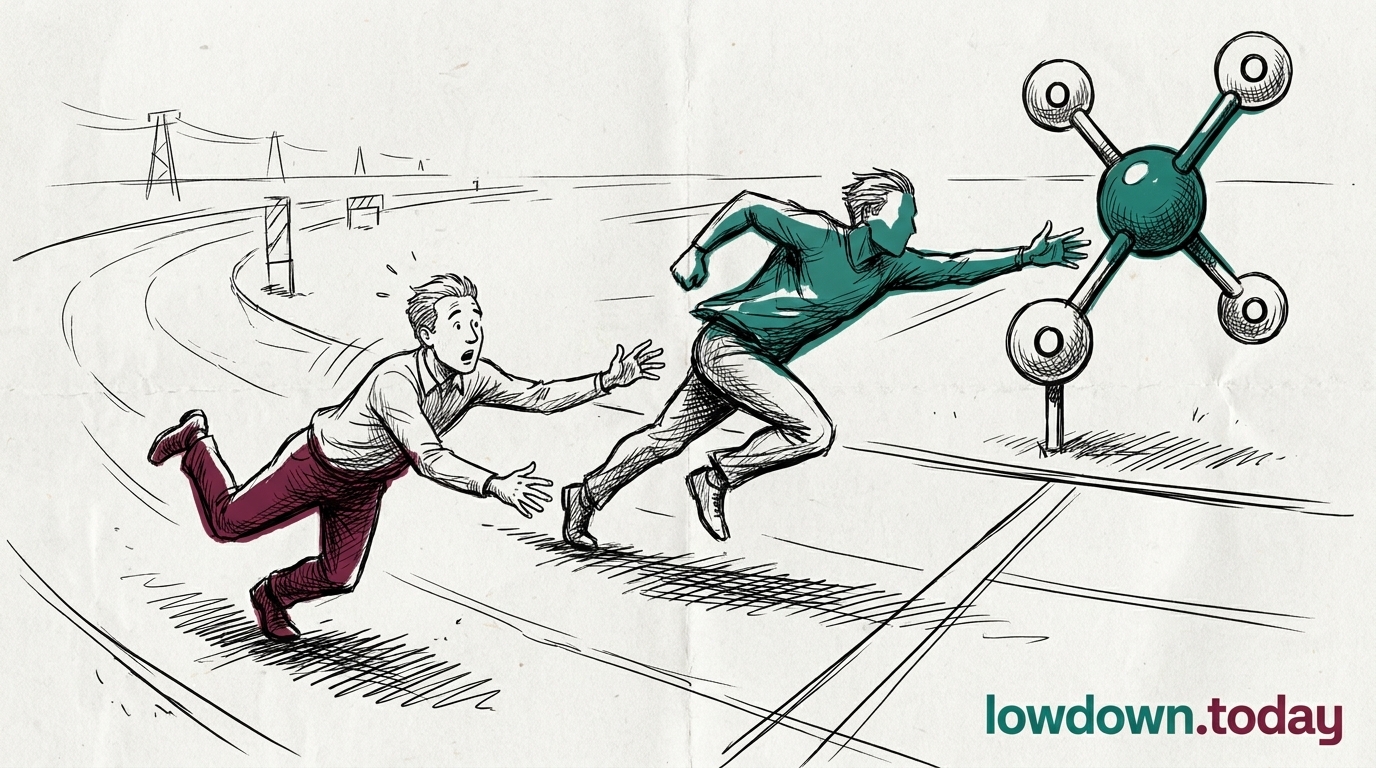
Iran asks Washington to start with hostilities; Washington asks Iran to start with uranium. Phase 3 cannot be split from Phase 1 without one side conceding the order, and neither has. The third channel attempt in two weeks collapsed when Trump cancelled the Witkoff and Kushner Islamabad flight ; the Pakistani route is what survived. The Iranian text has now been delivered in writing; the US position remains rhetorical. OFAC and the White House have authorised no signed Iran instrument in 59 days.


Deep Analysis

In plain English

Iran sent a written peace proposal to Washington on 27 April, delivered through Pakistan as a go-between. The plan has three stages: first, stop the fighting; second, sort out who controls the Strait of Hormuz (the main shipping channel); third, tackle the nuclear question later. The US rejected this order. Washington says Iran must hand over its stockpile of enriched uranium and pause nuclear work before any talks begin. Iran says it will not do that without a guarantee that the attacks stop first. Think of it like two neighbours in a dispute: one says 'stop throwing rocks, then we'll talk'; the other says 'give me your rocks first, then we'll talk'. Both positions are now written down and sitting with the same Pakistani mediator, but 59 days into the war neither side has budged on which step comes first.

Deep Analysis
Root Causes

The sequencing inversion has a structural cause: Iran's surviving civilian government cannot accept uranium removal as a precondition without the IRGC veto.

Mojtaba Khamenei communicates via handwritten envelopes; the IRGC, which controls Iran's nuclear programme since the February strikes decapitated the civilian command chain, treats the 440.9 kg of 60%-enriched uranium as its primary remaining deterrent. Surrendering it before any security guarantee would eliminate Iran's only leverage in a war it is losing militarily but not economically.

Washington's nuclear-first position has a parallel structural driver: OFAC's Hengli Petrochemical designation and Iran's internet blackout (1,440 cumulative hours by Day 59) confirm the administration is applying maximum-pressure logic simultaneously with the ceasefire track.

Maximum pressure and sequenced diplomacy are institutionally incompatible: the first requires Iran to feel pain to the point of capitulation; the second requires Iran to feel secure enough to make concessions. Running both tracks simultaneously has produced the contradiction visible in the Trump/Leavitt public-line gap.

What could happen next?
  • Consequence

    Pakistan now holds both sides' written floor positions simultaneously, giving Islamabad institutional leverage it has not held since the 2013 Geneva interim nuclear talks, when Oman played the equivalent role.

    Immediate · 0.85
  • Risk

    If the US rejects the three-phase text without a counter-offer, Iran's civilian Foreign Ministry loses standing to the IRGC hardliners who argued the Pakistani channel would produce nothing.

    Short term · 0.78
  • Opportunity

    Phase 1 alone, if agreed, would freeze hostilities and allow Hormuz transits to resume, cutting Brent by an estimated $15-20 per barrel within a week of announcement, per Gulf Research Centre modelling from 2019 Hormuz crisis simulations.

    Short term · 0.72
  • Precedent

    Iran routing a written text through Pakistan rather than Oman establishes Islamabad as the primary mediating channel for the first time, potentially displacing Muscat's decades-long backchannel role.

    Medium term · 0.68
First Reported In

Update #81 · Iran writes Phase 3; Trump posts Phase 1

Axios· 27 Apr 2026
Read original
Causes and effects
This Event
Iran files three-phase deal; nuclear last
Both floor positions now sit in writing on the same day, routed through the same mediator, with their sequencing inverted; the disagreement is no longer about substance but about which clause comes first.
Different Perspectives
Cross-border power traders
The France-Germany day-ahead spread flipped from a EUR 17.20 German premium on 1 August to a EUR 4.15 French premium on 3 August, the same day French curtailment peaked. They cannot yet attribute the flip to curtailment alone, since a like-for-like overnight comparison shows French nuclear output rising while wind fell and demand returned on the weekday step.
EDF
EDF
River-cooling limits took 7.6 GW, 12 per cent of its fleet, offline on 3 August, the highest curtailment since the heatwave began, with an easing forecast to 4.3 GW on 4 August and 3 GW after. It manages the cut as a recurring seasonal constraint, expecting it to lift with river temperature, not repair.
Gasunie
Gasunie
TTF, the Dutch hub it operates, drifted to roughly EUR 55 to 58 per MWh across the window, staying inside its recent range through both the German spark reversal and the French curtailment. It reads a flat hub price as evidence that neither event this window carried enough weight to move the fuel leg on its own.
German gas-fired generators
Record German solar of 18,761 MW on 2 August pushed the clean spark spread to minus 18.48 EUR/MWh, a loss-making day, before it returned to plus 16.20 on 3 August. They now price dispatch against post-solar residual load rather than wind alone, since the sign flipped inside 48 hours on unchanged fuel and carbon costs.
European Commission (DG Energy)
Its implementing-measures register logged transposition notices from only Portugal and Slovakia against Wednesday's Article 94 deadline for Directive (EU) 2024/1788, with 25 states silent. It expects the register to fill only gradually, since filing routinely lags legislating and any infringement track against non-notifying states runs on a slower clock than the deadline itself.
Spain's LNG terminal operators
Spain's 9,145 GWh terminal inventory is the largest single stock in the EU LNG network, an option value that can reroute cargoes wherever the winter strip pays best rather than a cavern gas obligation tied to a fixed date. That flexibility matters more as Germany's cavern shortfall pushes more of the winter security question onto import infrastructure.



