Skip to content
You can now search across every topic, entity and event.What's new
European Energy Markets
15JUN

Riyadh founds a 43-nation naval bloc

3 min read
12:23UTC

Saudi Arabia announced a maritime defence coalition for the Red Sea, Bab al-Mandeb and Gulf of Aden, with thirteen founding signatories, no start date and no named headquarters site.

EconomicAssessed
Key takeaway

Thirteen signatures, no start date, no rules of engagement, and no coverage of Hormuz.

Saudi Arabia announced a 43-nation maritime defence coalition on Thursday 30 July, with a first meeting of military representatives in Riyadh and a headquarters in The Kingdom at a site it declined to name 1. Thirteen states signed as founding members alongside Saudi Arabia: Turkey, Kuwait, Bahrain, Qatar, Jordan, Egypt, Pakistan, Djibouti, Somalia, Bangladesh, Yemen, Sudan and Comoros. No start date was given 2.

The declared scope covers the Red Sea, the Bab al-Mandeb, the strait between Yemen and Djibouti that opens the Red Sea onto the Gulf of Aden and the Indian Ocean, and the Gulf of Aden itself. It does not cover the strait of Hormuz, whatever some coverage of the announcement implied. The injuries it answers are specific and recent: the Houthi embargo on Saudi-linked shipping declared on 20 July by radio warning alone , the strike on the tanker NCC Masa off Al-Shuqaiq and the Aramco fires at Jazan .

Read the signatory list against the diplomacy and the shape sharpens. Qatar, Egypt and Pakistan sponsored the four-party ten-day truce proposal , and all three have now put their names to a Saudi naval bloc. Oman, the fourth sponsor and the state actually running the live channel to Tehran, did not. Neither did the United Arab Emirates, and the United States has not joined.

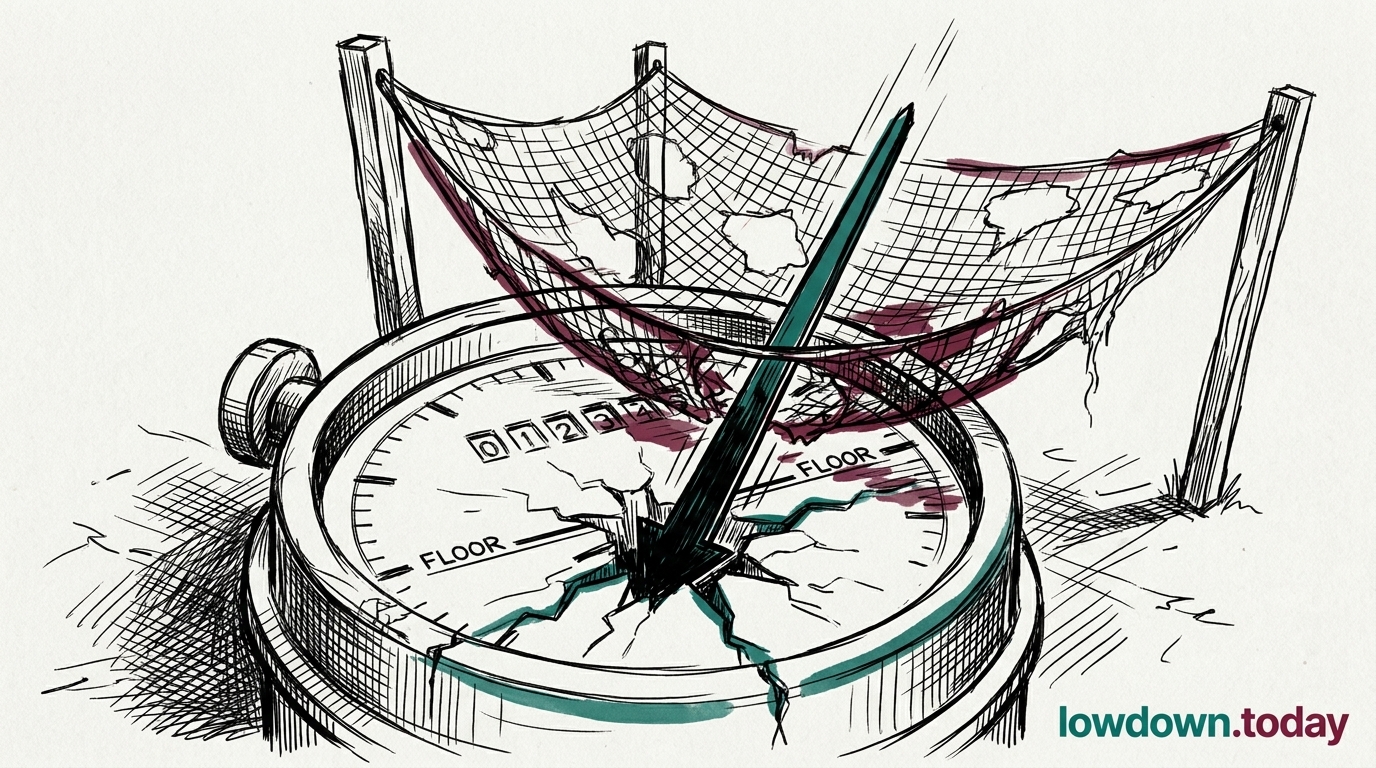
A communiqué, a first meeting and a headquarters address commit no hull to sailing, no navy to a rule of engagement and no government to firing on a Houthi launch crew. Combined Maritime Forces in Bahrain has spent two decades demonstrating how wide the gap runs between a membership list and a patrol schedule. Riyadh has not published a start date, and that omission is the thing to watch next.


Deep Analysis

In plain English

Saudi Arabia announced a new alliance of 43 countries to help protect ships in the Red Sea, the narrow Bab al-Mandeb strait near Yemen, and the Gulf of Aden. Only 13 of those countries have actually signed on so far as founding members, and no date has been set for when patrols would start. This is a different waterway from the Strait of Hormuz, the chokepoint near Iran that has dominated most of this conflict's shipping disputes.

What could happen next?
  • Consequence

    Without a start date, shipping insurers are unlikely to lower Red Sea war-risk premiums until the coalition demonstrates an operational patrol schedule.

  • Risk

    A gap between 43 signatories and 13 active founding members could leave the coalition unable to sustain continuous naval presence against Houthi missile and drone strikes.

First Reported In

Update #164 · The pause ends, and the map moves west

The National· 31 Jul 2026
Read original
Different Perspectives
Spain's LNG terminal operators
Spain's 9,145 GWh terminal inventory is the largest single stock in the EU LNG network, an option value that can reroute cargoes wherever the winter strip pays best rather than a cavern gas obligation tied to a fixed date. That flexibility matters more as Germany's cavern shortfall pushes more of the winter security question onto import infrastructure.
European Commission
European Commission
Brussels holds the bloc to 90% on a flexible window while Germany, holding roughly a quarter of EU storage capacity, tracks toward missing its own lower 80% figure by 21 points. A national shortfall this size in the anchor market matters more to bloc security than the flexible timetable alone can absorb.
French power exporters and CRE
French day-ahead rose in step with Germany but by less, reopening a EUR 7-17 premium that makes northward export flows commercially attractive again after the EUR 43.09 discount evaporated in days. CRE separately authorised RTE and Enedis to buy flexibility locally, betting the coming winter's binding constraint is grid congestion rather than a shortage of firm capacity.
TTF trading desk
TTF trading desk
A visible national shortfall like Germany's 21-point gap is a directional signal, not noise, for a desk holding the summer-winter spread. TTF's flat EUR 58-60 range through this week's German price swings says the market has not yet chosen to reprice refill risk into the front of the curve.
German cavern and CCGT operators
German caverns kept buying prompt gas at TTF near EUR 58-60 through the inversion; the wind collapse to 2.4 GW then flipped the spark spread to plus EUR 29 and put turbines back in the same queue. Every day turbines win that bid, injection at a third of the 877 GWh/day pace needed falls further behind.
Slovakia
Slovakia
Slovakia says it dropped its hold-out on the 21st sanctions package only after Ursula von der Leyen personally signed written gas-price and supply guarantees. The Council of the European Union's own 17,238-character release on the package names neither Slovakia nor any guarantee, leaving Bratislava's account unconfirmed by the institutional record.



