Skip to content
You can now search across every topic, entity and event.What's new
European Energy Markets
15JUN

IRGC declares Hormuz shut, vetoing Iran's own deal

4 min read
12:23UTC

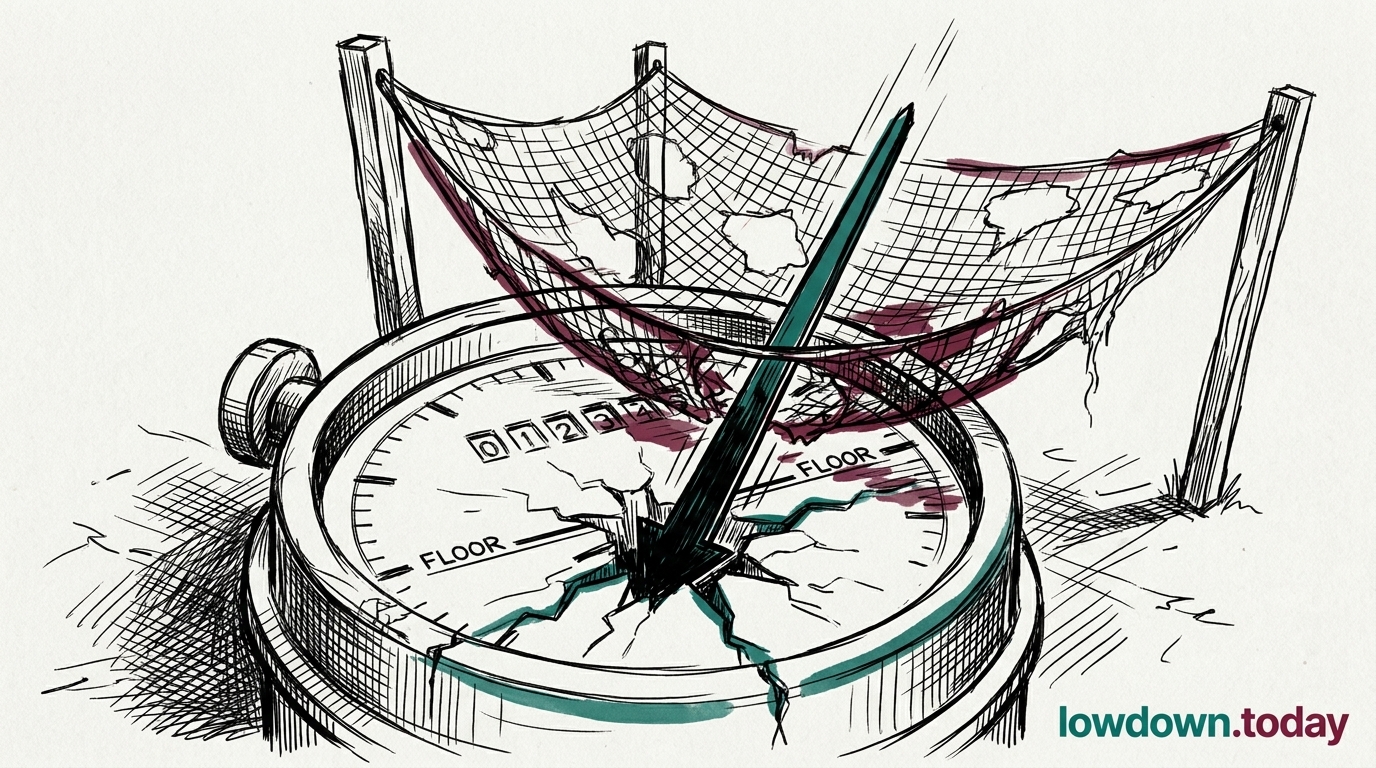
The IRGC Navy posted an order on its Telegram channel on 11 June barring all traffic through the Strait of Hormuz, the first such declaration of the war and a military override of the deal its own government was negotiating.

EconomicDeveloping
Key takeaway

The corps declared Hormuz closed and overrode its government's deal, yet only the IRGC confirms any ship was hit.

The IRGC Navy posted an order to its official Telegram channel on 11 June declaring the strait of Hormuz "closed to all vessels, including oil tankers and commercial ships" and warning that "any vessel attempting to transit will be targeted." The Navy claimed two ships had been struck for defying the order, naming none and confirming no casualties, so the only account of enforcement comes from the party that declared the closure. CENTCOM rejected it within hours, saying commercial shipping was continuing to transit normally and no US warship had been hit.

For the length of this war the chokepoint ran one way: CENTCOM blockaded from outside Iranian waters while the corps levied tolls from within. On 11 June the IRGC inverted that, and in doing so negated the first operative clause of the late-May MoU framework, under which Hormuz was to reopen and the tolls to end. the strait the corps declared shut also carries the China-bound crude that keeps Iran's economy breathing after exports fell below 300,000 barrels a day , which makes the order a cost to Tehran as much as a threat to anyone else.

No independent source has verified that the 33-kilometre passage is physically sealed, which leaves a closure that exists in a Telegram post but not in the transit data as a legal and insurance event before it is a naval one. The military wing chose escalation over the deal its government is still pursuing through Pakistani mediation, and announced the choice itself.


Deep Analysis

In plain English

The Strait of Hormuz is a 33-kilometre-wide waterway between Iran and Oman, and roughly one-fifth of all the oil traded at sea passes through it. Iran's Islamic Revolutionary Guard Corps (IRGC), its ideological military force, posted a message on the messaging app Telegram on 11 June declaring the strait closed to all ships and warning that any vessel trying to pass would be attacked. The problem is that Iran's own civilian government is in the middle of peace negotiations, and those negotiations require the strait to reopen. The military wing has now said the opposite of what the diplomatic wing was promising. The US military rejected the IRGC's announcement and said ships were still sailing through normally. CENTCOM, Indian naval sources, and commercial shipping trackers Kpler and Windward have not confirmed any vessel stoppage or strike in the hours following the declaration.

Deep Analysis
Root Causes

Iran signed and ratified the 1958 Convention on the Territorial Sea but never ratified UNCLOS, which establishes transit passage rights through international straits.

Tehran's 1964 Maritime Zones Act and its 2024 update claim jurisdiction over vessels it classes as 'hostile-linked', a category defined domestically and applied to any flag state that has sanctioned Iran. That legal gap gives the IRGC a domestic statute to cite when it stops ships, while CENTCOM and maritime law cite UNCLOS transit passage that Iran has never accepted.

The corps also controls what the body refers to as the Persian Gulf Strait Authority, the toll registration system launched in May 2026. Declaring Hormuz closed converts a revenue mechanism into a military-command instrument: the same institutional apparatus used to charge $2 million per VLCC can now be cited as the enforcement body for a formal closure order.

Escalation

Upward. The IRGC declaration, even if unenforceable, moves from the previous pattern of levying tolls on transiting vessels to an absolute prohibition on transit. It directly negates the first operative clause of the MoU framework. The corps and the civilian government are now giving opposite signals on the same day, which increases the probability that the diplomatic track collapses before a text is signed.

What could happen next?
  • Risk

    If two independent shipping data platforms (Kpler, Windward) record transit volumes falling below three vessels per day, the closure will shift from a legal event to a physical one, triggering automatic hull-and-cargo war-risk surcharges across Lloyd's, the Japanese and Korean P&I clubs.

    Immediate · Assessed
  • Consequence

    The MoU's reopening clause is now contradicted by a standing IRGC order. Any mediator presenting the deal to the IRGC command must either obtain a formal corps withdrawal of the Telegram closure post or accept that the deal's first clause is unenforceable from the moment of signing.

    Short term · Reported
  • Precedent

    An IRGC command that publicly vetoes its own government's negotiated framework in the middle of active talks establishes that corps authority over the strait exceeds civilian authority. Future mediators must address the corps directly, not through the foreign ministry.

    Medium term · Assessed
First Reported In

Update #124 · IRGC declares Hormuz shut; US strikes again

ANI / Tribune India / Business Standard· 11 Jun 2026
Read original
Causes and effects
This Event
IRGC declares Hormuz shut, vetoing Iran's own deal
A military command shut, on paper, the waterway its civilian negotiators had agreed to reopen. The declaration repriced legal and insurance risk regardless of whether the strait is physically sealed, and it set the corps openly against Iran's diplomatic track.
Different Perspectives
Spain's LNG terminal operators
Spain's 9,145 GWh terminal inventory is the largest single stock in the EU LNG network, an option value that can reroute cargoes wherever the winter strip pays best rather than a cavern gas obligation tied to a fixed date. That flexibility matters more as Germany's cavern shortfall pushes more of the winter security question onto import infrastructure.
European Commission
European Commission
Brussels holds the bloc to 90% on a flexible window while Germany, holding roughly a quarter of EU storage capacity, tracks toward missing its own lower 80% figure by 21 points. A national shortfall this size in the anchor market matters more to bloc security than the flexible timetable alone can absorb.
French power exporters and CRE
French day-ahead rose in step with Germany but by less, reopening a EUR 7-17 premium that makes northward export flows commercially attractive again after the EUR 43.09 discount evaporated in days. CRE separately authorised RTE and Enedis to buy flexibility locally, betting the coming winter's binding constraint is grid congestion rather than a shortage of firm capacity.
TTF trading desk
TTF trading desk
A visible national shortfall like Germany's 21-point gap is a directional signal, not noise, for a desk holding the summer-winter spread. TTF's flat EUR 58-60 range through this week's German price swings says the market has not yet chosen to reprice refill risk into the front of the curve.
German cavern and CCGT operators
German caverns kept buying prompt gas at TTF near EUR 58-60 through the inversion; the wind collapse to 2.4 GW then flipped the spark spread to plus EUR 29 and put turbines back in the same queue. Every day turbines win that bid, injection at a third of the 877 GWh/day pace needed falls further behind.
Slovakia
Slovakia
Slovakia says it dropped its hold-out on the 21st sanctions package only after Ursula von der Leyen personally signed written gas-price and supply guarantees. The Council of the European Union's own 17,238-character release on the package names neither Slovakia nor any guarantee, leaving Bratislava's account unconfirmed by the institutional record.



