Skip to content
Welcome, thoughtbot's Giant Robots listeners!Start here
Data Centres: Boom and Backlash
28JUN

Texas queue swells to 438 GW

3 min read
12:23UTC

Texas approved its first formal large-load study process on 18 June, even as ERCOT's connection queue climbed to 438 GW, about 90% of it data centres. The plan to clear it is not due until autumn 2027.

IndustryDeveloping
Key takeaway

ERCOT's queue has nearly doubled to 438 GW while the plan to clear it runs to autumn 2027.

The Public Utility Commission of Texas approved the state's first formal Batch Zero large-load study process on 18 June, the cohort method ERCOT will use to work through its connection requests⁠1. ERCOT, the Electric Reliability Council of Texas, which runs about 90% of the state grid, reported its large-load queue at 438 GW (gigawatts), roughly 90% of it data centres.

The queue climbed from 410 GW in April in about six weeks, and Texas first tried to clear it when it stood at 225 GW. It has nearly doubled since. ERCOT's final transmission plan is not due until autumn 2027, with the next application round, Batch 1, opening in summer 2027.

Intake runs at tens of gigawatts a quarter while the study meant to clear it takes years, so the backlog grows faster than any single cohort can be processed. A connection cleared through Batch Zero still cannot switch on without the transformers to serve it, and those are running years behind for new grid links. A transformer ordered today arrives after both the FERC show-cause responses and the Batch Zero plan are already on the table.


Deep Analysis

In plain English

ERCOT (Electric Reliability Council of Texas) is the company that operates the electricity grid for about 90% of Texas. When a company wants to connect a new power user, like a data centre, to the Texas grid, it has to apply for a connection and join a queue. ERCOT then studies whether the local grid can handle the extra load without causing problems for existing customers. That queue has now reached 438 GW, meaning companies have applied to connect 438 GW of new electricity demand, roughly five times Texas's actual peak electricity use of about 85 GW. About 90% of those applications are from data centres. On 18 June, Texas approved the first formal batch process to work through the queue, called Batch Zero. But the final plan is not due until autumn 2027, and the next round of applications does not open until summer 2027, meaning new data centres approved through this process will not have confirmed grid connections for at least two more years.

What could happen next?
  • Consequence

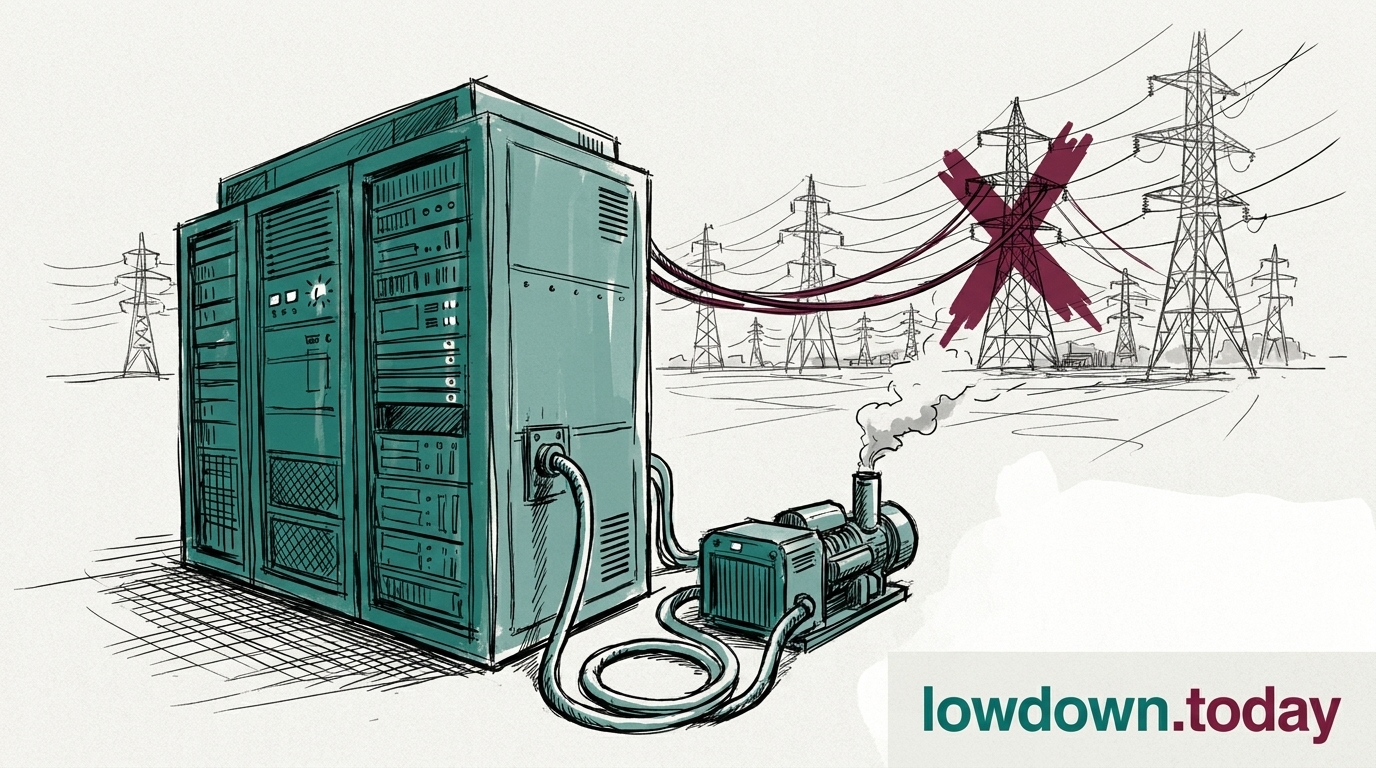
    ERCOT's Batch Zero timeline locks the Texas data-centre grid-connection question to 2027-28, a 12-18 month gap that will be filled by BTM generation deals like Project Kilby rather than utility connections.

  • Risk

    If queue growth continues at the 28 GW per two-month pace observed between April and June 2026, the queue will exceed 600 GW before Batch Zero's autumn 2027 plan is delivered, making any single batch process insufficient.

First Reported In

Update #8 · Data centres build their own power plants

Utility Dive· 28 Jun 2026
Read original →
Different Perspectives
MUFG
MUFG
Mitsubishi UFJ (MUFG) and Morgan Stanley are preparing to sell a loan of about $4.5bn secured on the GPUs CoreWeave runs for Meta in Dalton, Georgia, with price talk of 7% to 7.5%, Bloomberg reported. Meta's contract is expected to win the loan investment-grade ratings, though CoreWeave is rated below investment grade and the loan has not priced.
CX Tech
CX Tech
CX Tech's £16.5bn, 1,000 MW plan for the former Chapelcross nuclear site has drawn more than 10,000 representations, the most Dumfries and Galloway's planners have received, BBC News reported. The company says the scheme could support up to 750 construction jobs and about 540 permanent posts; comments close on 29 November.
Nate Glubish, Alberta's technology and innovation minister
Glubish tabled Bill 42 on 18 November to ban power plants and data centres on Class 1 and 2 farmland and within 600 m of homes, a day after the regulator approved a 1,494 MW plant that fails both tests. The bill exempts projects already approved or under review, so the Indus plant stands.
NEXTDC's chairman and chief executive
After a second pay strike and a defeated spill on 20 November, NEXTDC's leaders said they are exploring a joint venture for the S4 Sydney campus and do not expect to raise shareholder capital for contracted capacity. They raised FY27 underlying EBITDA guidance to A$260m-A$275m, still excluding about A$140m tied to Melbourne's stalled M3 site.
Friends of the Irish Environment, Friends of the Earth Ireland and ClientEarth
The three groups argued in the High Court on 18 November that the CRU's data-centre connection framework breaches the 2015 Climate Act by ignoring carbon budgets, which the CRU denies. Judge Micheal O'Connell reserved judgment with no date, so the framework stands meanwhile.
South Korean data-centre industry groups
Industry groups told Etnews on 13 November that tougher grid scoring for one sector alone is unfair, three days before the climate and energy ministry raised the capital-region pass mark to 75 from 70. Pending applications are judged on the new bar; the pilot assessed 28 capital-region projects worth 1.9 GW.

AI-assisted, human-edited under the editorial responsibility of Bannermedia Ltd. Reviewed by Ed Woodcock on 28 June 2026. Editorial standards.